
Seared Duck Breast with Kale and Walnuts
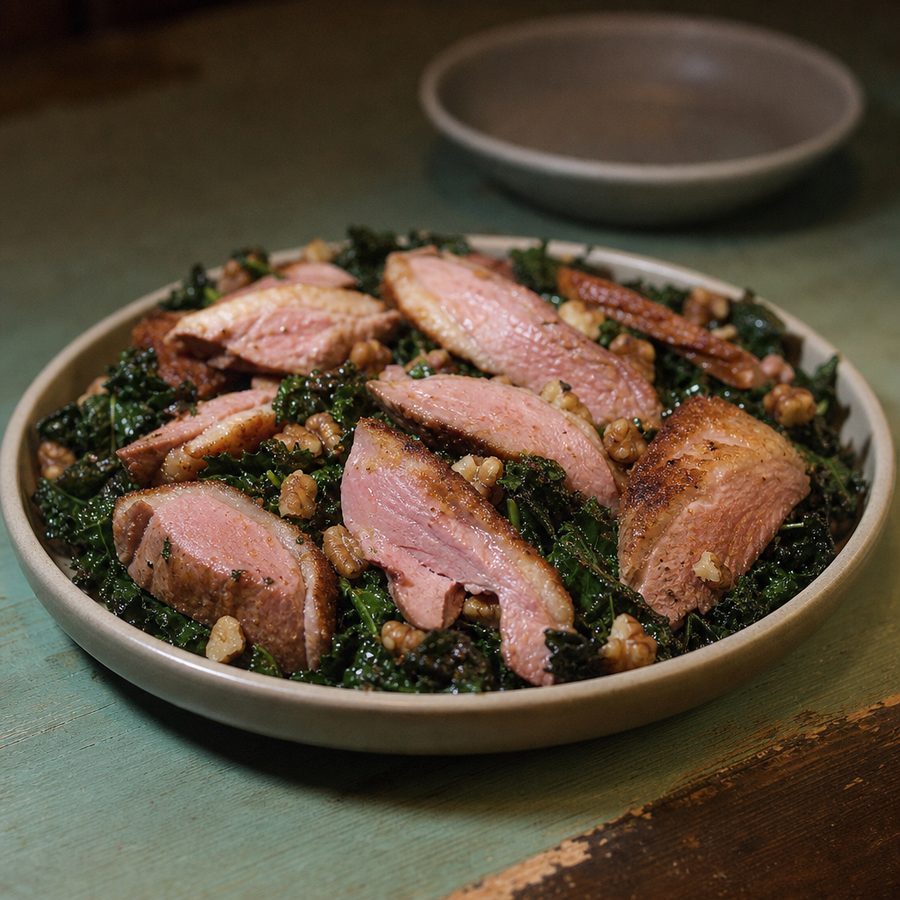
Crisp-skinned seared duck breast, sliced and fanned over garlicky kale and mushrooms wilted in butter, finished with a splash of balsamic and toasted walnuts.
Why You'll Love This Recipe
This is a restaurant-style dinner you can make at home without special equipment: crisp-skinned duck breast served over a quick tangle of sauteed kale and mushrooms. It suits anyone who wants a rich, savory main that eats like a treat but leans on whole ingredients, and it is forgiving enough for a weeknight yet polished enough for company. Duck has a reputation for being difficult that it does not deserve, since the whole technique is a cold pan and the patience to leave it alone.
A cold, dry pan and a slow climb in heat is what that skin needs. Starting cold and building the heat gradually gives the thick layer of fat time to melt out, which is what turns the skin deep golden and shatteringly crisp instead of leaving it flabby. That same rendered fat flavors everything, while the balsamic splashed onto the hot greens deglazes the pan and adds a bright, faintly sweet edge that cuts the richness of the meat.
Tender rosy duck against the crunchy toasted walnuts, and silky mushrooms against the sturdy, garlicky kale. The duck is a substantial source of protein, the kale brings fiber and an earthy backbone, and the walnuts and olive oil add unsaturated fats that make the plate feel filling. It is hearty without being heavy, and the flavors are deep enough that a modest portion feels complete.
Ingredients
- 4 small duck breasts
- 3 tbsp butter
- 2 tbsp olive oil
- 6 cups chopped kale
- 2 cups sliced mushrooms
- 1 tbsp balsamic vinegar
- 3 cloves garlic, minced
- 1 shallot, thinly sliced
- 1/3 cup toasted walnuts
- 3/4 tsp salt
Instructions
- Toast the walnuts: Roughly chop the walnuts. Toast them in a dry skillet over medium heat, stirring often, until fragrant and lightly golden, about 4 to 5 minutes. Tip them onto a plate so they stop cooking and set aside.
- Score and season the duck: Pat the duck breasts very dry with paper towels. Using a sharp knife, score the skin in a crosshatch pattern, cutting through the fat but not into the meat. Season both sides with the salt, dividing it evenly among the breasts.
- Render and sear the duck: Place the duck skin-side down in a cold, dry skillet, then set it over medium heat. Let it cook undisturbed so the fat renders and the skin turns deep golden and crisp, about 8 to 10 minutes; pour off excess fat as it collects. Flip and cook the meat side until an instant-read thermometer reads 130 to 135°F (54 to 57°C) for medium, about 3 to 4 more minutes. Move the duck to a board and let it rest, loosely tented, while you make the greens.
- Prep the aromatics and greens: Thinly slice the shallot, mince the garlic, slice the mushrooms, and remove the kale leaves from their tough stems, then chop the leaves.
- Wilt the greens: In a wide skillet over medium heat, melt the butter with the olive oil. Add the shallot, garlic and mushrooms and cook, stirring, until the mushrooms are browned and softened and the shallot is translucent, about 5 minutes. Add the kale in handfuls, tossing, until it wilts down and turns bright green and tender, 3 to 4 minutes.
- Deglaze and season: Pour the balsamic vinegar over the greens and toss to coat, scraping up any browned bits, until the liquid glazes the vegetables. Taste before serving; the greens cook in the seasoned duck drippings, so they should not need any more salt.
- Slice and serve: Slice each rested duck breast crosswise into thin slices against the grain, showing the pink center. Spoon the kale onto plates, fan the duck over the top, and garnish with the toasted walnuts.
Variations
- Rosemary and thyme duck: Add sprigs of fresh rosemary and thyme to the pan once you flip the duck, spooning the rendered fat over them; the herbs perfume the meat as it finishes.
- Peppery greens swap: Trade the kale for chard or mature spinach, which wilt faster and turn silkier; add them a little later since they need less time in the pan.
- Blue cheese finish: Crumble a little blue cheese over the warm greens just before serving so it softens into them. This adds dairy.
- Pan sauce with cream: After the greens are done, add a splash of cream to the mushrooms and let it reduce into a glossy sauce for the duck. This adds dairy.
- Orange and five-spice: Add a little grated orange zest and a pinch of five-spice to the greens for a warm, aromatic lift that plays off the rich duck; the zest keeps it fresh without adding meaningful carbs.
Storage & Leftovers
Refrigerate leftover duck and greens in separate airtight containers for up to three days. Keeping them apart preserves what is left of the crisp skin and stops the kale from steaming the meat soft.
Reheat the greens gently in a skillet over low heat with a splash of water to loosen them. Warm the sliced duck briefly and separately, either in a low oven or a dry pan skin-side down over medium heat for a minute to re-crisp the skin; avoid the microwave, which turns the skin rubbery and overcooks the pink center.
To get ahead, toast the walnuts and chop the kale, shallot, garlic and mushrooms up to a day in advance and store them covered in the refrigerator. You can also score and salt the duck a few hours ahead and leave it uncovered in the fridge, which dries the skin and helps it crisp even better when it hits the pan.
Notes & Tips
- Buy duck with a thick skin: When you shop, look for breasts with a good, even fat cap; that layer is what renders down into crisp skin, so a thin or torn skin will never crisp the same way.
- Save the rendered fat: Pour the fat you drain off the duck into a jar and refrigerate it. It keeps for weeks and is excellent for roasting or frying vegetables another night.
- Dry skin crisps best: Patting the breasts bone dry and salting the skin ahead of time pulls out moisture; the drier the skin goes into the pan, the crisper it gets.
- Judge doneness by feel and temperature: Duck breast is best cooked to medium, still rosy in the center; an instant-read thermometer at the thickest part is far more reliable than guessing by time.
- Rest before slicing: Give the duck a few minutes on the board before you cut it so the juices settle and the slices stay moist rather than bleeding onto the plate.
- Massage tough kale: If your kale is very sturdy, rub the chopped leaves with a little salt for a minute before cooking; it breaks them down so they wilt more evenly and taste less bitter.
Nutrition & Mindful Eating
- Duck, kale and walnuts each bring a different texture to the plate. The meat is tender and dark, the kale keeps a bit of resistance even after wilting, and the walnuts on top stay crisp through the whole meal.
- Mushrooms browned in butter and olive oil turn deeply savory and give up a liquid that lifts everything stuck to the pan, and they carry selenium and B vitamins in with that earthiness.
- Kale cooked in the rendered fat loses its toughness and takes on the flavor of the pan, and a splash of balsamic at the end softens it further. The vitamin K and fiber in the leaves stay right there in the greens.
- Walnuts toasted until they smell of themselves add a bitter-edged crunch that cuts the richness, and the plant omega-3 fats in them are part of why a small handful goes such a long way.
- Garlic and shallot cooked down in the fat are the quiet layer under all of it, and duck this rich holds you for a long stretch. The protein does most of that work, with the fat from the walnuts and the pan alongside it.
- As you eat, notice the walnut crunch arriving after the softness of the greens and how much of the pan the kale took on, and slow down enough to let a modest plate register as enough.
Frequently Asked Questions
Why do I start the duck in a cold pan instead of a hot one?
A thick layer of fat sits under duck skin, and starting cold lets that fat melt out slowly as the pan heats. That gradual rendering is what gives you crisp, deeply browned skin; a screaming-hot pan browns the outside before the fat has a chance to render, leaving the skin greasy underneath.
How do I know when the duck is done?
Duck breast is at its best cooked to medium, still pink and juicy inside. The most reliable way is an instant-read thermometer in the thickest part reading about 130 to 135°F (54 to 57°C), after which it will rise a few degrees as it rests.
My kale tastes bitter and tough. What can I do?
Strip the leaves fully off the thick central stems, which hold most of the bitterness, and chop the leaves smaller. Cooking them down in the butter and duck fat mellows them, and a pinch of salt while they wilt helps too.
Can I use a different cut than duck breast?
Boneless, skin-on chicken thighs work with the same cold-pan, skin-down rendering method, though they need to cook through fully to 165°F (74°C) rather than staying pink. The greens and walnuts pair just as well with them.