
Seared Duck and Orange Arugula Salad
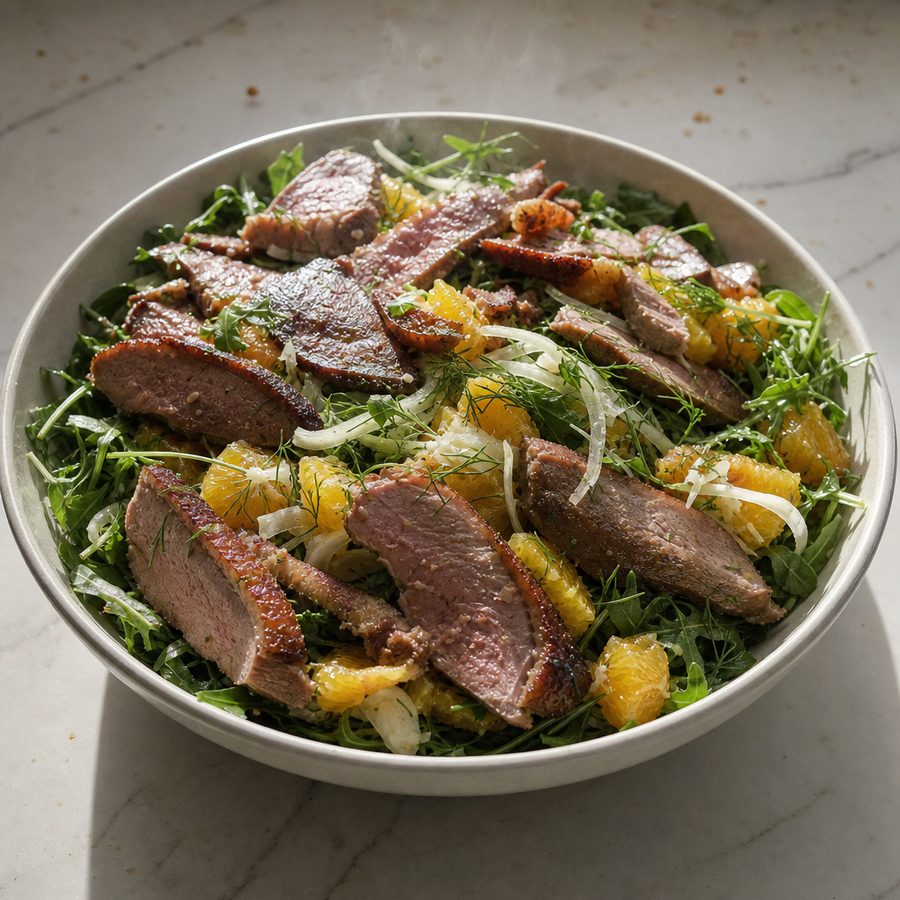
Thin slices of seared duck breast fanned over peppery arugula and shaved fennel with sweet orange segments, fresh mint, and a shallot-balsamic drizzle.
Why You'll Love This Recipe
This is a plate that eats light but leaves you satisfied, built for anyone who wants a lunch that feels like a restaurant course without much work. It pairs rich, rosy duck with cool, crisp greens and bright citrus, so it lands somewhere between a starter and a full meal. Because the components are simple and whole, it suits cooks who want something clean and uncomplicated but still worth sitting down for.
Low heat from the very beginning is what renders that skin. Starting cold gives the thick layer of fat time to melt out gradually so the skin turns crisp and golden instead of leathery, and cooking the breast only to medium-rare keeps the meat tender and juicy. Slicing across the grain after a rest gives you thin, easy-to-eat pieces. The dressing leans on the fennel's licorice sweetness and the balsamic's tang to cut through the richness of the meat.
Rich duck, bright citrus, and fresh produce all on one plate, with none of the three crowding out the others. The duck delivers a generous amount of protein, the olive oil brings satisfying fats, and the arugula, fennel, and orange add fiber, water, and a spread of vitamins. The peppery greens, the sweet citrus, and the anise-scented fennel keep every bite interesting, so it feels indulgent while staying light.
Ingredients
- 4 small duck breasts
- 8 cups arugula
- 1 fennel bulb, shaved
- 2 oranges, segmented
- 3 tbsp extra-virgin olive oil
- 1 1/2 tbsp balsamic vinegar
- 1 shallot, thinly sliced
- 1/4 cup mint leaves
- 1/2 tsp salt
Instructions
- Score the skin and start it in a cold pan: Pat the duck breasts dry and score the skin in a shallow crosshatch, cutting through the fat but not into the meat, which opens paths for the fat to escape as it melts. Season both sides with salt, lay the breasts skin side down in a cold, dry skillet, and only then set it over medium heat. A cold start is the whole technique here, because duck skin needs its fat to render out slowly before it can crisp, and a hot pan seizes the skin shut and leaves a layer of soft fat underneath.
- Render 6 to 8 minutes, then finish to 130 to 135°F: Leave the breasts undisturbed for 6 to 8 minutes, until the skin is deeply golden and crisp and most of the fat has melted out into the pan. Turn them and cook 3 to 5 minutes more, until the thickest part reads 130 to 135°F (54 to 57°C) for rosy medium-rare. Rest them on a board while you build the salad, then slice thinly across the grain.
- Shave the fennel paper-thin and segment the oranges: Trim and halve the fennel and shave it into paper-thin slices with a mandoline or a sharp knife, because raw fennel cut any thicker is woody and takes over every bite. Slice the shallot thin. To segment the oranges, cut off the top and bottom, stand each one up and slice away the peel and pith following the curve, then cut between the membranes to release the segments. Pick the mint leaves off their stems.
- Whisk the dressing with the shallot in it: Whisk the olive oil, balsamic vinegar, sliced shallot, and salt together and leave it while you build the rest. The few minutes the shallot spends sitting in the vinegar takes the raw burn out of it, so it seasons the salad rather than turning up as one fierce mouthful.
- Dress the greens lightly, hold some back: Toss the arugula and shaved fennel with most of the dressing until lightly coated, then mound it onto plates. Arugula is a thin leaf and collapses under too much dressing within a couple of minutes, which is why some of it is held back for the top.
- Fan the duck over the top and serve: Fan the sliced duck over the greens, tuck in the orange segments, scatter the mint, and drizzle the remaining dressing over everything. Serve right away, while the duck is still warm against the cold oranges, since that contrast is what the whole plate is built around.
Variations
- Blood orange or grapefruit: Swap the oranges for blood oranges or ruby grapefruit segments for a more tart, ruby-hued version. Grapefruit brings extra bitterness that plays nicely against the rich duck.
- Add avocado: Fan a few slices of ripe avocado over the greens for a creamy, buttery contrast to the peppery arugula. This adds extra healthy fat and richness to the plate.
- Herb swap: Trade the mint for tarragon or basil. Tarragon leans anise and echoes the fennel, while basil gives a softer, sweeter herbal note.
- Add pomegranate: Scatter fresh pomegranate arils over the finished salad for pops of tart-sweet crunch. This adds a little natural sugar and a jewel-like color.
- Seared chicken instead of duck: Use thinly sliced seared chicken breast in place of the duck for a milder, lighter-tasting plate. This swaps in a different poultry with a lighter flavor and less fat.
Storage & Leftovers
Store leftovers with the duck kept separate from the dressed greens if you can, since arugula wilts quickly once it meets the dressing. In an airtight container in the refrigerator, the sliced duck keeps for up to three days and the undressed greens and fennel for about two.
This salad is best enjoyed cold or at room temperature, so no reheating is really needed. If you prefer the duck warm, let the slices sit out for a few minutes or set them in a low oven just until they lose their chill; avoid a hot pan or microwave, which will overcook the medium-rare meat and dry it out.
To get ahead, sear and slice the duck, shave the fennel, segment the oranges, and whisk the dressing up to a day in advance and refrigerate each separately. Then simply toss the arugula and fennel with the dressing and assemble the plates right before serving.
Notes & Tips
- Pick the right duck: Look for duck breasts with a thick, unbroken layer of white fat under the skin; that fat is what renders down to crisp the skin. Skin-on is essential here, since a skinless breast will not give you that crackly top.
- Let the pan stay dry: Do not add oil to sear the duck. The skin releases plenty of its own fat as it renders, and extra oil only makes the pan greasy and can cause splatter.
- Judge doneness by temperature: An instant-read thermometer is the surest way to nail medium-rare; pull the breast at 130 to 135°F (54 to 57°C), since it will climb a few degrees as it rests. If you like it more done, cook a little longer, but the meat firms up and dries out past medium.
- Save the rendered fat: Pour the golden fat left in the pan into a small jar and refrigerate it. It keeps for weeks and is excellent for searing or roasting vegetables another day.
- Keep the fennel crisp: Shave the fennel just before serving, or hold the slices in ice water so they stay crunchy and do not brown. Reserve a few of the feathery fronds to tuck in as a garnish.
- Dress at the last minute: Arugula is delicate and wilts fast once dressed, so toss the greens only right before plating. Add the dressing a little at a time and taste, since you want the leaves lightly coated, not soggy.
Nutrition & Mindful Eating
- Duck, orange and fennel are the three notes here. The meat is rich and warm, the orange is sweet and wet, and the fennel is crisp and faintly aniseed, so every forkful picks up something of each.
- Fennel shaved thin stays crunchy under the dressing and brings a clean anise note that lifts the whole plate, along with fiber and potassium in the bulb.
- Oranges cut into segments release their juice into the dressing as you toss it, adding sweetness, water and vitamin C, and that acidity is what lets a salad hold up to something as rich as duck.
- Arugula is peppery enough to stand next to duck rather than disappear under it, and torn mint through the leaves gives the plate a cool green top note. The greens bring vitamin K and folate along with that bite.
- Shallot softened in a little balsamic before the olive oil goes in loses its raw edge and gives the dressing a sweet, sharp base, and the warm fat running off the duck slices joins it right on the plate.
- As you eat, try one bite with orange and one without, notice how the warm meat has barely wilted the leaves beneath it, and let the plate slow you down rather than disappearing while you work.
Frequently Asked Questions
Can I cook the duck ahead and serve the salad cold?
Yes. Sear and slice the duck, then refrigerate it and let it come closer to room temperature before plating. The meat is delicious cold or barely warm, which makes this an easy make-ahead lunch; just keep the greens undressed until serving.
My duck skin turned out rubbery instead of crisp. What went wrong?
Usually the fat did not have enough time to render. Start the breast skin-side down in a cold, dry pan over medium heat and let it go slowly, undisturbed, until the skin is deeply golden. Rushing it over high heat browns the outside before the fat melts out.
What can I use instead of a mandoline to shave the fennel?
A sharp chef's knife works well; halve the trimmed bulb, lay it flat, and slice as thinly as you can. A vegetable peeler run down the cut side also produces thin ribbons. The goal is delicate slices that stay crisp and are easy to eat.
Is the balsamic vinegar going to overpower the citrus?
It should not if you use it as a light drizzle. The dressing is meant to season, not soak, the salad, and the balsamic's tang balances the sweet orange and rich duck. Dress the greens sparingly and add more only after tasting.