
Egg And Greens Congee
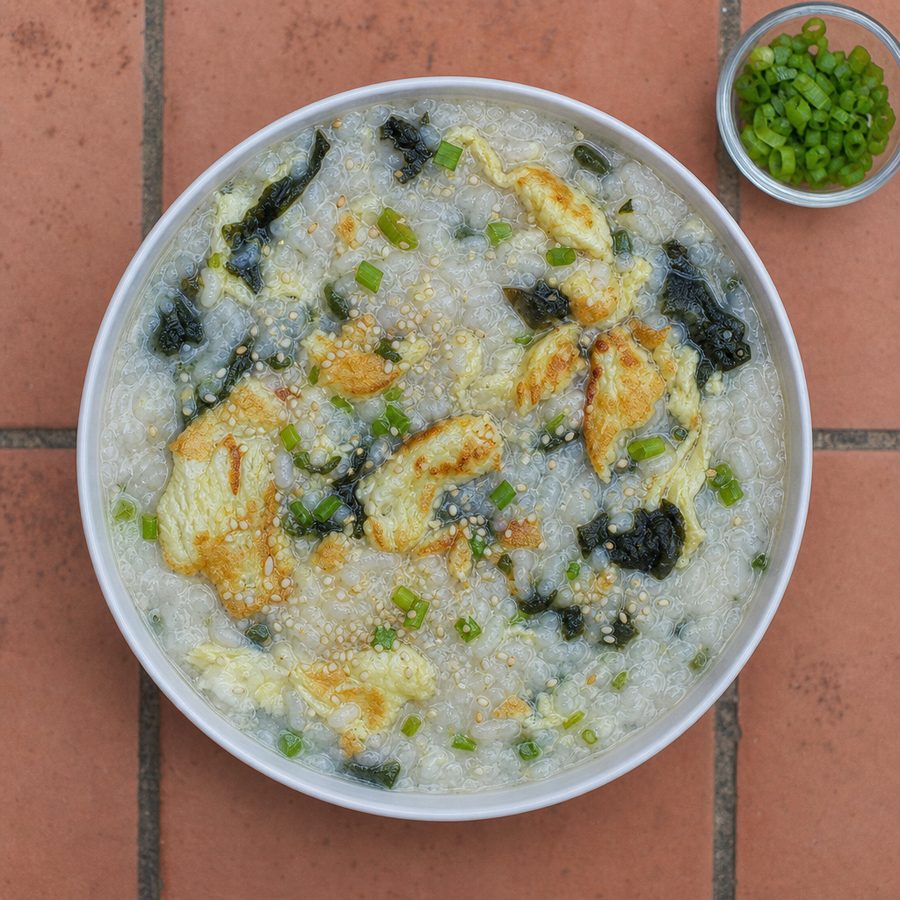
A soothing bowl of creamy ginger-scented rice porridge, silky with egg ribbons and tender Swiss chard and mushrooms, finished with sesame oil, scallions, and toasted sesame seeds.
Why You'll Love This Recipe
This is a gentle, comforting one-pot bowl for anyone who wants something warm and easy on the stomach, whether that is a cold morning, a light supper, or a day when you want dinner to feel restorative rather than heavy. It leans on humble pantry staples, cooks mostly on its own with the occasional stir, and turns plain rice into something soft, savory, and nourishing.
A long, gentle simmer breaks the rice grains open and lets their starch thicken the water into a creamy porridge. Grating the ginger into the pot from the start infuses the whole base with warmth, while streaming the beaten egg in slowly and stirring in one direction sets it into silky ribbons instead of scrambling it into clumps. The sesame oil and soy sauce go in off the heat so their aroma stays bright.
Soft and warming without ever being rich at all, and the real substance comes from the eggs, the earthy mushrooms, and the mineral-rich chard folded through every spoonful. The rice gives it comforting body, the ginger and scallion keep it lively, and the toasted sesame on top adds a nutty finish. It is the kind of bowl that feels light going down yet leaves you full.
Ingredients
- 8 large eggs, beaten
- 3 cups cooked white rice
- 5 cups chopped Swiss chard
- 2 cups sliced mushrooms
- 1 1/2 tbsp grated ginger
- 4 scallions, sliced
- 1 tbsp sesame oil
- 2 tbsp soy sauce
- 1 tbsp sesame seeds
- 1/2 tsp salt
Instructions
- Prep the aromatics and vegetables: Peel a knob of ginger and grate it finely. Wipe the mushrooms clean and slice them thin. Rinse the Swiss chard, stack the leaves, and chop them into ribbons, keeping the tender stems since they soften as they cook. Trim the scallions and slice them thin, keeping the white and green parts together. Set everything within reach of the stove.
- Simmer the congee base: Rinse the white rice under cold water until the water runs mostly clear, then drain. Put the rice in a large pot with plenty of water, the grated ginger, and the salt. Bring to a boil, then lower to a gentle simmer. Cook uncovered, stirring often and scraping the bottom so the rice does not catch, until the grains break down and the porridge turns thick and creamy, about 40 minutes. Add a splash more water anytime it gets too thick to stir easily.
- Add the vegetables: Stir the sliced mushrooms and chopped chard into the simmering porridge. Cook, stirring now and then, until the mushrooms are softened and the chard is wilted and tender, about 5 minutes.
- Ribbon the eggs: Crack the eggs into a bowl and beat them well with a fork until the yolks and whites are fully blended. With the congee at a low simmer, slowly stream the beaten eggs across the surface in a thin line while stirring gently in one direction. The egg will set into soft, silky ribbons within a minute. Do not stir hard or the ribbons will break up.
- Season: Turn off the heat. Stir in the sesame oil and the soy sauce. Taste and adjust with a little more soy sauce if it needs salt.
- Serve: Ladle the congee into warm bowls. Garnish each with sliced scallions and a sprinkle of sesame seeds. Serve hot.
Variations
- Spinach or kale swap: Trade the Swiss chard for chopped spinach, which wilts almost instantly, or for kale, which wants a couple of extra minutes to soften. Both keep the bowl leafy and green.
- Extra ginger and white pepper: For a bowl that reads even more warming, double the grated ginger and add a pinch of ground white pepper with the soy sauce for a gentle, peppery heat.
- Shredded tofu for more heft: Crumble firm tofu into the pot along with the mushrooms for a softer, more filling bowl. This adds soy protein and makes the congee more substantial.
- Chili crisp finish: Spoon a little chili crisp over each bowl at the table for crunch and heat. Check the jar, as some brands include added sugar.
- Brown rice base: Use cooked brown rice instead of white for a nuttier, chewier porridge with more fiber. It takes longer to break down, so simmer it a bit further and add water as needed.
Storage & Leftovers
Cooled leftovers keep in an airtight container in the refrigerator for up to four days. The porridge will thicken considerably as it chills, which is normal, since the rice keeps absorbing liquid.
To reheat, spoon the congee into a pot with a good splash of water and warm it over medium-low heat, stirring, until it loosens back to a creamy, spoonable texture. For the microwave, stir in a little water first, then warm it gently so the egg heats through slowly.
To get ahead, you can simmer the plain rice-and-ginger base a day in advance and keep it refrigerated, then reheat it with a splash of water and add the mushrooms, chard, and egg fresh just before serving so the greens stay vibrant and the egg ribbons stay silky.
Notes & Tips
- Stir often, scrape the bottom: Congee sticks and scorches easily once it thickens. Keep a heatproof spatula in the pot and scrape the bottom every few minutes; a scorched patch will flavor the whole batch.
- Control the thickness to taste: Congee is a personal thing. Keep adding water for a looser, soupier bowl, or simmer longer and add less for a thick, spoon-standing porridge. It thickens as it sits, so err slightly thin.
- Toast the sesame seeds for more flavor: If your sesame seeds are raw, toast them in a dry pan over medium heat until golden and fragrant, shaking often, before sprinkling. It deepens their nutty aroma noticeably.
- Save the sesame oil and soy for the end: Both are finishing seasonings here. Adding them off the heat keeps the sesame oil aromatic and lets you taste before you salt, since the soy sauce is what brings most of the saltiness.
- Pick firm, dry mushrooms: Choose mushrooms that feel firm and dry rather than slimy or spotted. Cremini give a meatier, earthier flavor than white button if you want more depth.
- Serve with a simple side: This bowl is gentle on its own, but a small dish of quick-pickled cucumber or a plate of steamed greens on the side adds crunch and brightness against the soft porridge.
Nutrition & Mindful Eating
- Rice, liquid and time are the whole method. The grains break down into something thick and comforting, the mushrooms and chard give it savor and green, and the egg stirred in at the end adds the protein that makes it a meal rather than a bowl of starch.
- Long simmering is what makes congee congee. The starch leaves the grain and thickens the pot, which is why this eats so gently and why a bowl of it feels soothing on a night when you do not want to chew much.
- Mushrooms give the pot its depth. They release glutamates as they cook, which is where that savory backbone comes from, and they carry selenium and B vitamins along with that earthiness.
- Swiss chard goes in near the end so the leaves just wilt and the stems keep a little bite. It brings a mineral, faintly bitter note that cuts through all that softness, along with vitamin K and magnesium.
- Ginger simmers with the rice from the start while scallions and sesame seeds land on top, so the first spoonful gets heat, sharpness and toasted nuttiness before it reaches the soft rice underneath. Sesame oil and soy sauce go in off the heat, where you can taste exactly what they are doing.
- As you eat, hold the bowl in both hands for a moment and let the ginger come through the steam, then go slowly enough to feel the warmth settle before you decide about a second bowl.
Frequently Asked Questions
Can I use raw rice instead of already-cooked rice?
Yes, and this recipe starts from raw rice. Rinsing it first and simmering it low and slow is exactly what breaks the grains down into that creamy congee texture. Just keep the heat gentle, stir often, and add water as it thickens.
Why did my egg clump instead of forming ribbons?
That usually happens when the porridge is boiling hard or you stir too vigorously. Bring it down to a low simmer, stream the beaten egg in slowly across the surface, and stir gently in one direction so it sets into soft silky threads.
My congee turned thick and gluey after refrigerating. Is it ruined?
Not at all. The rice keeps absorbing liquid as it cools, so it always firms up. Reheat it with a good splash of water over low heat, stirring, and it loosens right back to a creamy, spoonable bowl.
Is this filling enough for a full dinner?
It is more substantial than plain rice porridge thanks to the eggs, mushrooms, and greens folded through it. If you want it heartier, simmer it a little thicker, crumble in some tofu, or serve it with a crunchy vegetable side.