
Eggplant and Tomato Egg Skillet
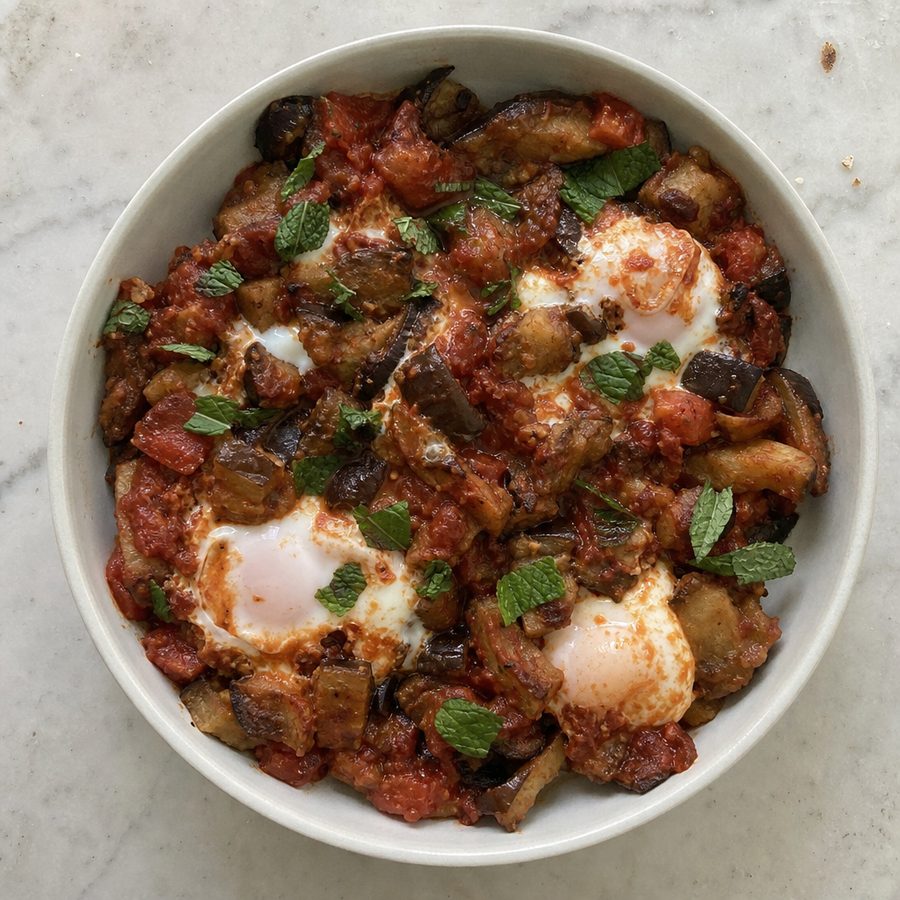
Silky browned eggplant simmered with crushed tomatoes, chickpeas, onion, garlic, cumin, and paprika, with eggs poached right in the skillet and finished with fresh mint.
Why You'll Love This Recipe
This is a warm, one-pan lunch that leans on a handful of pantry staples: eggplant, crushed tomatoes, chickpeas, and eggs. It suits anyone who wants a filling midday meal without meat, and it comes together in a single skillet, so it is friendly to cooks who do not want a sink full of pots. It reheats and travels well too, which makes it a practical choice for someone cooking for one and eating leftovers, or feeding a table at once.
Brown the eggplant properly before anything wet touches the pan. Given room in hot oil, the cubes turn golden and silky instead of spongy, and that caramelized flavor carries the whole dish. Blooming the cumin and paprika in the oil for a minute pulls out their aroma, and poaching the eggs directly in the simmering tomato means the yolks and whites pick up the seasoning of the sauce rather than tasting like a plain fried egg set on top.
Eggplant gives shakshuka a body that tomato alone cannot. The eggs bring quality protein, the chickpeas add plant protein and fiber, and the eggplant and tomato give the dish body and a savory depth without much effort. The mint at the end lifts everything with a fresh, cooling note against the warm spice, so each bite feels bright rather than heavy. It is the kind of meal that leaves you full and steady through the afternoon.
Ingredients
- 8 large eggs
- 1 large eggplant, cubed
- 2 cups crushed tomatoes
- 1 1/2 cups chickpeas
- 1 onion, diced
- 3 garlic cloves, minced
- 2 tsp cumin
- 2 tsp paprika
- 3 tbsp olive oil
- 3 tbsp chopped mint
- 1/2 tsp salt
Instructions
- Prep the vegetables: Trim the eggplant and cut it into bite-size cubes. Peel and dice the onion. Peel and mince the garlic. Drain the chickpeas in a colander and rinse under cool water until the foaming stops. Roughly chop the mint leaves and set aside for finishing.
- Brown the eggplant: Heat the olive oil in a large skillet over medium-high heat until it shimmers. Add the eggplant cubes in a single layer and cook, stirring occasionally, until they are deeply golden and tender all the way through, about 8 minutes. Give them the full time, because eggplant pulled early stays spongy and never softens later in the sauce. The cubes should collapse slightly when pressed.
- Bloom the aromatics: Add the diced onion and cook until softened and translucent, about 3 minutes. Stir in the minced garlic, cumin, and paprika and cook until fragrant, about 1 minute, so the spices toast in the oil rather than sit raw.
- Simmer the sauce: Pour in the crushed tomatoes and add the rinsed chickpeas, then stir in the salt. Bring to a gentle simmer and cook until the sauce thickens slightly and the flavors come together, about 6 minutes. If it tightens too much, loosen with a splash of water.
- Poach the eggs: Using the back of a spoon, make evenly spaced wells in the sauce, so each egg sits in its own pocket rather than spreading thin across the pan, then crack one egg into each. Cover the skillet with a lid and cook over medium-low heat until the whites are fully set and opaque but the yolks are still soft, about 6 minutes. For firmer yolks, cook a minute or two longer.
- Finish and serve: Remove from the heat and garnish with the chopped mint. Serve straight from the skillet, spooning up sauce, chickpeas, and an egg for each portion.
Variations
- Creamy finish: Spoon dollops of plain yogurt or a soft crumbled cheese over the top before adding the mint for a cooler, richer contrast. Note this adds dairy.
- Green and leafy: Stir a few big handfuls of spinach or chopped kale into the sauce just before you make the egg wells and let it wilt down, adding more greens and body.
- Extra warmth: Add a pinch of chili flakes or cayenne with the cumin and paprika for gentle heat that plays against the sweet tomato and cooling mint.
- Herb swap: Trade the mint for chopped fresh parsley or cilantro if that is what you have, for a different but equally fresh finish.
- Smoky depth: Use a smoked paprika in place of the sweet paprika to give the whole skillet a deeper, fire-roasted character.
Storage & Leftovers
Store leftovers in an airtight container in the refrigerator for up to 3 days. The eggplant and tomato base actually improves overnight as the flavors settle, though the poached eggs are best eaten the day they are made since the yolks firm up in the cold.
To reheat, warm the vegetable and chickpea base gently in a covered skillet or saucepan over low heat, adding a splash of water if it has thickened. Reheat only until hot through; pushing it hard will overcook the eggs and turn the yolks chalky. A microwave works in a pinch, in short bursts with a lid.
To get ahead, make the eggplant, tomato, and chickpea base completely and refrigerate it. When you are ready to eat, bring it back to a simmer, make the wells, and poach fresh eggs in it so the yolks are soft. This keeps the fastest part for last and gives you a hot meal in minutes.
Notes & Tips
- Pick a firm eggplant: Choose one that feels heavy for its size with tight, glossy skin and no soft spots; a lighter, spongy eggplant tends to taste bitter and soaks up more oil.
- Give the cubes room: Brown the eggplant in a wide, hot skillet so the cubes sear rather than steam. If your pan is small, work in two batches so they turn golden instead of gray and soft.
- Judge the eggs by the whites: The eggs are done when the whites are fully opaque with no clear jelly around the yolk. Keeping the lid on traps steam that sets the tops of the whites while the yolks stay soft.
- Season at the end too: Tomatoes and spice can taste flat until finished; taste the sauce before adding the eggs and adjust the salt, since a little more can wake the whole dish up.
- Rinse the chickpeas well: Draining and rinsing canned chickpeas washes off the starchy, salty packing liquid, which keeps the sauce cleaner tasting and lets you control the salt yourself.
- Serve with something to scoop: This is built to be mopped up. Warm flatbread or a hunk of crusty bread turns it into a fuller meal and catches the sauce and yolk.
Nutrition & Mindful Eating
- Eggplant, tomato and chickpeas cook down into one soft, savory base, and the eggs go on last so they set right into it. The eggplant brings the silkiness, the tomato the acidity, the chickpeas the bite, and the yolks tie the three together.
- Eggplant is the ingredient that decides this dish. Given enough olive oil and enough time it stops being spongy and turns creamy, and that oil is also what carries the paprika and cumin through the pan. The dark skin brings anthocyanins and fiber in with it.
- Fresh mint torn over the top at the end is the flavor that surprises people. It is cool against the warm paprika and cumin, and it lifts a pan that has been cooking down for a long while.
- Chickpeas that caught a little color against the hot pan keep a nutty edge even after sitting in the sauce, and the fiber and plant protein they carry are what make a skillet like this land as dinner.
- Cracked over a base this soft, the eggs need only a few minutes under a lid, and the whites take on some of the tomato and paprika as they set. The yolks bring richness and choline to a pan built almost entirely from vegetables.
- As you eat, notice how completely the eggplant has given way and how the mint arrives last, and take it straight from the skillet at a pace that lets you taste both.
Frequently Asked Questions
How do I keep the eggplant from turning greasy or spongy?
Get the oil good and hot before the eggplant goes in, and give the cubes room in the pan so they sear instead of steam. Browning them until golden and tender first, before any liquid is added, sets their texture so they stay silky rather than soaking up oil.
Can I make this ahead of time?
Yes. Make the eggplant, tomato, and chickpea base ahead and refrigerate it; the flavor deepens overnight. Reheat it to a simmer and poach fresh eggs in it just before serving so the yolks stay soft.
My yolks came out hard. What happened?
They cooked too long or the heat was too high. Keep the heat at medium-low, cover the pan so the steam sets the whites from above, and pull the skillet off the heat as soon as the whites are opaque and the yolks still jiggle.
What can I use instead of mint?
Fresh parsley or cilantro both work well and give a similar bright, herbal finish. Add whichever you use right at the end so it stays fresh and fragrant rather than cooking down.