
Eggplant Chickpea Coconut Curry
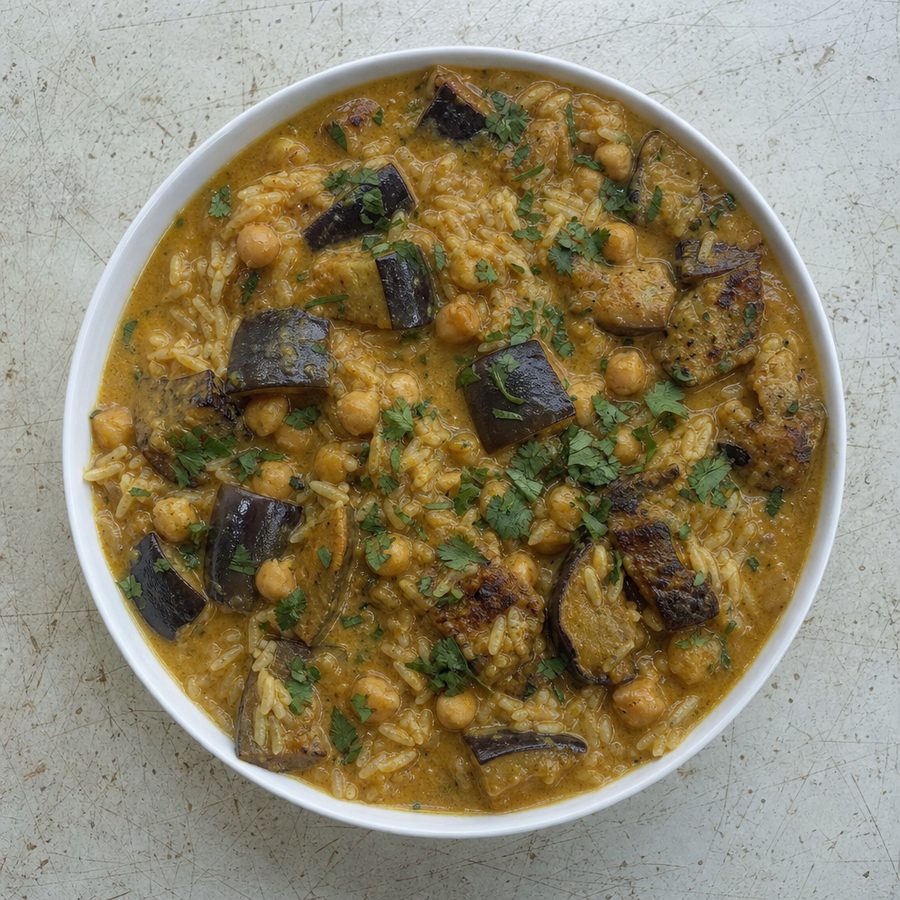
Silky cubes of golden-browned eggplant and tender chickpeas simmered in a spiced coconut-and-tomato sauce built on onion, garlic, ginger, cumin, turmeric, and coriander, finished with fresh cilantro over brown rice.
Why You'll Love This Recipe
This is a hearty one-pan curry for anyone who wants a filling dinner out of pantry and produce staples. Eggplant and chickpeas carry it, so there is no meat and no dairy in it, and the whole thing happens in a single skillet while the rice cooks alongside. It suits a weeknight, it scales for leftovers, and like most curries it is better on the second day once the turmeric and coriander have spread through the sauce.
It begins in the pan, not the pot. Eggplant that is thrown straight into liquid turns spongy and bland, but searing the cubes in olive oil until golden collapses their airy structure into something silky and gives them a savory, caramelized edge. Blooming the cumin, turmeric, and coriander in the hot pan before the tomatoes go in wakes up their aroma, and the crushed tomatoes get a few minutes to concentrate before the coconut milk rounds everything into a creamy sauce.
It satisfies on every front: the chickpeas and brown rice bring plant protein and a high dose of fiber, the coconut milk lends richness that makes the bowl feel indulgent, and the spices give it depth without any heat you cannot control. Ginger, garlic, and turmeric carry their own anti-inflammatory reputation, and the fresh cilantro at the end keeps the whole thing bright rather than heavy.
Ingredients
- 1 large eggplant, cubed
- 3 cups chickpeas, drained
- 1 cup coconut milk
- 1 cup crushed tomatoes
- 1 onion, diced
- 5 cloves garlic, minced
- 1 tbsp grated ginger
- 2 tsp cumin
- 1 tsp turmeric
- 1 1/2 tsp coriander
- 4 tbsp olive oil
- 3 1/2 cups cooked brown rice
- 1/2 cup cilantro
- 1/2 tsp salt
Instructions
- Start with cooked brown rice: This wants about three and a half cups of cooked brown rice. From dry, rinse it until the water runs clear and simmer it for 40 to 45 minutes, until tender and the water is absorbed, then fluff it with a fork. Get it going first, since it takes longer than the entire curry and there is no point in a finished pan waiting on a pot of rice.
- Cut everything before the pan goes on: Cube the eggplant, dice the onion, mince the garlic, and grate the ginger, then drain and rinse the chickpeas and chop the cilantro for serving. Have all of it ready, because once the eggplant is browning the steps run back to back and garlic left on the board while the pan is hot will scorch when it finally goes in.
- Brown the eggplant alone, about 8 minutes: Heat the olive oil in a large skillet or Dutch oven over medium-high, add the eggplant in a single layer, and saute for about 8 minutes, turning occasionally, until the cubes are golden on several sides and soft in the middle, then move them to a plate. Browning it separately is what keeps it recognizable, since eggplant simmered raw in the sauce collapses into it and disappears.
- Build the sauce in the same pan: Cook the onion in the same pan over medium heat for about 5 minutes, until soft and translucent, then add the garlic, ginger, cumin, turmeric, and coriander and stir constantly for about 1 minute, until fragrant. Stir in the crushed tomatoes and simmer 4 minutes, scraping up the browned bits from the bottom, because those bits are the flavor the eggplant left behind and they dissolve into the sauce.
- Simmer 12 minutes until it coats a spoon: Return the eggplant with the chickpeas and coconut milk, stir, and simmer gently for about 12 minutes, until the sauce thickens enough to coat the back of a spoon. Add a splash of water if it tightens too far, since a curry that reduces past this point scorches on the bottom before the flavors have finished coming together.
- Season at the end and finish with cilantro: Stir in the salt and taste before serving, adjusting if it needs more. Salt goes in last here because canned chickpeas and canned tomatoes both bring their own and the sauce has been reducing for twelve minutes. Spoon the curry over the warm rice and scatter the cilantro over the top.
Variations
- Spinach fold-in: Stir a few big handfuls of fresh spinach into the curry in the last couple of minutes of simmering, letting it wilt into the sauce for extra greens and color.
- Bring the heat: Add a minced fresh chile or a pinch of cayenne along with the ground spices for a curry with real warmth. Adjust the amount to your tolerance.
- Lime and lemongrass: Finish with a squeeze of fresh lime juice and its zest for a sharper, more aromatic sauce that plays against the richness of the coconut milk.
- Sweet potato swap: Replace some of the eggplant with peeled, cubed sweet potato, adding it earlier so it simmers until fork-tender. This makes the curry sweeter and even heartier.
- Toasted coconut finish: Sprinkle toasted unsweetened coconut flakes over each bowl for a nutty crunch that echoes the coconut milk in the sauce.
Storage & Leftovers
Cooled leftovers keep in an airtight container in the refrigerator for up to 4 days. The flavor actually deepens overnight as the spices settle into the eggplant and chickpeas, so day-two portions often taste better than the first.
Reheat gently in a saucepan over low heat, stirring now and then and loosening with a splash of water, since the sauce thickens as it chills. The microwave is fine. Cover the bowl and stir when you pass it. Keep the rice separate and sprinkle it with water first so it steams instead of drying.
To get ahead, make the curry a day or two in advance and refrigerate it, cooking the rice fresh when you serve. The curry also freezes well for up to 3 months; cool it completely, freeze in portions, and thaw overnight in the refrigerator before reheating. Add the cilantro only at serving time so it stays fresh and green.
Notes & Tips
- Pick a firm eggplant: Choose an eggplant that feels heavy for its size with taut, glossy skin and no soft spots. Older, spongier eggplant holds more bitterness and soaks up more oil, so fresher is better here.
- Do not crowd the pan: Give the eggplant room when you brown it. Packed too tightly, the cubes steam and go gray instead of turning golden. Work in batches if your pan is small.
- Full-fat coconut milk: Reach for canned full-fat coconut milk rather than the thin carton kind for a sauce that turns creamy. Stir the can well first, since the cream and water separate as it sits.
- Toast the spices: The minute you spend cooking the cumin, turmeric, and coriander in the hot pan before the tomatoes go in is what gives the curry its depth. Stir constantly so they bloom without scorching.
- Season at the end: Wait to add the salt until the curry has simmered and reduced, then taste. Concentrating the sauce intensifies its saltiness, so seasoning early can push it too far.
- Serve it fresh: A shower of chopped cilantro and, if you like, an extra spoonful of coconut milk swirled on top right before serving keeps each bowl looking and tasting bright rather than muddy.
Nutrition & Mindful Eating
- Eggplant, chickpeas and coconut milk are the three that carry this. The eggplant melts, the chickpeas stay firm enough to give the spoon something to find, and the coconut milk turns the tomatoes into a sauce rich enough to coat rice.
- Eggplant is the texture of this curry. Cooked long enough it gives up its structure entirely and goes silky, drinking in the spices around it, and the fiber and the dark pigments in its skin come along in that same soft spoonful.
- Chickpeas keep a slight bite through the simmer and turn faintly nutty as they take on the sauce, and the protein and fiber they bring together are most of the reason a bowl of vegetables eats like dinner.
- Coconut milk is what rounds the tomatoes off. It takes the sharp edge from their acidity, gives the sauce its pale gold color and its weight, and its fat helps your body take up the curcumin in the turmeric.
- Cumin, coriander and turmeric bloomed in the oil before anything else goes in are where the color and the smell of this come from, with ginger and garlic behind them, and torn cilantro at the end keeps a rich pot tasting fresh.
- As you eat, spoon the curry over the brown rice and take in how completely the eggplant has given way, then go slowly enough that the warmth of the spices registers before the bowl is empty.
Frequently Asked Questions
Do I need to salt or soak the eggplant before cooking?
You do not have to. Modern eggplant is far less bitter than it used to be, and browning the cubes in hot oil drives off much of the moisture that makes it spongy. If your eggplant is large and seedy, you can salt the cubes and let them sit for twenty minutes, then pat them dry, but it is optional for this dish.
Can I use canned chickpeas instead of cooking them from dried?
Yes, and this recipe is written for canned. Just drain and rinse them well before they go into the pan. If you prefer to start from dried, soak and simmer them until tender first, then measure out what you need.
My sauce turned out thin. How do I thicken it?
Let it keep simmering uncovered, which drives off water and concentrates the sauce as the chickpeas and eggplant release starch. Mashing a few chickpeas against the side of the pan with your spoon also thickens it naturally without changing the flavor.
What should I serve alongside it?
It is built to go over brown rice, but it is just as good with warm flatbread for scooping, or over cauliflower rice for a lighter plate. A crisp cucumber-and-lime salad on the side cuts through the richness of the coconut milk nicely.