
Eggplant And Lentil Baked Eggs
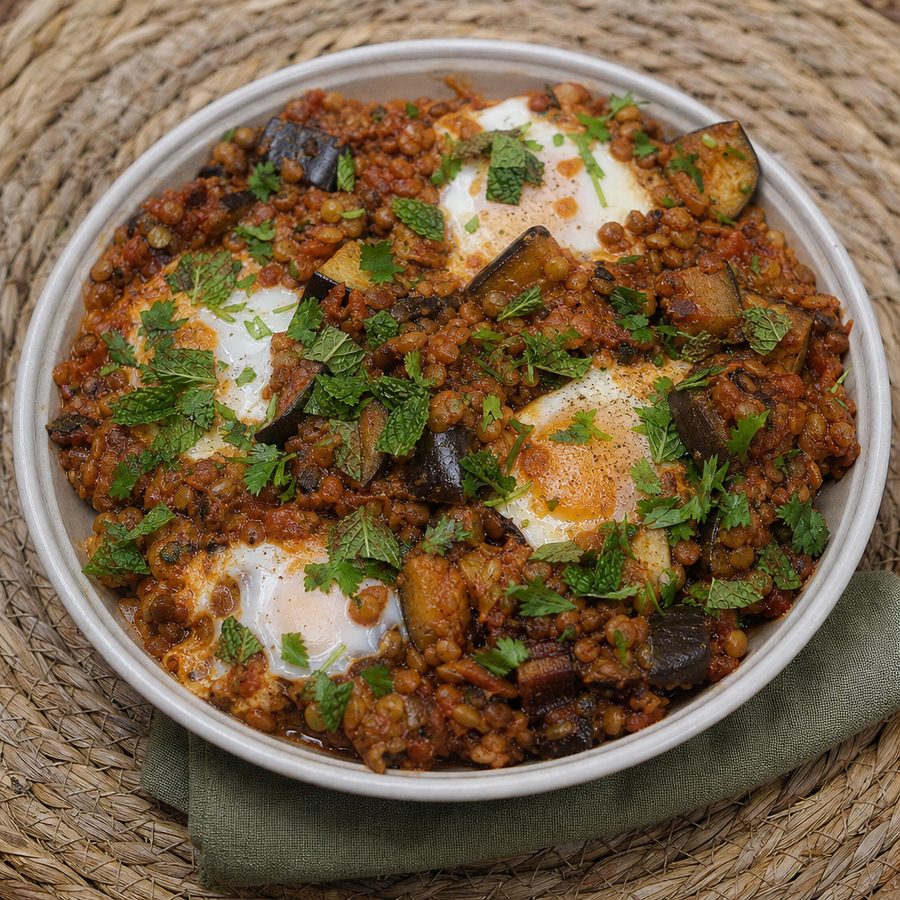
Silky roasted eggplant and tender brown lentils simmered in a cumin- and paprika-spiced crushed tomato sauce with onion and garlic, finished with eggs baked right into the skillet and showered with fresh mint and parsley.
Why You'll Love This Recipe
Hearty and warming with no meat in it at all. Roasted eggplant and brown lentils carry the body of the dish, a spiced tomato sauce ties it together, and eggs baked right into the surface turn it into a full meal. It comes together in a single pan, which makes it a good fit for a relaxed weeknight when you want real cooking without a sink full of dishes.
The eggplant roasts alone before it ever meets the sauce. Eggplant cooked directly in liquid turns spongy and watery, but a hot oven collapses its flesh into something silky and lightly caramelized, so it melts into the tomato rather than diluting it. Blooming the cumin and paprika in oil with the onion and garlic pulls the flavor out of the spices before the tomatoes go in, and finishing with raw mint and parsley off the heat keeps the herbs bright against the deep, savory base.
Textures differ from spoon to spoon, and the whole thing stays with you. The lentils and eggs together give it real substance and a good amount of protein, the eggplant and lentils bring plenty of fiber, and a soft yolk breaking into the spiced sauce makes each bite feel rich even though the dish leans on vegetables and pantry staples. It fills you up and holds you over, and it tastes like it took more effort than it did.
Ingredients
- 8 large eggs
- 1 large eggplant, cubed
- 2 cups cooked brown lentils
- 1 1/2 cups crushed tomatoes
- 1 medium onion, chopped
- 3 cloves garlic, minced
- 1 tbsp olive oil
- 1 tsp ground cumin
- 1 tsp paprika
- 3 tbsp chopped mint
- 2 tbsp chopped parsley
- 1/2 tsp salt
Instructions
- Cook the lentils: Rinse the brown lentils under cool water. Put them in a saucepan, cover them generously with unsalted water, bring it to a boil, then lower to a gentle simmer and cook uncovered until they are tender but still holding their shape, about 20 to 25 minutes. Leave the salt out of that water, since salt added early keeps a lentil skin firm long past the point the inside is done. Drain well and set aside.
- Roast the eggplant: Preheat the oven to 425°F (220°C). Trim and cut the eggplant into bite-size cubes. Toss the cubes with part of the olive oil and a pinch of the salt, spread them in a single layer on a rimmed baking sheet, and roast until softened and golden at the edges, about 15 minutes.
- Build the sauce base: Peel and chop the onion, and peel and mince the garlic. Warm the remaining olive oil in an oven-safe skillet over medium heat. Add the onion and cook, stirring now and then, until soft and translucent, about 6 to 7 minutes. Stir in the garlic, ground cumin, and paprika and cook until fragrant, about 1 minute.
- Simmer: Stir in the crushed tomatoes, the drained lentils, the roasted eggplant, and the remaining salt. Simmer, stirring occasionally, until the sauce thickens slightly and the flavors come together, about 8 minutes. Taste and adjust the salt.
- Bake the eggs: Set the oven to 400°F (200°C). Using the back of a spoon, make evenly spaced wells across the surface of the sauce, one for each egg, so each sits in its own pocket rather than spreading thin, and crack an egg into each. Transfer the skillet to the oven and bake until the whites are set but the yolks are still soft, about 10 minutes.
- Garnish and serve: Roughly chop the mint and the parsley. Scatter them over the baked eggs off the heat, since both go dull within a minute in a hot pan, and serve straight from the skillet.
Variations
- More heat: Add a pinch of cayenne or a spoonful of harissa with the cumin and paprika for a smoky, spicy edge.
- Fold in greens: Stir a few handfuls of chopped spinach or kale into the sauce during the last minutes of simmering and let them wilt before adding the eggs.
- Chickpea version: Swap the brown lentils for drained, rinsed chickpeas for a firmer bite and a nuttier flavor.
- Yogurt swirl: Spoon a little plain yogurt over each portion at the table for a cool, tangy contrast; this adds dairy.
- Tahini drizzle: Loosen tahini with a squeeze of lemon and a little water and drizzle it over the finished dish for a creamy, savory finish; this adds sesame.
Storage & Leftovers
Baked eggs are best the day they are made, but leftovers keep in an airtight container in the refrigerator for up to three days. The yolks will firm up as they sit, so expect the eggs to read more like a hard set than a runny one after chilling.
Reheat gently to avoid rubbery eggs. Warm a portion in a covered skillet over low heat with a splash of water to loosen the sauce, or microwave in short bursts at reduced power just until heated through. Add the fresh mint and parsley after reheating if you want that just-picked lift back.
To get ahead, make the eggplant-lentil sauce through the simmer step, cool it, and refrigerate it for up to three days. When you are ready to eat, rewarm the sauce in an oven-safe skillet, make the wells, crack in the eggs, and bake so they are freshly cooked and soft.
Notes & Tips
- Choose a good eggplant: Pick one that feels firm and heavy with glossy, unwrinkled skin; a lighter, spongier eggplant tends to have more seeds and a slightly bitter edge.
- Watch the yolks: Pull the skillet when the whites are just set and the yolks still jiggle, since the eggs keep cooking in the hot sauce for a minute or two after they leave the oven.
- Make deep wells: Press the wells wide and deep enough to cradle each egg so the whites settle in the sauce instead of running across the surface.
- Season before the eggs go in: Taste the sauce right before you crack in the eggs and adjust the salt then, since it is much easier to correct before the eggs go on top.
- Keep the herbs fresh: Add the mint and parsley only after baking; stirred in earlier they lose their color and bright flavor to the heat.
- Serve with something to scoop: Warm flatbread or a piece of crusty bread turns this into a more filling meal and is perfect for sopping up the sauce and soft yolk.
Nutrition & Mindful Eating
- The lentils, the eggplant and the eggs are three different textures in one pan. The lentils hold their shape in the sauce, the eggplant goes soft enough to disappear into it, and the eggs sit on top with yolks that break into the whole thing.
- Brown lentils cooked until they are tender but still round give the base its body, and the plant protein and fiber they bring together mean a pan of vegetables and eggs holds you well into the evening.
- Eggplant cooked down in oil first turns silky and slightly sweet, and it is what makes the sauce feel rich, carrying its fiber and the dark pigments from its skin into every spoonful.
- The eggs are added late and baked only until the whites turn opaque, so the yolks stay liquid and dress the lentils when you cut into them. That yolk is where the choline and the fat-soluble vitamins sit.
- Cumin and paprika stirred into the oil at the start are what give the pan its rust color and its warmth, and a scatter of torn mint and parsley over the finished dish is cold and sharp against all that softness.
- As you eat, cut into a yolk first and watch it move through the lentils, then take the pan to the table and go slowly enough to catch the mint at the end of each bite.
Frequently Asked Questions
Can I make this without an oven-safe skillet?
Yes. Build and simmer the sauce in any pan, then spoon it into a baking dish, make the wells, crack in the eggs, and bake as directed.
My eggs came out overcooked. What went wrong?
They likely stayed in too long or sat in the hot sauce afterward. Bake just until the whites are set and the yolks still wobble, then serve promptly, since the residual heat finishes them.
Can I use canned lentils instead of cooking them from dry?
Yes. Drain and rinse them well and stir them into the sauce at the simmer step; you can skip cooking them separately.
How do I keep the eggplant from turning bitter or watery?
Roast it well before it goes into the sauce so it turns silky and lightly browned rather than spongy, and choose a firm, fresh eggplant, which is far less likely to taste bitter.