
Elk Cheddar Burgers
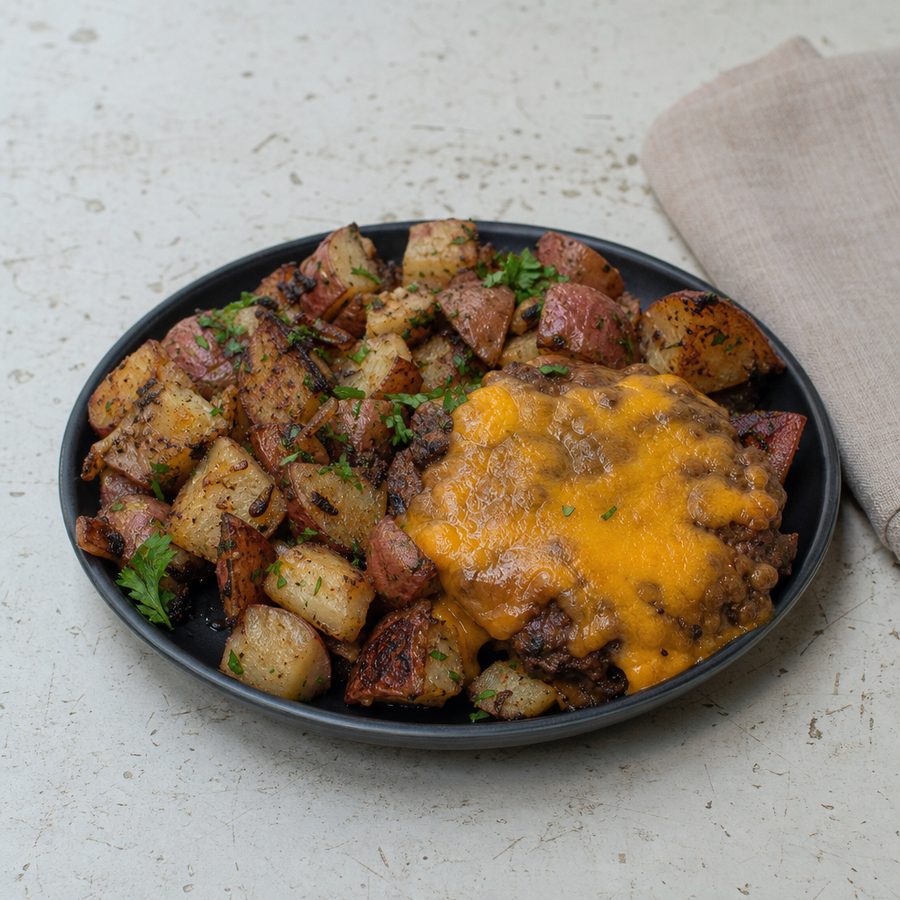
Ground elk patties seared in foaming butter and blanketed with melted cheddar for a rich, savory burger with no bun in sight.
Why You'll Love This Recipe
These are burgers stripped down to their most savory core: ground elk, sharp cheddar, and butter, with nothing else competing for attention. They come together in one skillet in under fifteen minutes, which makes them a reasonable thing to cook on any night at all. They also solve the usual problem with game meat, which is that it carries very little fat of its own, and the butter in the pan and the cheddar on top are there to make up the difference.
Elk cooks fast, and the whole method here respects that. The meat needs help staying moist, so the butter in the pan does double duty, basting the surface as the patty sears and building a browned crust that carries most of the flavor. Melting the cheddar under a lid off the heat lets the cheese soften into the warm meat without pushing the patty past doneness, and a spoonful of the nutty pan butter at the end ties the whole thing together.
Density of flavor and protein matters more here than volume. Elk is intensely savory and filling, cheddar adds richness and a salty tang, and butter rounds out the meat so each bite feels indulgent. It is the kind of plate that keeps you full for hours on very little, and it delivers a large amount of high-quality protein and iron in a small, focused portion.
Ingredients
- 1 3/4 lb ground elk
- 1 1/4 cup shredded cheddar
- 2 tbsp butter
- 3/4 tsp salt
Instructions
- Shape the patties gently and dimple them: Divide the ground elk into equal portions and form each into a patty a little wider than it is thick, handling the meat as little as you can so it stays tender. Press a shallow dimple into the center of each with your thumb, because a patty puffs from the middle as it cooks and the dimple is what keeps it flat enough to hold cheese.
- Salt them at the last minute: Season both sides evenly with salt just before they go into the pan. Salting early draws moisture to the surface and starts breaking down the proteins, which gives you a springy, sausage-like texture rather than the loose, tender one a burger wants.
- Heat the butter until the foam settles: Melt the butter in a heavy skillet over medium-high heat and let it foam. When the foaming settles and the butter smells nutty, the water has cooked out of it and the pan is ready, which is the moment that gives you a crust rather than a gray, steamed surface.
- Sear 3 to 4 minutes a side, to 160°F: Lay the patties in the hot butter without crowding them and cook undisturbed for 3 to 4 minutes, until a deep brown crust forms, then turn once and cook 3 to 4 minutes more. Elk carries very little fat of its own and dries out fast, so watch it closely and pull the patties the moment an instant-read thermometer in the center reads 160°F (71°C), the safe temperature for any ground meat.
- Melt the cheese off the heat, under a lid: Scatter the cheddar over the patties, cover the skillet, and let it sit off the burner for about a minute, until the cheese is fully melted and glossy. Off the heat is deliberate, since the residual warmth is plenty to melt cheddar while a live flame underneath would carry the meat past 160°F while you waited.
- Spoon the pan butter over and serve: Move the patties to warm plates, spoon any browned butter from the skillet over the top, and serve while the cheese is still molten. That butter has taken on everything the meat left in the pan, and with four ingredients in the recipe there is nothing else standing in for a sauce.
Variations
- Different melting cheese: Swap the cheddar for another good melting hard cheese such as aged gouda, Gruyere, or Swiss for a different tang and pull. This keeps the dish dairy-based.
- Cheese-stuffed: Fold some of the shredded cheddar into the center of each patty before shaping instead of melting it on top, so you get a molten pocket in every bite. This still uses dairy.
- Bacon-topped: Lay a couple of strips of crisp cooked bacon over the cheese before serving for a smoky, salty finish. This adds pork.
- Fried egg on top: Crown each finished patty with a butter-fried egg so the runny yolk becomes a rich sauce. This adds egg.
- Richer fat swap: Cook the patties in beef tallow or ghee instead of butter for a deeper, more roasted flavor. Ghee keeps it dairy-derived; tallow makes it beef fat.
Storage & Leftovers
Store leftover patties in an airtight container in the refrigerator for up to 3 to 4 days. Keep any patties you know you will save slightly underdone, since they will firm up and cook a touch further when reheated.
Reheat gently to keep the meat from drying out. Warm the patties in a covered skillet over low heat with a small knob of butter, turning once, just until heated through; a quick splash of water under the lid creates steam that keeps them moist. Avoid the microwave on high, which toughens elk quickly.
To get ahead, shape and season the raw patties, stack them between sheets of parchment, and refrigerate for up to a day or freeze for up to three months. Cook straight from raw; sear frozen patties a few minutes longer per side until they reach a safe internal temperature.
Notes & Tips
- Do not overwork the meat: Elk turns dense and rubbery if you knead or compact it, so press each patty together just enough to hold its shape and no more.
- Use a thermometer: Game meat gives you a very narrow window between juicy and dry, so an instant-read thermometer pulled at 160°F (71°C) for ground meat beats guessing by feel or color.
- Let the butter foam first: Wait until the butter foams and then the foam subsides before the patties go in; that nutty stage means the pan is hot enough to build a crust instead of steaming the meat.
- Choose a sharper cheddar: A sharp or extra-sharp aged cheddar stands up to the strong, savory elk better than a mild block, which can get lost against the meat.
- Salt right before cooking: Season the patties just as they hit the pan; salting well ahead and letting them sit draws out moisture and firms the surface, which works against a meat that already dries out easily.
- Rest a minute before eating: Give the patties a minute after the cheese melts so the juices settle and the cheddar sets slightly, making them easier to lift and less likely to slide apart.
Nutrition & Mindful Eating
- What makes these hold together is the balance between meat and fat. Elk is firm and fine-textured on its own, so the melted cheddar and the butter in the pan give it the richness a burger wants, and all three arrive in the same bite.
- Elk is a mild red meat with a firm, clean bite that holds its shape on the heat, and it carries iron in the form your body absorbs most readily along with the B12 that red meat brings.
- Because elk cooks quickly, these burgers want a hot pan and a short time in it. Pull them while the center is still pink and let them rest a minute, and the patty stays juicy rather than tightening up.
- Sharp cheddar is the right cheese for this. It melts into the ridges of the browned patty and its tang cuts through the richness, and the calcium and protein it carries ride along with all that flavor.
- Butter in the pan gives the meat its browned, nutty crust, and the salt on the outside is what draws that flavor to the surface and keeps the meat tasting like itself. A burger this savory holds you for hours.
- As you eat, take note of the crust the butter built, the way the cheddar has run into it and how clean the meat tastes underneath, and let a few slow bites tell you when you are done.
Frequently Asked Questions
What internal temperature should ground elk reach?
Cook these patties to 160°F (71°C) in the center, measured with an instant-read thermometer. Because elk is ground, the safe temperature is higher than for a whole steak, and hitting that mark exactly keeps the meat from drying out.
My elk burgers come out dry. What am I doing wrong?
Elk has almost no internal fat, so overcooking is the usual culprit. Pull the patties the moment they reach temperature, cook them in plenty of foaming butter, and baste the tops with pan butter as they sear to add richness back.
Can I cook these from frozen?
Yes. Sear frozen patties a few minutes longer per side over slightly lower heat so the outside does not scorch before the center comes up to a safe temperature. Thawing overnight in the refrigerator first gives you a more even crust.
There is no bun. How do I serve them?
These are meant to be eaten as an open patty, cheese-side up, with the browned butter from the pan spooned over the top. Serve them straight from the skillet on a warm plate so the cheddar stays molten and the meat stays juicy.