
Feta and Egg Scramble
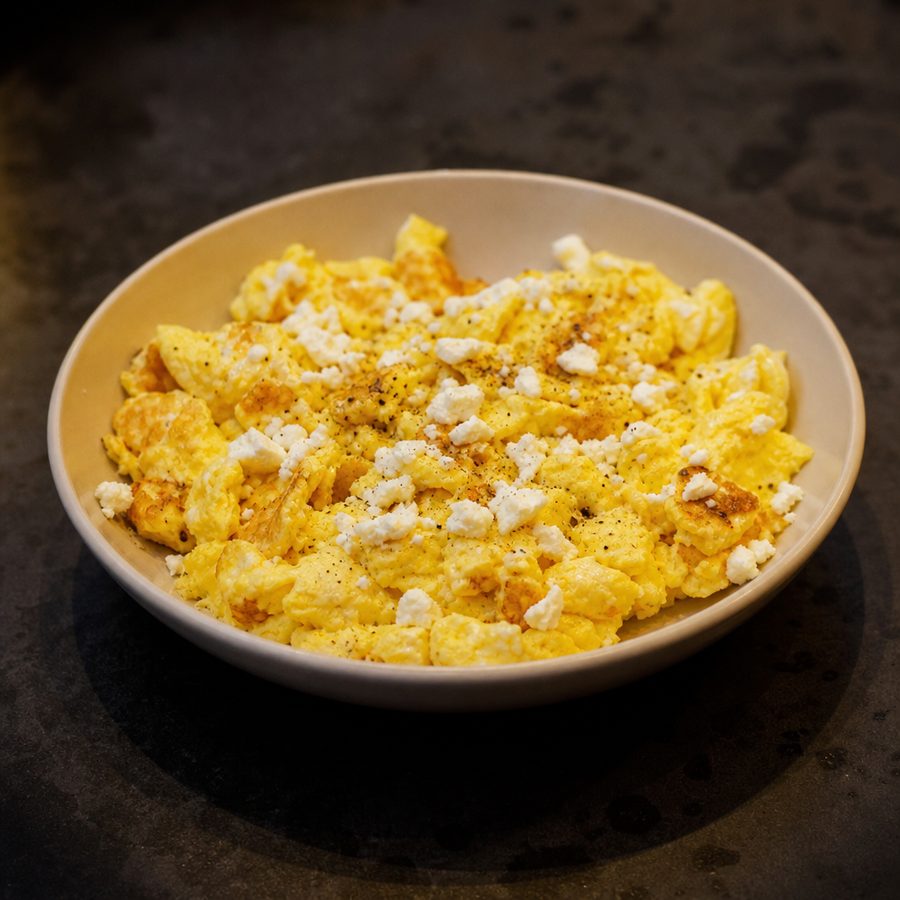
Soft, slow-cooked scrambled eggs enriched with butter and folded with briny crumbled feta for a creamy, savory breakfast.
Why You'll Love This Recipe
This is a fast, protein-rich breakfast for anyone who wants something warm and savory on a busy morning without a long ingredient list. It comes together in one skillet in just a few minutes, which makes it as practical for a weekday as it is for a slow weekend plate. It also suits cooks who like a rich, satisfying meal built entirely around eggs, butter, and cheese.
The technique is what separates this from a rubbery diner scramble: low heat, constant gentle stirring, and pulling the pan off the burner before the eggs look fully set. Cooking eggs slowly keeps the curds tender and custardy instead of dry, and folding the feta in off the heat means the cheese warms and softens without melting into a greasy pool. The result is creamy eggs studded with pockets of tangy, salty feta.
Eggs and feta together deliver a generous amount of complete protein, which helps a breakfast feel filling and keeps you steady until your next meal. Butter and the natural fat in the eggs and cheese make the dish rich and satisfying, so a modest portion feels like enough. The briny sharpness of the feta does the seasoning work, which is why it needs so little added salt.
Ingredients
- 12 large eggs
- 1 1/4 cups crumbled feta
- 3 tbsp butter
- a pinch of salt
Instructions
- Crumble the feta: If your feta came as a block rather than pre-crumbled, break it into small, rough pieces with your fingers or a fork so it will fold evenly through the eggs. Set it aside near the stove so it is ready to add quickly at the end.
- Beat the eggs: Crack the eggs into a bowl and whisk them well, until the yolks and whites are fully blended and the mixture is uniform and slightly frothy. Add only a pinch of salt, since the feta is already briny and salty on its own.
- Melt the butter: Set a nonstick skillet over medium-low heat and add the butter. Let it melt fully and coat the bottom of the pan, swirling to spread it, about 1 minute, but do not let it brown.
- Scramble slowly: Pour in the beaten eggs and let them sit for a few seconds, then stir slowly and gently with a silicone spatula, pushing the eggs from the edges toward the center. Keep the heat low and the motion unhurried so the eggs form soft, glossy curds. Pull the pan from the heat while the eggs still look slightly wet and underset, since they will keep cooking from residual heat.
- Fold in the feta and serve: Off the heat, gently fold the crumbled feta through the warm eggs for about 30 seconds, until it softens slightly but still keeps its texture. Serve right away while the scramble is creamy.
Variations
- Bacon and egg: Cook chopped bacon until crisp, then scramble the eggs in a little of the rendered fat and fold in the bacon with the feta. This adds pork.
- Smoked salmon fold: Fold flaked smoked salmon into the eggs along with the feta at the end for a silkier, richer bite. This adds fish.
- Extra-creamy curds: Whisk a splash of heavy cream into the eggs before cooking for even softer, more custardy curds. This adds more dairy.
- Sharp cheese swap: Replace the feta with grated aged hard cheese for a nuttier, less briny scramble; because it is not salted like feta, taste and adjust the salt.
- Ghee scramble: Use ghee in place of the butter for a slightly nuttier, higher-temperature-tolerant fat that still keeps the curds tender.
Storage & Leftovers
Store leftover scramble in an airtight container in the refrigerator for up to three days. Let it cool before sealing so condensation does not make it watery.
Reheat gently, since eggs turn tough and weep moisture when overheated. Warm the scramble in a nonstick skillet over low heat with a small piece of butter, stirring just until hot, or microwave it in short bursts at reduced power, stirring between each, and stop while it is still soft.
To get ahead, you can crack and whisk the eggs the night before and keep them covered in the refrigerator, then crumble the feta and store it separately. In the morning the scramble comes together in the time it takes the butter to melt.
Notes & Tips
- Buy the right feta: Feta packed in brine stays moister and tastes brighter than the pre-crumbled cups, which can be dry and chalky. Drain a brined block and crumble it yourself for the best texture.
- Salt with restraint: Feta carries a lot of salt, so taste a finished bite before reaching for more. It is easy to over-salt this dish; the pinch in the eggs is usually all you need.
- Know when to stop: The eggs are done when they hold together in soft, glossy folds but still look slightly wet. Carryover heat finishes them on the plate, so pulling the pan early is the safeguard against dryness.
- Keep the heat low: Medium-low is the sweet spot. High heat sets the eggs fast and turns them rubbery before you can fold in the cheese, so give the curds time to form slowly.
- Fold, do not stir hard: Once the feta goes in, use a gentle folding motion rather than vigorous stirring so the cheese keeps its distinct crumbly pockets instead of smearing through.
- Scale it for a crowd: This scales cleanly for more people, but cook in batches or a wide pan rather than crowding a small skillet, since a deep pile of eggs steams and cooks unevenly.
Nutrition & Mindful Eating
- Eggs, butter and feta are the whole plate, and the balance between them is what makes it work. The eggs go soft and mild, the butter makes them richer, and the feta arrives salty and sharp in bites you can find.
- Eggs scrambled low and slow set into large, loose curds rather than small dry ones, and the yolks staying barely cooked is where the color and the richness come from, along with the choline and complete protein a whole egg carries.
- Feta does not behave the way most cheeses do in a pan. It softens and goes creamy at the edges while holding its shape, so you get concentrated salty tang in some forkfuls and plain soft egg in others, plus the calcium that comes with it.
- Butter is what keeps the pan gentle. It melts and coats the surface before the eggs go in so nothing tightens or browns, and it carries the flavor of both the egg and the cheese across the whole plate.
- A plate of this holds you well into the morning. The protein and fat in the eggs and cheese are doing that work together, and it is why a scramble this simple eats like a proper breakfast.
- As you eat, take the first bite before you add anything else and notice how mild the egg is until the feta hits, then keep your fork moving slowly enough to taste both of them separately.
Frequently Asked Questions
Why do my scrambled eggs turn out dry and rubbery?
Almost always the heat was too high or the eggs cooked too long. Keep the pan at medium-low, stir slowly, and take it off the burner while the eggs still look a little wet, since they finish cooking from residual heat on the plate.
Should I add the feta while the eggs are still cooking?
Fold it in off the heat, once the eggs are just set. Adding it too early can make the cheese soften into the eggs and lose the pleasant crumbly pockets you want, and it can turn the scramble greasy.
How much salt should I add?
Just a pinch in the beaten eggs. Feta is quite salty, so it seasons the dish as it folds in. Taste a finished bite before adding any more.
Can I make this for one person or scale it up?
Yes, it scales up or down easily by keeping the same ratio of eggs to feta and butter. For larger amounts, use a wide skillet or work in batches so the eggs cook in a shallow layer and stay tender rather than steaming in a crowded pan.