
Feta and Spinach Breakfast Strata
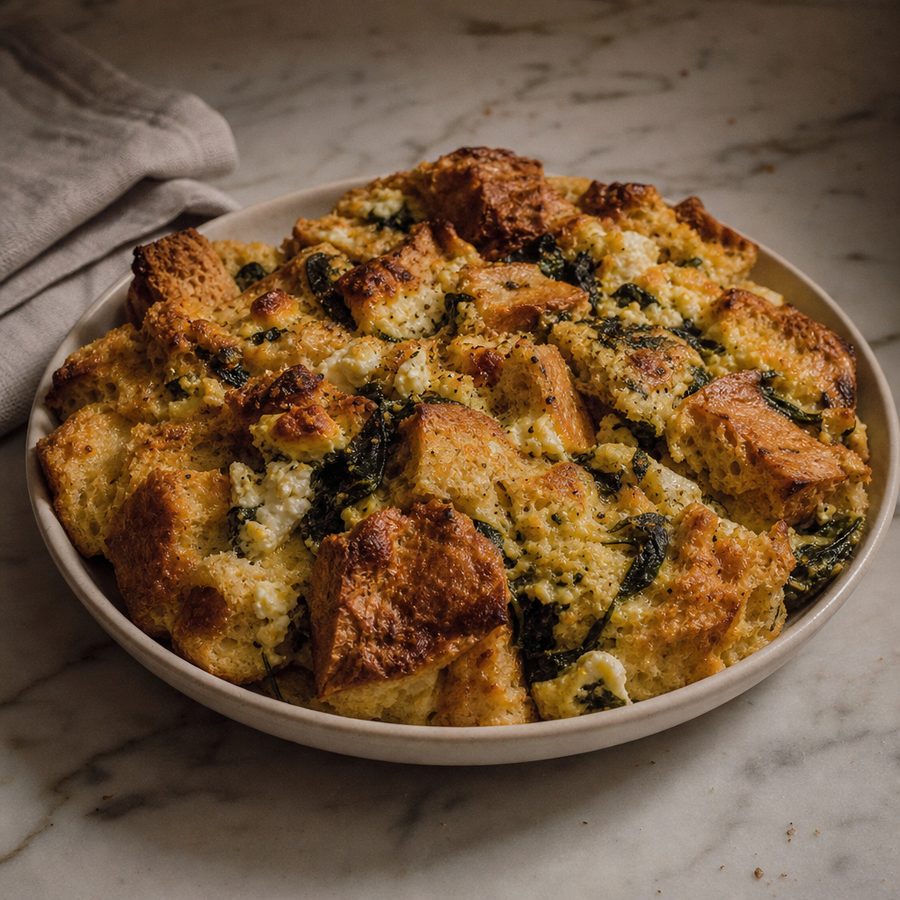
A savory overnight bread pudding of cubed whole wheat bread soaked in eggs and milk, layered with sauteed onion and spinach, fresh dill, and tangy crumbled feta, then baked until puffed and golden.
Why You'll Love This Recipe
This is a make-ahead savory breakfast bake for anyone who wants a hot, protein-rich meal without cooking first thing in the morning. You assemble it the night before, let it soak in the refrigerator, and slide it into the oven when you wake up. It is hearty enough to anchor a weekend brunch yet simple enough to feed a household on a busy weekday, and it reheats well for the days that follow.
The overnight soak is the whole thing: the custard of whisked eggs and milk works its way into every cube of whole wheat bread, so the interior bakes up tender and almost pudding-like while the top turns golden and slightly crisp. Sauteing the onion and spinach first drives off excess moisture and deepens their sweetness, which keeps the finished bake from turning watery, and the fresh dill and tangy feta cut through the richness so each bite tastes bright rather than heavy.
It satisfies on several levels at once. The eggs and feta deliver lasting protein, the whole wheat bread and spinach add fiber that helps the meal hold you over, and the olive oil brings a savory, satiating richness. The contrast of a crisp top against a soft, custardy middle, salty feta against grassy dill and greens, makes it feel like a treat even though it leans on simple, wholesome ingredients.
Ingredients
- 8 large eggs
- 6 slices whole wheat bread, cubed
- 1 1/3 cups milk
- 1 scant cup crumbled feta
- 5 cups spinach, chopped
- 1/2 onion, diced
- 2 tbsp olive oil
- 2 tbsp chopped fresh dill
Instructions
- Prep the vegetables and bread: Peel and dice the onion. Rinse the spinach, shake it dry, and roughly chop it. Finely chop the fresh dill. Cut the whole wheat bread into bite-size cubes and set aside. Crumble the feta if it is not already crumbled.
- Cook the aromatics and greens: Warm the olive oil in a large skillet over medium heat. Add the diced onion and cook, stirring often, until softened and translucent, about 3 minutes. Add the chopped spinach in handfuls, stirring, and cook just until fully wilted and any released liquid has cooked off, 2 to 3 minutes. Stir in the chopped dill, then remove from the heat and let the mixture cool for a few minutes.
- Layer the dish: Lightly grease an 8-inch baking dish with olive oil or butter. Spread the bread cubes evenly across the bottom, spoon the cooled spinach-and-onion mixture over the top, and sprinkle the crumbled feta evenly over everything.
- Make the custard and soak: In a bowl, whisk the eggs and milk together until completely blended and no streaks of white remain. Pour the mixture evenly over the layered bread, then gently press the bread down with the back of a spoon so it soaks up the custard. Cover and refrigerate at least 30 minutes, or overnight, so the bread absorbs the liquid.
- Bake: Preheat the oven to 375°F (190°C). Uncover the dish and bake until the top is golden and puffed and the center is set and no longer jiggly when the dish is nudged, 38 to 42 minutes. A knife inserted into the middle should come out clean.
- Rest and serve: Let the strata rest for 5 minutes so it firms up and the custard finishes setting, then cut into squares and serve warm.
Variations
- Roasted red pepper and olive: Fold in chopped jarred roasted red peppers and pitted Kalamata olives with the spinach for a brinier, sunnier flavor.
- Herb swap: Trade the dill for chopped fresh mint or flat-leaf parsley, or a mix of both, for a different fresh, green note.
- Mushroom and thyme: Saute sliced cremini mushrooms with the onion until their liquid cooks off, and add fresh thyme leaves for an earthier, more savory bake.
- Sun-dried tomato and goat cheese: Scatter in chopped oil-packed sun-dried tomatoes and swap some of the feta for crumbled goat cheese; this adds dairy and a creamier tang.
- Extra-green boost: Wilt chopped kale or Swiss chard alongside the spinach for a sturdier, more mineral-rich green layer.
Storage & Leftovers
Cool any leftovers, then cover the dish tightly or transfer squares to an airtight container and refrigerate. The strata keeps well for up to 4 days, and the flavor of the dill and feta actually settles in nicely by the next day.
To reheat, warm individual pieces in a 325°F (163°C) oven or toaster oven until heated through and the top re-crisps, about 10 minutes; a microwave works in a pinch but leaves the texture softer. Adding a light drizzle of olive oil before reheating in the oven helps the top revive.
For make-ahead, assemble the entire dish through the soak step, cover, and keep it in the refrigerator overnight so it is ready to bake straight from cold in the morning. You can also bake it fully, cool, and portion it for grab-and-go breakfasts through the week.
Notes & Tips
- Use slightly stale bread: Day-old or lightly toasted whole wheat bread soaks up the custard without turning to mush; if your bread is very fresh, spread the cubes on a sheet and dry them in a low oven for a few minutes first.
- Dry the spinach well: Cook the spinach until its liquid has fully evaporated. Excess water is the main thing that leaves a strata soggy in the center, so patience at the skillet pays off in the oven.
- Give it a real soak: Thirty minutes is the minimum, but an overnight rest gives the most even, custardy texture because the bread has time to absorb the eggs and milk all the way through.
- Rinse feta to soften the salt: Feta and bread both carry salt, so if you are watching sharpness, give the feta a quick rinse and pat dry, and taste before adding any extra salt to the custard.
- Judge doneness by the center: The edges set before the middle, so check the center: it should be puffed and no longer wobbly, and a knife should come out clean. If the top browns too fast, tent it loosely with foil.
- Serve with something bright: A simple green salad with lemon or a spoonful of plain yogurt on the side balances the richness and rounds out the plate.
Nutrition & Mindful Eating
- Bread, eggs and milk are the structure of a strata, and everything else rides in them. The bread drinks up the custard overnight, the eggs set it, and the spinach, onion and feta are held in suspension rather than sitting on top.
- Whole wheat bread has enough structure to take on all that liquid and still keep its shape, so the finished strata has distinct layers rather than one uniform mass, and the bran in it brings fiber and a faint nuttiness to the custard.
- The overnight rest is doing real work. Eggs and milk need hours to move all the way into the crumb, and that slow soak is why the center bakes custardy and even, carrying complete protein and calcium through every slice.
- Spinach cooked down with onion in olive oil loses its water first, which keeps the strata from going soggy, and cooking the greens in fat helps your body take up the vitamins that come with them.
- Fresh dill is the ingredient people cannot name and keep asking about. It goes grassy and bright against the salty feta, and the top layer of bread that stays above the custard crisps and browns while everything under it stays soft.
- As you eat, run your fork through the crisp top into the soft center so you get both in one bite, and let the smell of dill and warm cheese slow you to a Sunday pace.
Frequently Asked Questions
Can I assemble it the night before and bake it in the morning?
Yes, and it is at its best that way. Assemble through the soak step, cover, and refrigerate overnight, then bake straight from cold; you may need to add a couple of extra minutes since the dish starts colder.
Can I use frozen spinach instead of fresh?
You can. Thaw it fully and squeeze out as much water as you can with your hands or a clean towel before adding it to the skillet, otherwise the extra moisture will leave the center soggy.
Why is my strata watery in the middle?
Usually it is either spinach that was not cooked dry enough or a bake pulled too early. Cook the greens until their liquid evaporates, and bake until the center is fully set and a knife comes out clean, then let it rest before cutting.
What kind of bread works best?
A sturdy whole wheat sandwich loaf or a rustic whole wheat bread both work well. Slightly stale or lightly toasted cubes hold their shape and soak up the custard better than very soft, fresh bread.