
Zucchini and Herb Frittata
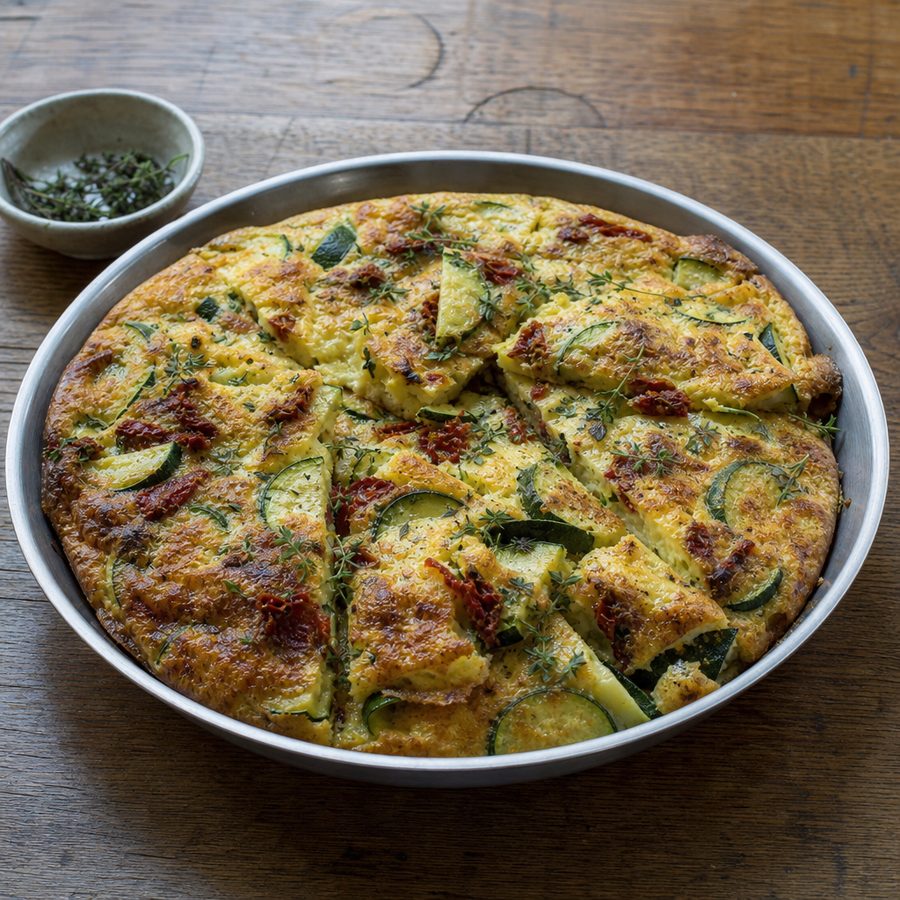
A tender baked egg frittata studded with sauteed zucchini, onion, and garlic, brightened with sweet sun-dried tomato and fresh basil, cut into squares and served warm over lemon-dressed arugula.
Why You'll Love This Recipe
A real, protein-rich meal without much fuss attached. Eggs carry sauteed zucchini, onion, and garlic, with sun-dried tomato and fresh basil folded through for pockets of sweet and herbal flavor. It comes together in one oven-safe skillet and finishes in the oven, so there is no flipping and no fighting a stubborn pan. Served over cool, peppery arugula, it works as a sit-down lunch and reheats well for the days that follow.
It cooks in two stages: the vegetables are sauteed first so the onion turns sweet and the zucchini gives up some of its water and picks up color, then the beaten eggs go in and the whole thing bakes until just set. Baking rather than cooking it entirely on the stovetop lets the eggs puff and firm evenly from edge to center without a rubbery bottom. Nutritional yeast stirred into the eggs adds a gentle savory, almost cheesy depth without any dairy, and the sun-dried tomato concentrates a tomato sweetness that fresh tomato cannot.
It fills you, plainly and simply. Eggs bring complete protein and richness that keeps you full, while zucchini and arugula add volume, moisture, and fiber for very little heaviness. The lemon-dressed greens cut the richness of the eggs and keep each bite feeling fresh, and the basil and sun-dried tomato make it taste like more than the sum of simple ingredients. It is the kind of plate that feels light and substantial at the same time.
Ingredients
- 10 large eggs, beaten
- 2 zucchini, sliced
- 1/2 cup sliced sun-dried tomatoes
- 1 onion, diced
- 1/2 cup chopped basil
- 2 garlic cloves, minced
- 3 tbsp nutritional yeast
- 4 cups arugula
- 1 tbsp lemon juice
- 2 tbsp olive oil
- 1/2 tsp salt
Instructions
- Prep the vegetables and oven: Preheat the oven to 375°F (190°C). Dice the onion, slice the zucchini into thin rounds, mince the garlic, roughly chop the basil, and slice the sun-dried tomatoes into thin strips if they came whole. Keep the sun-dried tomato and the basil aside for the egg mixture, since basil cooked in the pan turns black and loses everything it was there for.
- Saute the vegetables: Heat the olive oil in an oven-safe skillet over medium heat. Add the onion, zucchini, and garlic and cook, stirring occasionally, until the onion is translucent and the zucchini is softened and lightly golden, about 7 minutes. Spread the vegetables into an even layer across the pan, so the eggs settle around them rather than pooling to one side.
- Mix the eggs: Crack the eggs into a bowl and beat them well with a fork until the yolks and whites are fully blended. Stir in the sliced sun-dried tomatoes, chopped basil, nutritional yeast, and salt.
- Combine and bake: Pour the egg mixture evenly over the vegetables in the skillet, giving the pan a gentle shake to settle everything. Transfer the skillet to the oven and bake at 375°F (190°C) until the frittata is set, puffed, and no longer jiggles in the center when you nudge the pan, about 15 minutes.
- Dress the arugula: While the frittata bakes, place the arugula in a large bowl and toss with the lemon juice until the leaves are lightly and evenly coated.
- Slice and serve: Let the frittata rest a couple of minutes before you cut it, since the custard goes on setting off the heat, then run a spatula around the edge and slice it into squares. Plate the dressed arugula and lay the warm frittata squares over the top.
Variations
- Swap the greens: Trade the arugula for baby spinach or a mix of tender salad greens if you want a milder, less peppery bed under the frittata. Dress it the same way with lemon juice.
- Make it cheesy: Crumble feta or grate parmesan into the egg mixture along with the nutritional yeast for a saltier, richer bite; this adds dairy.
- Roasted pepper version: Use jarred roasted red peppers, drained and sliced, in place of the sun-dried tomatoes for a softer, smokier sweetness instead of the concentrated, chewy tomato.
- Add gentle heat: Stir a pinch of red pepper flakes into the eggs, or add a little more to taste, for a warm background heat that plays well against the sweet tomato and basil.
- Change the herb: Swap the basil for chopped dill, parsley, or mint, or use a combination, to shift the frittata toward a brighter, grassier or more anise-like flavor.
Storage & Leftovers
Store leftover frittata squares in an airtight container in the refrigerator for up to four days. Keep the arugula and lemon separate and undressed, since the leaves wilt once they meet the acid; dress and plate fresh greens each time you serve.
Reheat the frittata gently to keep the eggs tender. A few minutes in a 300°F (150°C) oven or a covered skillet over low heat warms it through without turning it rubbery. It is also good at room temperature, so you can simply take a square out ahead of time and let it come off the chill.
To get ahead, chop the onion, zucchini, garlic, and basil and slice the sun-dried tomatoes a day in advance and refrigerate them in a covered container. You can also bake the full frittata a day ahead, cool it completely, and reheat squares as needed, dressing the arugula only at serving.
Notes & Tips
- Manage the zucchini's water: Zucchini is very wet, and rushing the saute leaves you with a soggy frittata. Cook it until the rounds are softened and lightly golden and much of the moisture has cooked off before the eggs go in. For very fresh, large zucchini, you can salt the slices, let them sit a few minutes, and blot them dry first.
- Know when it is set: The frittata is done when the top is puffed and the center no longer jiggles like liquid when you gently shake the pan. A knife slipped into the middle should come out clean with no wet egg clinging to it.
- Nutritional yeast is flexible: The nutritional yeast adds a savory, faintly cheesy note but is optional if you do not keep it on hand. Without it, add a little extra salt and the frittata still tastes good; it will simply be a touch less savory-rich.
- Pick the right sun-dried tomatoes: Oil-packed sun-dried tomatoes are softer and easier to slice, while dry-packed ones are chewier and more concentrated. If yours are very dry and leathery, soak them in warm water for a few minutes and pat them dry before slicing.
- Serve it beyond lunch: This holds up warm or at room temperature, which makes it easy to bring to a potluck or pack for the next day. A slice of crusty bread or a few olives alongside rounds it into a fuller meal.
- Season to your taste: Eggs can take more salt than people expect. Taste a bit of the beaten egg mixture before it bakes and adjust, keeping in mind the sun-dried tomato and nutritional yeast both bring their own savory saltiness.
Nutrition & Mindful Eating
- Eggs, zucchini and the sun-dried tomatoes are what make this frittata work. The eggs hold everything, the zucchini keeps it moist, and the tomatoes are concentrated enough that a small amount seasons the entire pan.
- Eggs cooked gently, started on the stove and finished in the oven, stay tender the whole way through and never tighten at the edges, and each one brings complete protein and the choline that sits in the yolk.
- Zucchini has to lose some water before the eggs go in, so it gets cooked down with the onion and garlic first. Treated that way it turns sweet and silky and adds real volume to the pan along with its potassium and gentle fiber.
- Sun-dried tomatoes, basil and nutritional yeast are what people taste and try to identify. The tomatoes are chewy and intense, the basil goes soft and fragrant in the heat, and the nutritional yeast adds a nutty, savory hum underneath along with its B vitamins.
- The arugula on top is not decoration. Dressed with lemon and olive oil and piled on while the frittata is still warm, its pepperiness and the acid cut the richness of the eggs, which is what keeps the last bite as good as the first.
- As you eat, cut a wedge that has both the warm egg and the cool dressed leaves on it, and let the lemon and the basil register before you go back for the next one.
Frequently Asked Questions
Do I need a special pan to bake this?
You need an oven-safe skillet, meaning one with no plastic handle that can go straight from the stovetop into the oven. Cast iron and stainless steel both work well. If your only skillet has a handle that cannot take oven heat, saute the vegetables in it, then transfer everything to a greased baking dish before adding the eggs and baking.
Why did my frittata turn out watery?
The usual culprit is the zucchini releasing water during baking. Make sure you saute the zucchini long enough that it softens and browns a little and much of its moisture cooks off before the eggs go in. Slicing the zucchini thin and, for very fresh ones, salting and blotting it first also helps.
Can I eat this cold or make it for meal prep?
Yes. The frittata is good warm, at room temperature, or cold, which makes it a strong make-ahead option. Bake it, cool it completely, and keep the squares refrigerated, then dress fresh arugula and plate it whenever you are ready to eat.
What can I use instead of nutritional yeast?
Nutritional yeast is there for a savory, lightly cheesy note, so the simplest swap is to leave it out and add a little more salt. If you are open to dairy, a small amount of grated parmesan gives a similar savory depth, though it changes the makeup of the dish.