
Garlic Butter Baked Scallops
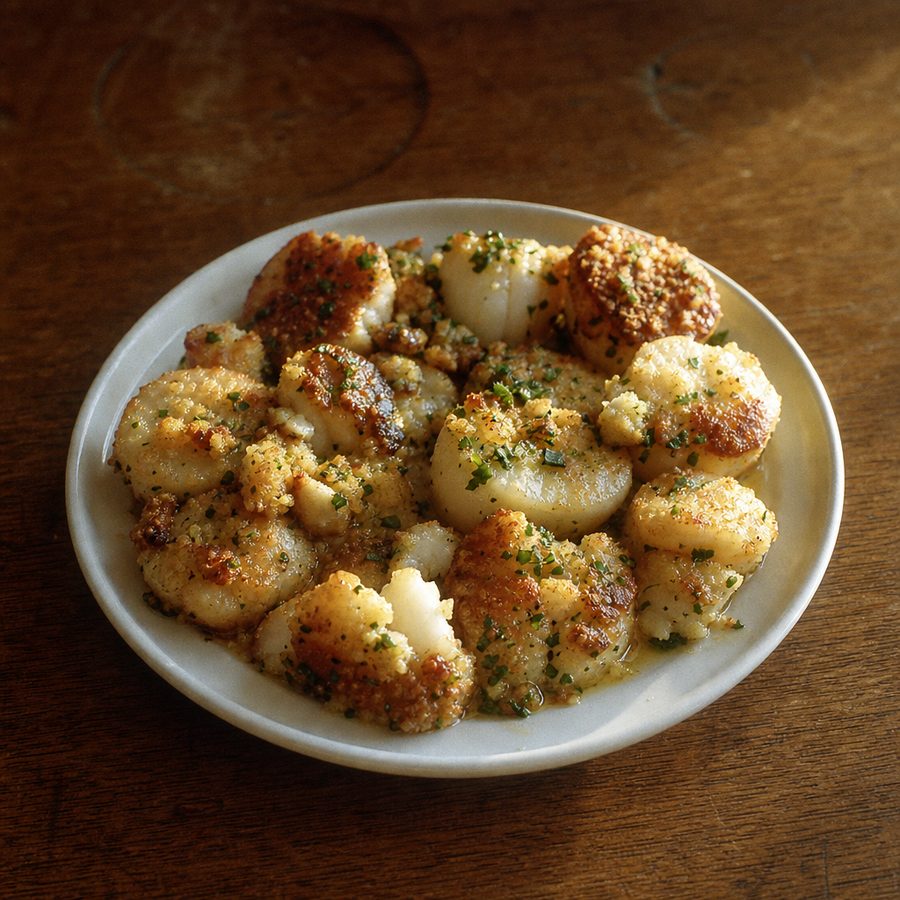
Tender scallops baked in a garlic-lemon butter under a golden almond flour crumb flecked with parsley and paprika.
Why You'll Love This Recipe
This is a small, warm seafood plate meant for sharing or for a slower, sit-down snack, and it borrows the feel of a restaurant appetizer without the fuss. Scallops are naturally sweet and cook quickly, so the whole thing comes together in the time it takes the oven to do its work. It suits anyone who wants something that feels special but stays light, and it is friendly to a cook who is a little nervous about seafood, because baking is far more forgiving than a hot skillet.
Dry the scallops well and give each one room. Dry surfaces and a little space let the tops color and the crumb crisp instead of steaming in released liquid. The garlic butter and lemon juice soak down around the scallops and season them from below, while the almond flour crumb toasts on top and gives a nutty, savory contrast to the soft, sweet flesh underneath. Paprika adds gentle warmth and a bit of color to the topping.
Clean protein and real richness, in a portion that is not large. The scallops are sweet and filling, the butter and almond flour carry flavor and a pleasant fat that helps the dish taste indulgent, and the lemon and parsley keep everything bright so it never feels heavy. It reads as a treat while still leaving you comfortable afterward, and the whole thing is in and out of the oven inside fifteen minutes, which is worth remembering on a night that turns into an occasion without warning.
Ingredients
- 16 cooked scallops, patted dry
- 1/3 cup plus almond flour
- 3 cloves garlic, minced
- 1 1/2 tbsp butter, melted
- 1 tbsp lemon juice
- 3 tbsp chopped parsley
- 1/2 tsp paprika
- 1/4 tsp salt
Instructions
- Preheat and prep the dish: Preheat the oven to 400°F (200°C). Lightly butter a small baking dish so the scallops sit in a single snug layer without crowding.
- Prep the scallops: Check each scallop for the small tough side muscle and peel it off if it is still attached. Pat the scallops very dry on all sides with paper towels; surface moisture is what keeps them from browning. Arrange them in the buttered dish, spaced slightly apart.
- Make the garlic butter: Peel and finely mince the garlic. Melt the butter, then stir in the minced garlic, lemon juice, and salt until combined. Spoon this mixture evenly over the scallops.
- Make the crumb topping: Finely chop the parsley. In a small bowl, stir together the almond flour, chopped parsley, and paprika until the flour is evenly tinted. Sprinkle the mixture over the scallops to lightly cover the tops.
- Bake: Bake for 12 to 14 minutes, until the crumb is golden and the scallops are opaque all the way through and just firm to the touch. Let them rest for a minute or two, then serve warm straight from the dish with the pan juices spooned over.
Variations
- Add gentle heat: Stir a pinch of crushed red pepper flakes or a little cayenne into the crumb for a warm, lingering kick that plays off the sweet scallops.
- Cheesy crust: Mix a spoonful of finely grated hard cheese such as Parmesan into the almond flour topping for a saltier, more browned crust. This adds dairy.
- Panko crunch: Replace the almond flour with panko breadcrumbs for a crisper, lighter crumb. This adds gluten and swaps out the nuts.
- Herb swap: Use chopped fresh dill or chives in place of the parsley for a different herbal note that leans grassy or oniony.
- Wine-brightened butter: Stir a small splash of dry white wine into the garlic butter along with the lemon juice for a deeper, slightly tangy sauce around the scallops.
Storage & Leftovers
Keep leftover scallops in an airtight container in the refrigerator for up to two days. Seafood is best eaten soon after cooking, so plan to finish them within that window for the best texture.
To reheat, warm them gently in a 300°F (150°C) oven, covered loosely, just until heated through. Avoid the microwave if you can, since high heat turns scallops rubbery quickly; low and slow keeps them tender and protects the crumb.
To get ahead, mince the garlic, chop the parsley, and stir together the almond flour crumb earlier in the day and refrigerate the parts separately. When it is time to eat, pat the scallops dry, assemble, and bake so they go to the table freshly cooked.
Notes & Tips
- Buy dry-packed scallops: Ask for dry-packed scallops rather than wet-packed ones treated with a phosphate solution. Dry scallops hold less water, so they brown better and taste sweeter instead of soapy.
- Pull the side muscle: Look for the small rectangular tab on the side of each scallop and peel it off. It turns chewy when cooked and is easy to miss until you feel it on the plate.
- Judge doneness by feel: Scallops are done when they turn opaque and feel just firm with a slight spring, like the pad of your palm. Fully hard means overcooked, so pull them the moment they set.
- Do not crowd the dish: Give each scallop a little room. Packed too tightly, they release moisture and steam instead of browning, and the crumb stays pale.
- Adjust the salt at the end: Scallops vary in natural saltiness. Taste one after baking and add just a small extra pinch of salt over the top if it needs lifting.
- Serve with something to catch the butter: Set out gluten-free crusty bread, a spoon of cauliflower mash, or a simple green salad to soak up the garlicky lemon butter left in the dish.
Nutrition & Mindful Eating
- Scallops, butter and the almond crumb are doing three separate things. The scallops stay sweet and tender, the butter pools underneath and becomes the sauce, and the crumb on top toasts into the only crunchy thing on the plate.
- Scallops are sweet in a way almost no other shellfish is, and they go from tender to rubbery in about a minute, which is why the oven is hot and the time is short. They bring dense protein and the B12 and selenium shellfish carries.
- Almond flour toasts into a sandy, golden topping that soaks up the garlic butter and still holds its texture, and the vitamin E and unsaturated fat in the almonds are part of why it browns so richly.
- Garlic and butter melted together and spooned over before baking is the smell that fills the kitchen. The butter carries the garlic into every part of the dish, and the paprika over the top gives the crumb its color as it browns.
- Lemon squeezed on at the end rather than before baking keeps its edge, and the parsley scattered over stays raw and grassy. Together they cut the butter and keep something this rich tasting bright right through the last scallop.
- As you eat, take in how little resistance a properly cooked scallop gives and how the lemon arrives just after the butter, and put the fork down between bites so a small plate feels like the meal it is.
Frequently Asked Questions
Can I use frozen scallops?
Yes. Thaw them fully in the refrigerator overnight, then pat them very dry before baking. Frozen scallops carry extra water, so drying them well is the key to a golden crumb rather than a soupy dish.
How do I know when the scallops are cooked through?
They should look opaque all the way through and feel just firm with a slight give when pressed. If they are still translucent in the center, give them another minute, but pull them before they turn hard and rubbery.
My topping stayed pale. What went wrong?
Usually it means the scallops were wet or crowded, releasing steam. Pat them thoroughly dry and space them out next time. For more color, you can finish under the broiler for a minute at the end, watching closely so the crumb does not burn.
What can I serve these with to make a fuller meal?
They pair well with a crisp green salad, roasted vegetables, or gluten-free crusty bread to mop up the garlic-lemon butter. A squeeze of extra fresh lemon at the table keeps everything bright.