
Garlic-Ghee Shrimp Over Spaghetti Squash
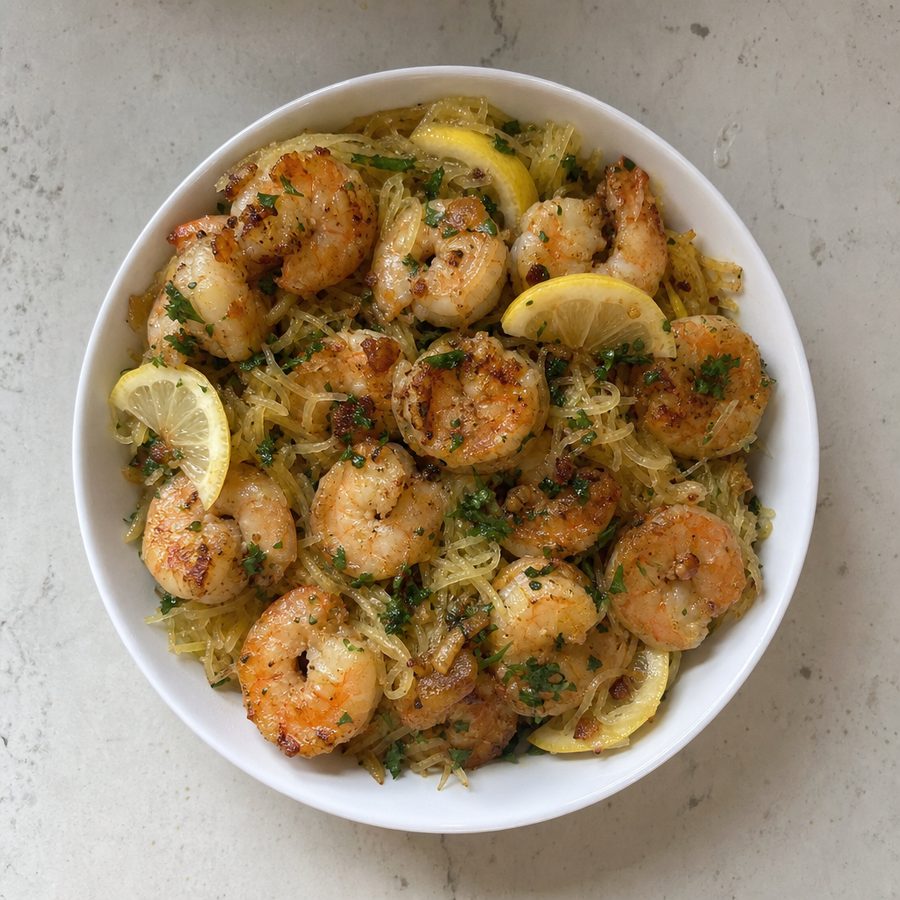
Plump shrimp sauteed in garlicky ghee with fresh lemon juice and parsley, piled over tender roasted spaghetti squash strands and finished with sliced scallions.
Why You'll Love This Recipe
The comfort of a big bowl of noodles and shrimp, with no grains on the plate. Roasted spaghetti squash gives you long, forkable strands that carry a garlicky ghee sauce the way pasta would, and the shrimp cook in the time it takes to pull the squash apart. It is gentle on the stomach, quick to pull together, and built around whole ingredients you can pronounce.
The whole dish turns on the ghee and how you treat the garlic. Ghee is butter with the milk solids removed, so it brings a rich, nutty, browned-butter flavor and a high enough smoke point to cook the garlic without scorching. Blooming the minced garlic in that warm fat for only about a minute pulls its flavor into the sauce while keeping it sweet rather than acrid, and the shrimp then cook right in that infused fat so every bite tastes of it. A final hit of fresh lemon juice cuts the richness and keeps the plate bright, while the scallions add a clean, oniony finish.
Filling, and yet nothing about it feels heavy. The shrimp make it high in protein, which keeps you full, and the spaghetti squash adds volume and fiber for far fewer carbohydrates than a bowl of pasta. The ghee and olive oil provide the fat that makes the dish taste indulgent and helps you absorb the fat-soluble nutrients in the squash and parsley. It is the kind of light-but-hearty meal that leaves you comfortable rather than sluggish.
Ingredients
- 1 large spaghetti squash, halved and seeded
- About 1 1/3 lb shrimp, peeled and deveined
- 3 tbsp ghee
- 2 tbsp olive oil
- 6 garlic cloves, minced
- 2 tbsp fresh lemon juice
- 1/2 cup chopped parsley
- 3 scallions, sliced
- 3/4 tsp salt
Instructions
- Roast the spaghetti squash: Preheat the oven to 400°F (200°C). Rub the cut sides of the halved, seeded spaghetti squash all over with the olive oil and sprinkle with some of the salt. Place the halves cut-side down on a baking sheet and roast until the shells give easily when pressed and a fork slides into the flesh with no resistance, about 35 minutes. Let the squash cool a few minutes, then drag a fork lengthwise through the flesh to pull it into long strands and set aside.
- Prep the aromatics: While the squash roasts, mince the garlic cloves, thinly slice the scallions, and roughly chop the parsley. Squeeze the fresh lemon juice and have it ready. Pat the peeled, deveined shrimp dry with paper towels so they sear rather than steam.
- Bloom the garlic in ghee: Melt the ghee in a large skillet over medium heat. Add the minced garlic and cook, stirring constantly, just until fragrant and pale gold, about 1 minute. Watch it closely so it does not brown, which would turn it bitter.
- Cook the shrimp: Add the shrimp to the skillet in a single layer and saute, turning once, until they curl into loose C-shapes and turn opaque pink throughout, about 3 to 4 minutes total. Stir in the lemon juice and the remaining salt and remove from the heat.
- Combine and serve: Add the spaghetti squash strands to the skillet and toss with the garlic shrimp and pan juices until evenly coated and warmed through. Fold in most of the chopped parsley and sliced scallions, then transfer to bowls and garnish with the rest.
Variations
- Wilt in leafy greens: Add a few handfuls of baby spinach or torn arugula to the skillet right after the shrimp finish, tossing until just wilted. It stretches the dish and adds an earthy note without changing its character.
- Mushrooms for meatiness: Slice mushrooms and saute them in the ghee before the garlic goes in, cooking until browned and their liquid has evaporated. They lend a savory, meaty depth to the sauce.
- Briny capers: Stir in drained rinsed capers along with the lemon juice for little pops of salty, briny tang that play well against the rich ghee.
- Herb swap: Trade the parsley for fresh basil, or use a mix of both, for a softer, more aromatic finish. Fold the basil in off the heat so it stays fragrant.
- Seared scallops instead of shrimp: Swap the shrimp for sea scallops, patted very dry and seared in the ghee about two minutes per side until golden and just opaque in the center. This keeps it a shellfish dish but makes it feel more special.
Storage & Leftovers
Store leftovers in an airtight container in the refrigerator for up to three days. The squash will release some liquid as it sits, so drain off any pooled water before reheating and the strands will firm back up.
Reheat gently in a skillet over medium-low heat, just until warmed through. Shrimp turn rubbery when overcooked, so pull the pan off the heat as soon as everything is hot rather than letting it bubble. A microwave works in a pinch at short intervals, but the skillet keeps the texture best. Add a fresh squeeze of lemon after reheating to wake the flavors back up.
To get ahead, roast the spaghetti squash up to two days in advance, scrape it into strands, and refrigerate it in a container. When you are ready to eat, you only need the few minutes it takes to cook the garlic and shrimp, then toss everything together warm.
Notes & Tips
- Choosing the squash: Pick a spaghetti squash that feels heavy for its size with a hard, matte shell and a dry stem still attached. A glossy skin or soft spots mean it is underripe or past its prime, and the strands will be watery.
- Halving it safely: A whole squash is tough to cut. Microwave it whole for a couple of minutes to soften the shell slightly, then trim off the stem end so you have a flat base before slicing lengthwise with your heaviest knife.
- Buy the right shrimp: Peeled and deveined shrimp save real time here. If you can find them, large or extra-large shrimp hold up best and stay juicy; smaller ones overcook in seconds. Thaw frozen shrimp fully and pat dry before cooking.
- Know when shrimp are done: Shrimp are cooked the moment they turn opaque pink and curl into a loose C. A tightly curled O-shape means they have gone too far and will be tough, so err on the side of pulling them early.
- Adjust the finish to taste: Taste before serving and decide whether it needs more lemon for brightness or a pinch more salt to pull the garlic forward. The balance of ghee and acid is what makes it sing.
- Serve it right away: This is best eaten fresh off the heat while the squash is warm and the shrimp are tender. If you need a side, a simple green salad or roasted non-starchy vegetables rounds out the plate.
Nutrition & Mindful Eating
- Squash, shrimp and garlic ghee are all this needs. The strands are mild and faintly sweet, the shrimp bring the savor, and the ghee ties the two together and coats every strand as you toss it in the pan.
- Spaghetti squash roasted cut side down steams itself inside its own shell, and the flesh separates into strands when you drag a fork through it. Roasted rather than boiled it stays firm and slightly sweet, and it carries vitamin C and potassium with it.
- Shrimp curl and turn opaque fast, so they go in last and come out the moment they do. Cooked that briefly they stay snappy and sweet, and they bring dense protein along with the selenium and iodine shellfish is known for.
- Ghee browns gently and smells nutty when it is warm, and garlic sizzled in it for less than a minute perfumes the entire pan. That combination is most of the flavor in the dish.
- Lemon, parsley and scallions all go in off the heat so they stay sharp. The acid lifts the whole pan, the parsley stays green, and the scallions keep a clean bite that runs through the mild strands of squash.
- As you eat, twirl the strands the way they ask to be twirled and notice how much slower that makes you go, then pay attention to the garlic and the lemon as you get toward the bottom of the bowl.
Frequently Asked Questions
My spaghetti squash came out watery. What happened?
Usually it was either slightly underripe or roasted a touch too long, which breaks down the flesh and releases water. Roast it just until a fork slides in with no resistance, and after scraping the strands, let them sit a minute and drain off any pooled liquid before tossing with the shrimp.
Can I use frozen shrimp?
Yes, and they work beautifully. Thaw them fully in the refrigerator or under cold running water, then pat them very dry with paper towels. Dry shrimp sear and stay juicy, while wet ones steam and turn rubbery.
What can I use instead of ghee?
Olive oil alone will work and still tastes good, though you lose the nutty, browned-butter richness that makes this dish distinctive. Increase the olive oil to make up for the missing ghee and add a little extra lemon at the end to keep it bright.
How do I keep the garlic from turning bitter?
Cook it over medium heat and stir constantly for only about a minute, just until it smells fragrant and turns pale gold. The moment it starts to brown it turns bitter, so add the shrimp promptly to bring the pan temperature down.