
Garlic Shrimp Couscous Primavera
Plump garlicky shrimp and tender zucchini, red bell pepper, and cherry tomatoes spooned over lemony whole wheat couscous and finished with fresh parsley.
Why You'll Love This Recipe
This is a bright, quick lunch for anyone who wants something light but filling. Shrimp and vegetables cook in one skillet while the couscous steams alongside, so the whole dish comes together in about half an hour with very little to clean up. It suits a busy midday break, a made-ahead work lunch, or a simple dinner when you do not want to spend the evening at the stove.
A few honest techniques stacked on each other. Searing the zucchini and pepper over medium-high heat before the shrimp go in gives them a little browning and keeps them tender rather than watery. Blooming the garlic and paprika in the hot oil for just a moment pulls their flavor into the fat that coats everything. The shrimp cook fast and are pulled the instant they turn opaque, and the lemon juice added off the heat at the end keeps its brightness instead of cooking away.
Nothing on this plate is carrying the whole load on its own. Shrimp brings protein that keeps you full, whole wheat couscous adds hearty, fiber-rich grains, and the mix of zucchini, pepper, and tomato brings color, moisture, and vitamins without weighing the bowl down. Olive oil, garlic, lemon, and parsley tie it together with a fresh, clean flavor that feels like a treat rather than diet food.
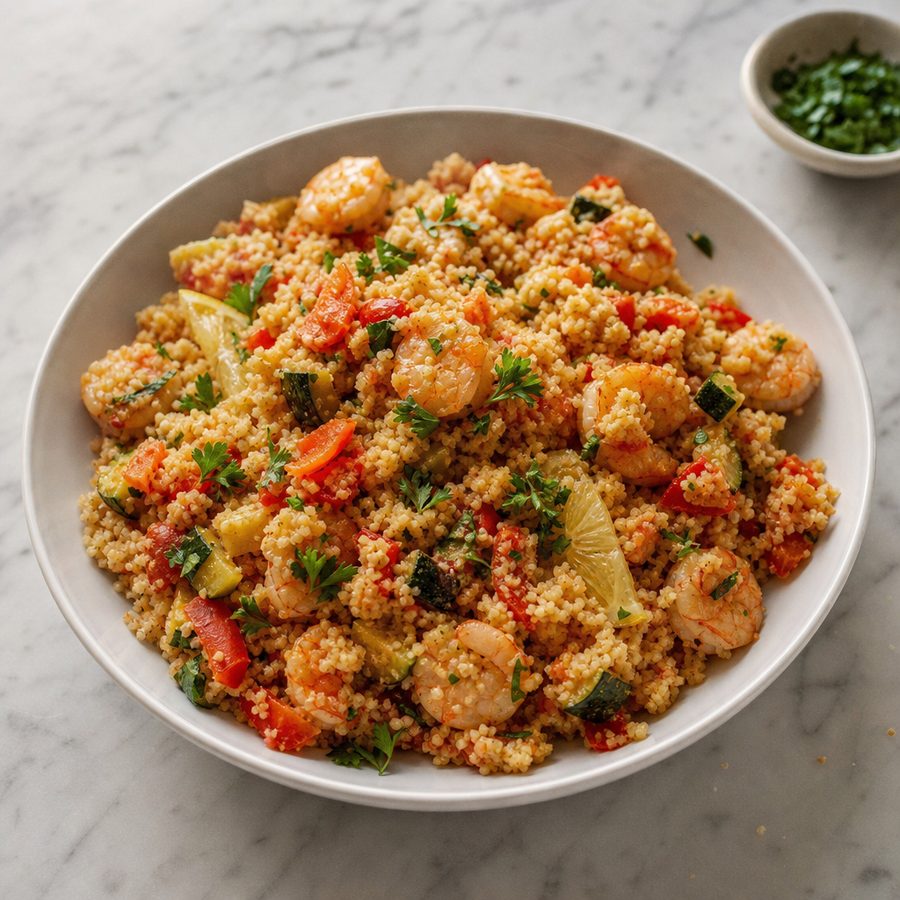
Ingredients
- 1 lb shrimp, peeled and deveined
- 3 cups cooked whole wheat couscous
- 1 zucchini, diced
- 1 red bell pepper, diced
- 1 cup cherry tomatoes, halved
- 3 cloves garlic, minced
- 3 tbsp olive oil
- 2 tbsp lemon juice
- 1/2 cup parsley, chopped
- 1 tsp paprika
- 1/2 tsp salt
Instructions
- Cook the couscous: Bring a pot of water to a boil and lightly salt it. Stir in the whole wheat couscous, cover, and remove from the heat. Let it sit undisturbed until the grains are tender and have absorbed the water, about 5 minutes, then fluff with a fork and set aside.
- Prep the vegetables and aromatics: While the couscous rests, dice the zucchini and red bell pepper into bite-size pieces, halve the cherry tomatoes, mince the garlic, and roughly chop the parsley. Pat the peeled and deveined shrimp dry with a paper towel so they sear rather than steam.
- Saute the vegetables: Heat the olive oil in a large skillet over medium-high heat. Add the diced zucchini and red bell pepper and cook, stirring occasionally, until they are just tender and beginning to brown at the edges, about 5 minutes.
- Add the shrimp: Stir in the minced garlic and paprika and cook for about 30 seconds, until fragrant. Add the shrimp in a single layer and cook, turning once, until they curl and turn opaque pink throughout, about 2 to 3 minutes total. Do not overcook or they will turn rubbery.
- Fold in the tomatoes: Add the halved cherry tomatoes and warm through for about a minute, just until they soften slightly and release a little juice.
- Assemble and serve: Spoon the shrimp and vegetables over the couscous. Finish with the lemon juice, salt, and chopped parsley, and serve warm.
Variations
- Swap the grain: Serve the shrimp and vegetables over quinoa or brown rice instead of couscous for a different texture. Both keep the dish hearty and add fiber.
- Turn up the heat: Add a pinch of red pepper flakes with the garlic and paprika for a gentle warmth that plays well against the lemon.
- Add a briny finish: Stir in a handful of pitted, halved olives or a spoonful of capers with the tomatoes for a salty, savory edge. This raises the sodium.
- Make it creamy and tangy: Crumble feta over each bowl just before serving for a salty, tangy contrast. Note that this adds dairy.
- Change the protein: Swap the shrimp for cubed boneless chicken thigh, cooking it a few minutes longer until it reaches 165°F (74°C), or use white beans, drained and rinsed, for a plant-based bowl.
Storage & Leftovers
Store leftovers in an airtight container in the refrigerator for up to three days. Keeping the couscous and the shrimp-and-vegetable mixture in separate containers, if you can, helps the couscous stay fluffy and the shrimp from overcooking on reheat.
Reheat gently to protect the shrimp, which turn rubbery if pushed too hard. Warm the couscous and vegetables in a skillet over medium-low with a splash of water to loosen them, then add the shrimp only at the very end just to heat through. A brief, covered warm-up in the microwave at reduced power also works if you stop as soon as it is hot.
To make ahead, cook the couscous and prep all the vegetables and garlic a day in advance and refrigerate them. When it is time to eat, the shrimp and vegetables cook in only a few minutes, so a made-ahead lunch is ready almost immediately. Add the lemon juice and parsley fresh at serving for the best flavor.
Notes & Tips
- Buy the right shrimp: Large or extra-large shrimp hold up best here and are harder to overcook than tiny ones. If you buy frozen, thaw them in a bowl of cold water and pat them very dry before cooking.
- Dry shrimp sear better: Wet shrimp steam and turn gray instead of browning. A quick pat with a paper towel is the difference between a good sear and a rubbery one.
- Watch for the C shape: Shrimp are done when they curl into a loose C and turn opaque pink. A tight O shape means they have gone too far, so pull them the moment they turn.
- Fresh lemon matters: Squeeze the lemon just before serving and add it off the heat. Bottled juice tastes flat, and cooking the juice dulls its brightness.
- Season at the end: Wait to add the salt until you have tasted the finished bowl, since shrimp and any briny add-ins vary in saltiness. Adjust a little at a time.
- Round out the plate: A handful of baby spinach wilted into the vegetables, or a side of crusty bread to catch the garlicky oil, turns this into a more filling meal.
Nutrition & Mindful Eating
- The shrimp, the couscous and the pan of vegetables come together in about the time it takes to boil a kettle. The shrimp brings the protein, the couscous soaks up everything left in the pan, and the zucchini, pepper and tomato keep each forkful juicy.
- Shrimp turns firm and sweet the moment it curls, which is why it goes in last and comes out fast. It is a complete protein, and it is the reason a bowl built mostly of vegetables still eats like lunch.
- Whole wheat couscous is tiny and quick, and it drinks up the garlicky olive oil around it. Each grain keeps its bran, so the fiber comes built in along with a slightly nutty chew.
- Zucchini, red bell pepper and cherry tomatoes go in hot and fast so they finish bright and only just tender. The pepper carries a lot of vitamin C, the tomatoes bring their lycopene and a little acidity, and together they keep the bowl from ever feeling dry.
- Paprika bloomed in the olive oil turns the whole pan a warm rust color, lemon goes over at the end, and the parsley is torn in raw so it stays green and grassy. Salt goes in early, where it pulls water out of the zucchini and keeps the flavors from going flat.
- As you eat, take in the lemon and parsley coming off the hot bowl before your fork moves, and give yourself the length of the meal to notice the point where you feel comfortably satisfied.
Frequently Asked Questions
Can I use frozen shrimp instead of fresh?
Yes. Thaw them first in a bowl of cold water until fully defrosted, then drain and pat them dry so they sear rather than steam. Frozen shrimp are often just as good as fresh and can be more convenient.
My couscous turned out mushy. What went wrong?
Couscous only needs to steam off the heat, not boil. Use hot water, stir it in, cover, and let it sit until the water is absorbed, then fluff with a fork. Too much water or leaving it on the heat makes it gummy.
Can I eat this cold as a leftover?
Yes. It makes a good cold grain-and-shrimp bowl straight from the fridge. Refresh it with a squeeze of lemon and a little more parsley, since chilling can mute the brightness.
Can I add more vegetables?
Absolutely. Baby spinach, asparagus, or a diced yellow squash all fit well. Add quicker-cooking greens near the end and firmer vegetables with the zucchini and pepper so everything finishes tender at the same time.