
Garlic Shrimp and Farro Bowl
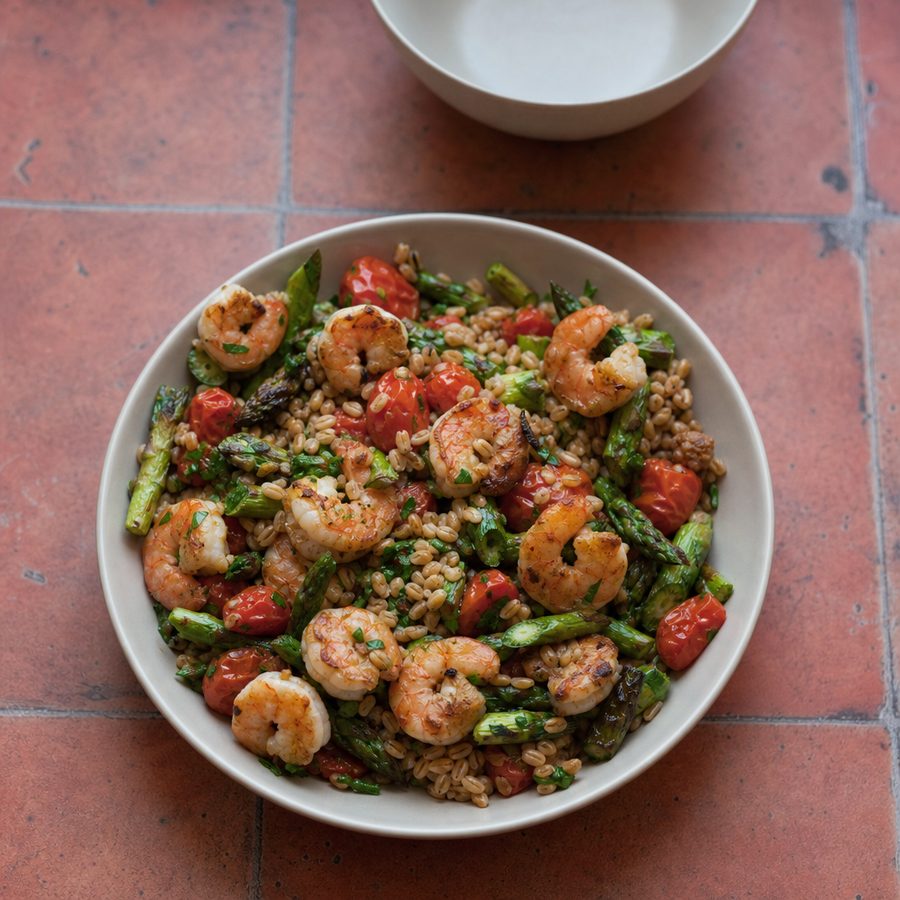
Sauteed garlic shrimp and blistered cherry tomatoes pile over nutty farro with crisp-tender asparagus, bright lemon juice, and fresh parsley.
Why You'll Love This Recipe
A midday meal that has to carry you through the afternoon without weighing you down. It pairs sweet, garlicky shrimp with a chewy whole grain and a generous amount of vegetables, so it eats like real food rather than a light salad. It suits anyone who wants a lunch that reheats well, travels in a container, and delivers a lot of protein and fiber in one bowl.
The technique is simple layering in a single skillet, and the order matters. The asparagus goes in first so it keeps a little bite, then the garlic and cherry tomatoes cook just long enough to turn fragrant and burst, releasing their juice into the pan. Because the shrimp only needs a couple of minutes to heat through, it goes in last and stays tender instead of turning rubbery. A final splash of lemon juice stirred off the heat keeps the acidity bright rather than cooked-out and flat.
Sweet blistered tomatoes, grassy asparagus, briny-sweet shrimp, and the nutty chew of farro, all tied together with garlic, olive oil, and lemon. The farro brings fiber that fills you up and slows digestion, the shrimp delivers protein, and the olive oil carries the flavor while adding good fats. The farro keeps it substantial and the garlic keeps it interesting, which is a good deal for one bowl.
Ingredients
- about 520g cooked shrimp, peeled
- 3 1/2 cups cooked farro
- 1 bunch asparagus, cut into 2-inch pieces
- 2 cups cherry tomatoes
- 4 cloves garlic, minced
- 3 tbsp olive oil
- 2 tbsp lemon juice
- 1/4 cup chopped parsley
- 1/2 tsp salt
Instructions
- Have the farro ready: This builds on farro that is already cooked, so keep it warm while the skillet comes together, since warm grains take up the pan juices and cold ones only wear them. Starting from dry instead, rinse the farro under cold running water and simmer it uncovered in salted water until the grains are tender but still pleasantly chewy, about 25 to 30 minutes, then drain it well.
- Prep the vegetables and aromatics: While the farro cooks, snap or trim the woody ends off the asparagus and cut the spears into 2-inch pieces. Mince the garlic. Rinse the cherry tomatoes and leave them whole, so they burst in the pan and give up their juice into the dish rather than drying out on a cut face. Chop the parsley and juice the lemon.
- Saute the asparagus: Heat part of the olive oil in a large skillet over medium-high heat. Add the asparagus and saute, stirring occasionally, until bright green and crisp-tender, about 4 minutes.
- Add garlic and tomatoes: Add the minced garlic and whole cherry tomatoes to the skillet. Cook, stirring, until the garlic is fragrant and the tomatoes begin to blister and slump, about 2 minutes.
- Warm the shrimp: Add the peeled shrimp along with the remaining olive oil. Cook, stirring gently, until the shrimp are pink, opaque, and heated through, about 2 to 3 minutes, and no longer, because shrimp already cooked once tighten into rubber on a second pass. Stir in the lemon juice and salt.
- Assemble the bowls: Spoon the warm farro into the bowls, top with the shrimp and vegetables, and scrape in every drop of the pan juices, since that garlicky oil is most of what the dish tastes like.
Variations
- Swap the grain: Use cooked quinoa or brown rice in place of the farro. Both keep the bowl free of gluten and give a slightly softer texture under the shrimp and vegetables.
- Change the seafood: Trade the shrimp for seared bay scallops or flaked cooked salmon. Salmon adds a richer, oilier bite; add it at the end just to warm so it does not break apart.
- Add creamy tang: Crumble feta over the finished bowls for a salty, tangy finish. This adds dairy.
- Fold in beans: Stir a handful of drained and rinsed white beans in with the tomatoes for extra plant protein and fiber, which also stretches the bowl further.
- Wilt in greens: Add a couple of handfuls of baby spinach or arugula with the shrimp and let it wilt into the pan for more volume and color.
Storage & Leftovers
Store leftovers in an airtight container in the refrigerator for up to three days. The farro holds up especially well and the flavors deepen overnight as the grains soak up the lemon and pan juices.
Reheat gently, either in a covered skillet over medium-low with a splash of water to loosen the farro, or in the microwave in short bursts, stirring between them. Stop as soon as it is warmed through so the shrimp stay tender; overheating is what makes reheated shrimp tough. A fresh squeeze of lemon after reheating wakes it back up.
To get ahead, cook the farro up to four days in advance and keep it refrigerated, and trim the asparagus and mince the garlic the night before. With the farro already done, the skillet portion comes together in under ten minutes.
Notes & Tips
- Buy the right shrimp: Peeled shrimp saves real time here. If yours still have shells, peel them and pull the dark vein along the back before cooking. Deveining is about grit and appearance, not safety, so it is optional but nicer.
- Toast the farro flavor: For deeper nuttiness, dry-toast the rinsed farro in the empty pot for a minute before adding water. It is a small step that noticeably boosts the grain's flavor.
- Do not overcook the asparagus: Pull it when it is bright green and still has snap; it keeps cooking with residual heat once the tomatoes and shrimp go in. Thin spears need closer to 3 minutes, thick ones closer to 5.
- Season at the end: Taste after the lemon and salt go in. Shrimp and any brine they carry can vary in saltiness, so adjust then rather than earlier.
- Double the farro: Cook a big batch of farro while you are at it and refrigerate the extra. Having it ready turns this into a ten-minute lunch on a busy day.
- Round out the plate: A slice of crusty bread or a spoonful of plain yogurt on the side plays well with the garlic and lemon if you want to make it more of a full meal.
Nutrition & Mindful Eating
- Farro, shrimp and asparagus are doing three different jobs in the same bowl. The grain gives it weight and chew, the shrimp goes sweet and firm in a couple of minutes, and the asparagus keeps a snap that stops the whole thing from turning soft.
- Farro is a whole grain with real bite, the kind that stays separate and a little bouncy after cooking. That intact bran is where its fiber lives, and it is what makes the bowl feel like something you chewed rather than swallowed.
- Asparagus wants a hot pan and very little time, just enough to go bright green and squeaky at the tip. It carries folate and a prebiotic fiber that the bacteria in your gut make good use of.
- Cherry tomatoes burst in the pan and turn into a loose, garlicky sauce that coats the farro, and their lycopene becomes easier for your body to take up once they have seen heat. Lemon and parsley go on at the very end so both stay sharp.
- A bowl like this holds you through a long afternoon. The protein in the shrimp and the fiber in the farro do most of that work between them, and the olive oil rounds it out while carrying the fat-soluble vitamins out of the vegetables.
- As you eat, pay attention to the way the farro pushes back against your teeth while the shrimp gives way immediately, and let that contrast slow you down enough to register when you are comfortably full.
Frequently Asked Questions
Can I use frozen shrimp?
Yes. Thaw it first by leaving it in the refrigerator overnight or running it under cold water in a colander for a few minutes, then pat it dry so it warms through cleanly instead of steaming in the pan.
My farro takes forever to cook. Is there a faster option?
Cooking time depends on the type. Pearled farro cooks fastest, semi-pearled is in the middle, and whole farro takes the longest and stays chewiest. Check the package and cook until tender but still with some bite; you can also soak whole farro ahead to shorten the time.
Can I serve this cold?
It works well at room temperature or lightly chilled, which makes it a good packed lunch. Add an extra squeeze of lemon and a drizzle of olive oil before eating, since cold dulls the seasoning.
What can I use instead of asparagus?
Green beans, broccoli florets, or zucchini all work. Cut them into similar-size pieces and saute until crisp-tender, adjusting the time so they keep some texture before the tomatoes and shrimp go in.