
Ginger-Garlic Chicken and Bok Choy Stir-Fry
Quick-seared chicken thighs and tender baby bok choy tossed with earthy mushrooms in a bright ginger-garlic coconut-aminos sauce, finished with fresh scallions and creamy diced avocado.
Why You'll Love This Recipe
This is a fast weeknight dinner for anyone who wants a hot, savory plate of protein and vegetables without a long list of ingredients or a sink full of pans. Everything cooks in one wok in under twenty minutes, and the flavors come from real aromatics rather than a bottled sauce, so it lands as satisfying and clean-tasting at the same time. It suits people who are cooking around a short list of allowed ingredients and still want dinner to feel like a treat.
High heat, and everything in its own turn. Searing the chicken first over high heat browns the surface and builds the savory, roasty flavor that seasons the whole pan. Adding the mushrooms, garlic, and ginger next lets the mushrooms give up their moisture and concentrate, while the aromatics bloom in the hot oil. The bok choy and coconut aminos go in last and for the shortest time, so the greens stay crisp-tender and the coconut aminos reduce just enough to glaze everything with a gently sweet, salty depth.
The chicken, the greens, and the avocado each pull. The chicken thighs bring rich, tender protein that keeps you full; the bok choy and mushrooms add volume, water, and fiber for very little heavy lifting; and the avocado stirred in at the end lends a cool, buttery creaminess and healthy fat that rounds out the ginger and garlic. The result is a bowl that feels hearty and complete, with contrast between the seared chicken, the snappy greens, and the soft avocado.
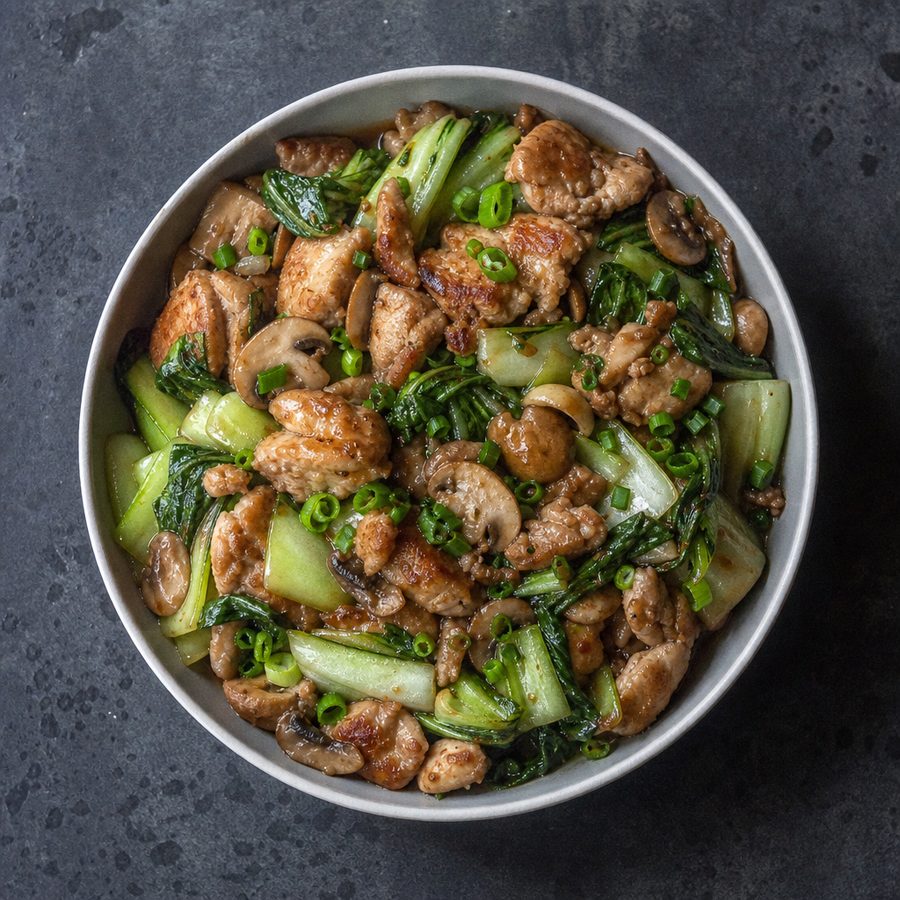
Ingredients
- 1 1/2 lb boneless chicken thighs, cubed
- 4 heads baby bok choy, quartered
- 3 cups sliced mushrooms
- 3 tbsp coconut aminos
- 4 cloves garlic, minced
- 1 1/2 tbsp grated ginger
- 4 scallions, sliced
- 3 tbsp avocado oil
- 1 small avocado, diced
Instructions
- Prep the ingredients: Cut the boneless chicken thighs into bite-size cubes. Quarter each head of baby bok choy lengthwise through the root so the leaves stay attached at the base. Slice the mushrooms, mince the garlic, and grate the ginger on a fine grater or microplane. Slice the scallions thinly, keeping the white and green parts, and set them aside. Halve the avocado, remove the pit, and dice the flesh; hold it aside until serving so it stays fresh.
- Sear the chicken: Heat the avocado oil in a wok or wide skillet over high heat until it shimmers. Add the cubed chicken in a single layer and stir-fry for 5 to 6 minutes, letting it sit undisturbed for the first minute so it browns, then tossing until the pieces are golden on the outside and cooked through with no pink in the center, about 165°F (74°C) on an instant-read thermometer.
- Cook the mushrooms and aromatics: Add the sliced mushrooms, minced garlic, and grated ginger to the wok. Stir-fry for about 3 minutes, until the mushrooms release their liquid, soften, and start to take on color and the garlic and ginger are fragrant. Keep everything moving so the garlic does not scorch.
- Add the bok choy and sauce: Add the quartered bok choy and the coconut aminos. Stir-fry for about 3 minutes, until the stems are crisp-tender and the leaves have just wilted. The bok choy should still have a little bite and bright green color. If the pan looks dry, add a splash of water to help the bok choy steam.
- Finish and serve: Turn off the heat and toss in most of the sliced scallions. Spoon into bowls, top with the diced avocado and the remaining scallions, and serve hot.
Variations
- Shrimp instead of chicken: Swap the cubed chicken thighs for peeled shrimp; add them for the sear and cook just until pink and opaque, a few minutes, so they stay tender. This adds shellfish.
- Extra greens: Add broccoli florets or halved snap peas along with the mushrooms so they have time to soften, for more crunch and volume in the bowl.
- Shiitake swap: Use sliced fresh shiitake in place of the button mushrooms for a deeper, meatier flavor; trim off and discard the tough stems before slicing.
- Citrus finish: Squeeze a little fresh lime over the finished stir-fry and add extra grated ginger at the end for a brighter, zippier sauce.
- Napa cabbage: Trade the baby bok choy for sliced napa cabbage, adding it last and cooking just until it wilts; it turns silkier while still holding a little bite.
Storage & Leftovers
Store leftovers in an airtight container in the refrigerator for up to 3 to 4 days. Keep the diced avocado separate if you can, since it browns and softens once cut; add it fresh when you serve.
Reheat in a hot skillet or wok over medium-high heat for a few minutes, stirring, so the chicken warms through and the bok choy keeps some texture. A splash of water helps loosen the pan and steam the greens. A microwave works in a pinch, but the bok choy will go softer.
To get ahead, cube the chicken, quarter the bok choy, slice the mushrooms and scallions, and mince the garlic and ginger up to a day in advance and refrigerate them in separate covered containers. With the prep done, the actual cooking takes only about fifteen minutes. Dice the avocado only when you are ready to eat.
Notes & Tips
- Have everything ready first: Stir-frying moves fast over high heat, so cube the chicken, cut the bok choy, and mince the garlic and ginger before the wok goes on. Once you start cooking there is no time to chop.
- Dry the chicken: Pat the chicken cubes dry with a paper towel before they hit the oil. A dry surface browns instead of steaming, which gives you that golden, savory crust.
- Pick firm, tight bok choy: Choose baby bok choy with crisp, pale stems and perky green leaves. Limp or yellowing heads will turn mushy in the pan and lose their fresh snap.
- Wash the bok choy well: Grit hides between the layers near the base. After quartering, swish the pieces in a bowl of cold water and shake dry so no sand ends up in the sauce.
- Adjust the salt with coconut aminos: Coconut aminos is the main source of salt and its gentle sweetness. Taste at the end and add a little more if the dish needs lift, since brands vary in saltiness.
- Choose a ripe avocado: Use an avocado that yields to gentle pressure but is not mushy. Add it off the heat so it stays cool and creamy against the hot chicken rather than turning greasy.
Nutrition & Mindful Eating
- The thighs, the mushrooms and the bok choy build this in layers. The chicken browns first and leaves its fond behind, the mushrooms soak that up and go deeply savory, and the bok choy goes in last so the stems keep their snap.
- Chicken thighs stay juicy in a hot pan and take color better than most cuts, which is where the roasted, almost caramelized edge of this dish comes from. They carry protein along with the iron and zinc that darker poultry meat brings with it.
- Mushrooms give up their water, shrink, and only then start to brown, and that is the point where they turn from spongy to meaty. They carry natural glutamates that make the sauce taste savory and full, and they bring B vitamins along with that depth.
- Ginger and garlic hit the oil first and the smell fills the kitchen almost immediately. Coconut aminos goes in behind them and reduces into a thin, sweet-savory glaze, and the scallions are scattered raw at the end for a sharp green finish.
- Avocado sliced over the hot pan softens slightly and turns everything silky. Its fat is what helps your body take up the vitamins A and K in the bok choy, and it is a good part of why a plate of stir-fry holds you well into the evening.
- As you eat, catch the ginger first, then the crunch at the base of the bok choy, then the avocado smoothing it all out, and let those three things arrive one at a time rather than all at once.
Frequently Asked Questions
Can I use chicken breast instead of thighs?
Yes. Chicken breast works, but it dries out faster, so cut it into even cubes and pull it off the heat as soon as it reaches 165°F (74°C) and is no longer pink inside. Thighs stay more forgiving and juicy over high heat.
My bok choy turned soggy. What went wrong?
Usually the heat was too low or the pan was crowded, so the greens steamed instead of stir-frying. Keep the heat high, add the bok choy last, and cook it just until the stems are crisp-tender and the leaves have barely wilted.
What does coconut aminos taste like, and can I use something else?
Coconut aminos is a savory, slightly sweet sauce that stands in for the salty-umami role soy would normally play, with a milder, gentler edge. It is what gives this dish its glaze, so it is worth using here rather than substituting.
Why add the avocado at the end instead of cooking it?
Avocado is meant to stay cool and creamy as a finishing touch. Cooking it would turn it soft and slightly bitter, so dice it fresh and add it off the heat right before serving.