
Ginger Shrimp and Broccoli Stir-Fry
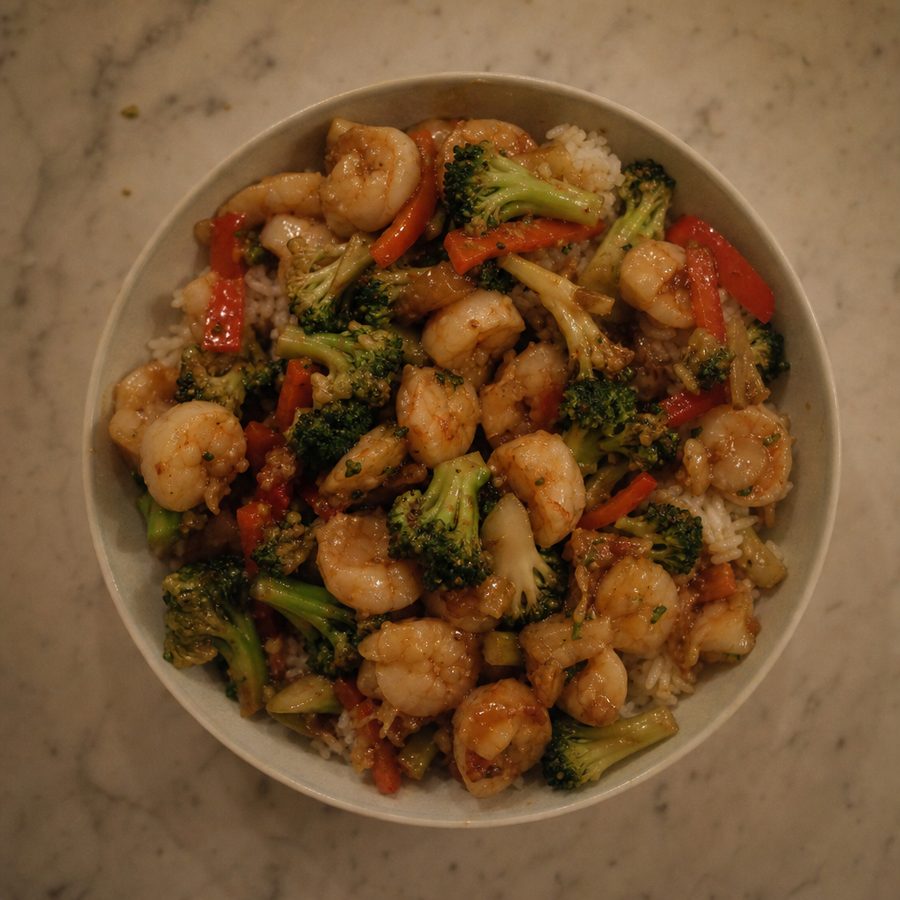
Quick-seared shrimp tossed with crisp broccoli, red bell pepper, and snap peas in a savory ginger-garlic sauce, finished with fresh scallions and served over brown rice.
Why You'll Love This Recipe
This is a fast one-pan dinner for anyone who wants a real meal on the table in the time it takes the rice to finish. It leans on shrimp and a generous pile of vegetables, so it comes together quickly on a weeknight yet feels substantial. It suits a cook who wants big flavor without a long ingredient list or a sink full of pots.
The pan has to be hot and dry. Cooking the broccoli, pepper, and snap peas fast over a hot pan keeps them crisp and bright instead of soft and watery, and it lets the broccoli pick up a little browning that deepens its flavor. Adding the garlic and ginger near the end keeps them fragrant rather than scorched, and stirring in the soy sauce and coconut aminos at the finish gives a savory, lightly sweet glaze that clings to everything. Since the shrimp are already cooked, they go in last and only warm through, which keeps them tender.
The dish is satisfying because it balances protein from the shrimp, fiber from the broccoli, snap peas, and bell pepper, and slow-digesting whole grains from the brown rice. That combination keeps you full and steady rather than heavy. The ginger and garlic bring warmth, the scallions add a fresh bite, and the whole bowl eats light while still being dinner. Five cups of broccoli across four servings is also a great deal of vegetable for a dish nobody would describe as a salad.
Ingredients
- 1 1/3 lb cooked shrimp, peeled
- 5 cups broccoli florets
- 1 large red bell pepper, sliced
- 1 1/2 cups snap peas
- 4 garlic cloves, minced
- 1 tbsp grated fresh ginger
- 3 tbsp soy sauce
- 2 tbsp coconut aminos
- 3 tbsp avocado oil
- 3 scallions, sliced
- 3 cups cooked brown rice
Instructions
- Start with cooked brown rice: This wants three cups of cooked brown rice. From dry, rinse it until the water runs clear and simmer it covered for 40 to 45 minutes, until the grains are tender and the water is absorbed, then leave it covered off the heat while you cook the stir-fry. Rice that rests covered finishes steaming itself, which is what keeps the bottom layer from being wet.
- Cut everything before the pan goes on: Mince the garlic, grate the ginger, cut the broccoli into bite-size florets, slice the pepper into thin strips, trim the snap peas, and slice the scallions, keeping those separate for the end. Peel the shrimp if they still have shells. A stir-fry runs about six minutes from start to finish, so anything still on the board when the pan is hot is already too late.
- Heat the pan until the oil thins: Warm the avocado oil in a large wok or skillet over high heat until it shimmers and thins out but is not smoking, about 1 minute. Avocado oil is here rather than olive because it takes this heat without breaking down, and the heat is what gives you char on the broccoli instead of a pan of steamed vegetables.
- Stir-fry the vegetables 4 to 5 minutes: Add the broccoli, bell pepper, and snap peas and stir-fry, tossing frequently, for 4 to 5 minutes, until the colors are bright and the vegetables are crisp-tender with a little char on the broccoli. Let them sit still for a few seconds between tosses, since constant motion keeps the pan too cool for anything to brown.
- Aromatics 30 seconds, then the shrimp: Push the vegetables to one side, add the garlic and ginger to the clear space, and stir for about 30 seconds, until fragrant. Add the shrimp with the soy sauce and coconut aminos and toss everything for 1 to 2 minutes, just until the shrimp are hot through and the sauce coats the pan. The shrimp are already cooked, so they only need warming, and longer than that turns them rubbery.
- Scallions off the heat, over the rice: Take the pan off the heat, scatter the sliced scallions over the top, and serve the stir-fry over the brown rice. The scallions go on raw and last, because thirty seconds in that pan would collapse them into the sauce and their whole job is a sharp, fresh bite against everything else.
Variations
- Add heat: Stir in a spoonful of chili-garlic sauce or a pinch of red pepper flakes with the garlic and ginger for a spicy kick.
- Swap the grain: Serve over cauliflower rice for a lighter, lower-carbohydrate base, or over rice noodles for a different texture.
- Nutty finish: Drizzle with a little toasted sesame oil off the heat and garnish with toasted sesame seeds; this adds seeds and their oil.
- More vegetables: Add sliced mushrooms, shredded carrots, or baby bok choy along with the broccoli to stretch the vegetable side of the plate.
- Citrus lift: Add a squeeze of fresh lime juice and some grated zest at the finish for a brighter, tangier sauce.
Storage & Leftovers
Store leftovers in an airtight container in the refrigerator for up to three days. Keep the stir-fry and rice together or separate, whichever you prefer; both hold well.
Reheat gently to protect the shrimp, which turn rubbery if overheated. Warm a portion in a skillet over medium heat with a splash of water to loosen the sauce, tossing just until hot through, or microwave in short bursts and stir between them. Stop as soon as the shrimp are warm.
To get ahead, cook the brown rice and mince the garlic and ginger up to a few days in advance, and cut the broccoli, pepper, and snap peas and keep them in the refrigerator. With the prep done, the stir-fry itself takes only a few minutes at the stove.
Notes & Tips
- Use fresh ginger: Fresh grated ginger gives a brighter, sharper warmth than the jarred paste or dried powder; peel it with the edge of a spoon and grate it on a fine grater or microplane.
- Dry the shrimp: Pat the shrimp dry with a paper towel before they go in the pan so they warm and glaze rather than steam in their own moisture.
- Do not crowd the pan: If your skillet is small, cook the vegetables in two batches; a crowded pan traps steam and leaves the broccoli soft instead of crisp-tender.
- Adjust the saltiness: The soy sauce and coconut aminos carry the salt, so taste before adding any more; if you want it saltier, add soy sauce a little at a time, and if it is too salty, a squeeze of lime or a splash of water balances it.
- Pick firm broccoli: Choose broccoli with tight, dark-green florets and firm stalks; yellowing heads are past their prime and turn mushy when cooked.
- Double the batch: The vegetables and sauce scale up easily for meal prep, but cook them in a wide pan or in batches so the high heat can still crisp them rather than steam them.
Nutrition & Mindful Eating
- Shrimp, a pan of green vegetables and a bowl of brown rice make this whole dinner. The shrimp cooks in almost no time, the vegetables stay crisp because they are barely in the pan, and the rice underneath catches everything that runs off.
- Shrimp goes from translucent to firm and sweet in a moment, and pulling it out right then is the difference between tender and rubbery. It is dense in protein, and it is why a plate this full of vegetables still eats like a real dinner.
- Brown rice keeps its bran, which gives it a chewy, slightly nutty character and a fiber that stays with you. It is also the part of the plate that catches the sauce, and it is better for it.
- Broccoli takes a little char at the florets, snap peas stay squeaky, and red bell pepper goes sweet and glossy while holding its color. Between the three of them, the vitamin C and the crunch arrive in the same bite.
- Ginger and garlic go into the hot oil first, then soy sauce and coconut aminos hit the pan and reduce into a glossy, sweet-savory coat. Scallions go over the top raw, still sharp, and that is the note you taste last.
- As you eat, listen for the crunch of the vegetables against the soft rice and let the ginger warm the back of your throat, taking the meal slowly enough to notice when you have had enough.
Frequently Asked Questions
Can I use raw shrimp instead of cooked?
Yes. Add raw peeled shrimp in place of the cooked shrimp and cook them a little longer, about 2 to 3 minutes, tossing until they turn pink and opaque and curl into a loose C shape. Avoid cooking them past that point, or they will toughen.
Can I use frozen broccoli?
Fresh gives the best crisp-tender texture, but frozen works in a pinch. Thaw and pat it very dry first, since excess water will steam the pan and keep the florets from browning.
What is coconut aminos, and can I leave it out?
Coconut aminos is a savory, slightly sweet sauce made from coconut sap; it rounds out the soy sauce with a touch of sweetness. If you do not have it, you can use all soy sauce, though the sauce will taste a bit sharper and saltier, so add it gradually and taste.
How do I keep the vegetables from turning soggy?
Keep the heat high, do not overcrowd the pan, and stir-fry just until the broccoli is bright green and crisp-tender. Cooking in batches in a wide pan lets steam escape so the vegetables sear instead of stew.