
Goat Cheese Baked Egg Bites
Soft, custardy baked egg bites shot through with tangy soft goat cheese and just enough salt to make the flavor sing.
Why You'll Love This Recipe
These are simple, protein-rich bites for anyone who wants a savory snack that holds up in the fridge and travels well. There is almost nothing to them, just eggs, soft goat cheese, and salt, which makes them a reliable option when you want real food fast, without a plate or a fork. They suit a mid-morning lull, a post-workout bite, or a small savory something in place of a sweet one.
A well-beaten egg base, with the soft goat cheese folded in as loose crumbles rather than blended smooth. Whisking the eggs thoroughly builds an even, tender custard, while leaving the cheese in pieces creates creamy, tangy pockets that stay distinct through the bake. The reserved crumbles on top brown slightly in the oven, giving each bite a savory, faintly caramelized cap against the soft interior.
They satisfy because eggs and goat cheese together are rich in high-quality protein and fat, the combination that keeps a snack from feeling empty an hour later. The texture is soft and creamy without being heavy, and the tang of the goat cheese keeps each bite interesting so a couple feels like enough. Warm or cold, they deliver flavor and staying power from a very short ingredient list.
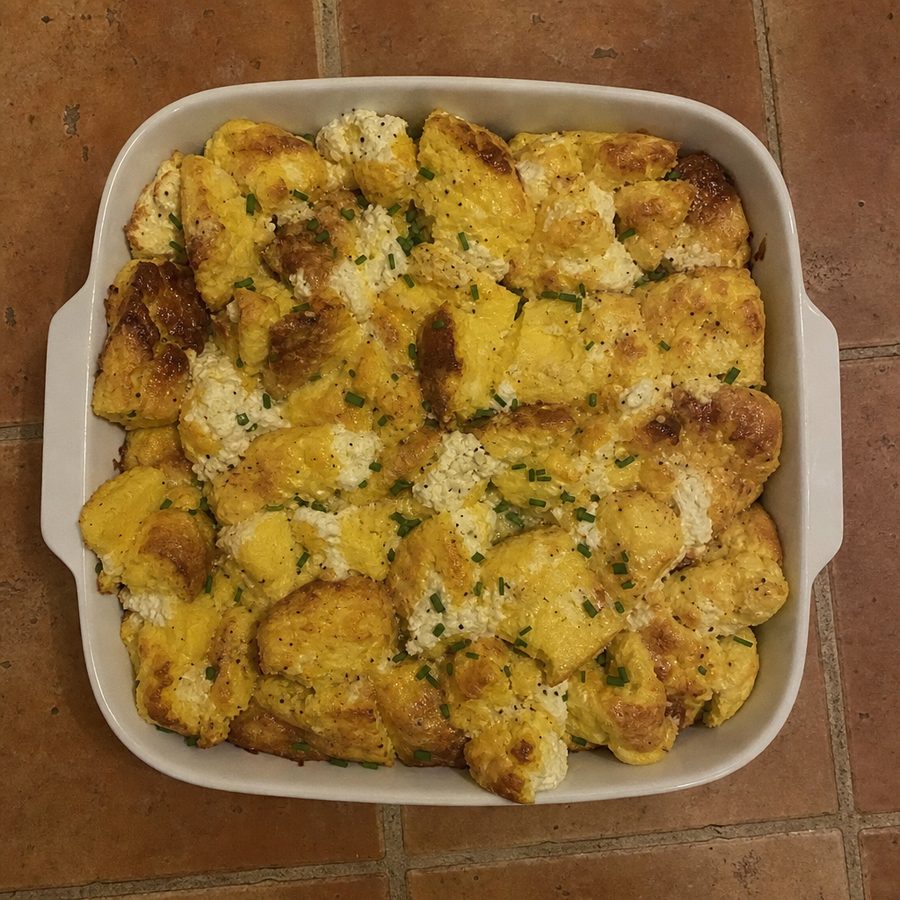
Ingredients
- 5 large eggs
- about 3 1/2 oz soft goat cheese (100 g)
- a pinch of salt
Instructions
- Preheat and prepare the tin: Preheat the oven to 350°F (175°C). Grease the muffin cups generously with softened butter or a neutral oil, coating the bottoms and all the way up the sides so the bites release cleanly once baked.
- Whisk the eggs: Crack the eggs into a bowl, add the salt, and whisk briskly for about a minute until the yolks and whites are fully blended and the mixture is uniform and slightly frothy. A smooth, well-beaten base gives you an even, tender set.
- Fold in the goat cheese: Crumble most of the soft goat cheese into the eggs in small pieces and stir gently just to distribute it. Leave the pieces intact rather than beating them smooth so you get creamy pockets of cheese throughout the bites.
- Fill the cups: Divide the egg-and-goat-cheese mixture evenly among the greased cups, filling each about three-quarters full to leave room for a slight rise. Crumble the reserved goat cheese over the tops so each bite bakes with a browned, tangy cap.
- Bake: Bake for 16 to 18 minutes, until the tops are set to the touch, lightly golden, and no longer wet in the center; a bite jiggled gently should hold firm rather than slosh. Avoid overbaking, which dries them out and can make them puff and then sink.
- Cool and release: Let the bites cool in the tin for 5 minutes so they finish setting and firm up. Run a small knife or offset spatula around each one and lift it out.
Variations
- Sharper, firmer bite: Fold in some grated aged hard cheese along with the goat cheese for a saltier, more pronounced flavor and a slightly firmer set. This adds more dairy.
- Bacon: Fold cooked, crumbled bacon into the egg mixture before filling the cups for a smoky, savory contrast to the tangy cheese. This adds pork.
- Smoked salmon: Stir flaked smoked salmon into the base for a richer, brinier bite that pairs naturally with goat cheese. This adds fish.
- Extra-rich texture: Whisk an additional egg yolk into the base for a softer, more custardy interior and a deeper color. This adds more egg.
- Ham-lined cups: Press a thin slice of ham into each greased cup before filling, so the bites bake up with a savory, slightly crisp wrapper. This adds pork.
Storage & Leftovers
Keep the cooled bites in an airtight container in the refrigerator, where they hold their texture and flavor for up to four days. Let them come to room temperature for a few minutes before eating, or enjoy them cold straight from the container.
To reheat, warm them in a 300°F (150°C) oven or toaster oven for a few minutes until just heated through, which keeps them tender. A short, gentle burst in the microwave also works; stop as soon as they are warm, since eggs turn rubbery when overheated.
For make-ahead, bake a batch at the start of the week and portion them into grab-and-go containers. They also freeze well: cool completely, freeze in a single layer, then transfer to a sealed bag and reheat from frozen in a low oven until warmed through.
Notes & Tips
- Choose a soft, spreadable goat cheese: Reach for a fresh log-style goat cheese that crumbles and melts easily, not a dried, aged one. The softer the cheese, the creamier the pockets inside each bite.
- Grease more than you think you need: Egg clings to metal, so coat the cups thoroughly, sides included. If you own silicone molds or paper liners, they make release effortless.
- Bring the eggs to room temperature: Eggs that have sat out for ten or fifteen minutes whisk more smoothly and bake more evenly than cold ones straight from the fridge.
- Judge doneness by the tops: They are ready when the centers no longer look wet and a gentle jiggle shows a firm, set surface rather than a loose slosh. Pull them before they dome and crack for the softest texture.
- Adjust the salt to the cheese: Goat cheeses vary in saltiness, so taste your cheese first; if it is very tangy and salty, go lighter with the added salt in the eggs.
- Double the batch for the week: These scale easily and store well, so it is worth filling every cup you have. A larger batch gives you grab-and-go protein for several days with no extra effort.
Nutrition & Mindful Eating
- Eggs and goat cheese are the entire recipe, and they suit each other. The eggs set into something soft and custardy, the cheese stays in distinct creamy pockets, and between them you get complete protein in a form small enough to eat with one hand.
- Eggs baked gently rather than fast come out tender all the way to the edge. The yolks are where the color and most of the richness live, and they carry choline and the vitamins A and D along with it.
- Goat cheese is bright and tangy in a way that makes you notice the eggs around it, and it softens into creaminess rather than pulling into strings. It brings protein and calcium of its own into something this small.
- They rise high in the oven and settle again as they cool, which is exactly what should happen and where that tender center comes from. The salt is quiet but essential, drawing the sweetness out of the eggs and sharpening the tang of the cheese.
- A couple of these hold you longer than you would expect for their size, and the protein and fat in the eggs and cheese are doing that work together. It is why they land well at three in the afternoon and still feel like you ate something.
- As you eat, press one with your teeth and find the warm pocket of cheese underneath, and let something this small still be a thing you sit down for rather than eat standing up.
Frequently Asked Questions
Why did my egg bites puff up and then sink?
That usually means they baked a touch too long or too hot. Eggs puff as they set and deflate slightly as they cool, but a big collapse points to overbaking; pull them as soon as the centers are set and no longer wet.
Can I make these in a mini muffin tin?
Yes. Fill the smaller cups about three-quarters full and start checking several minutes earlier, since the reduced volume sets faster. Look for the same firm, lightly golden tops.
Why did the bites stick to the pan?
Egg grips bare metal readily, so thorough greasing up the sides is essential. Letting them rest in the tin for five minutes before running a knife around each one also helps them release in one piece.
Can I eat these cold, or do they need reheating?
They are good either way. Cold from the fridge they are firm and creamy and travel well; a brief warm-up in a low oven brings back the just-baked softness if you prefer them warm.