
Greek Salad Feta and Farro Bowl
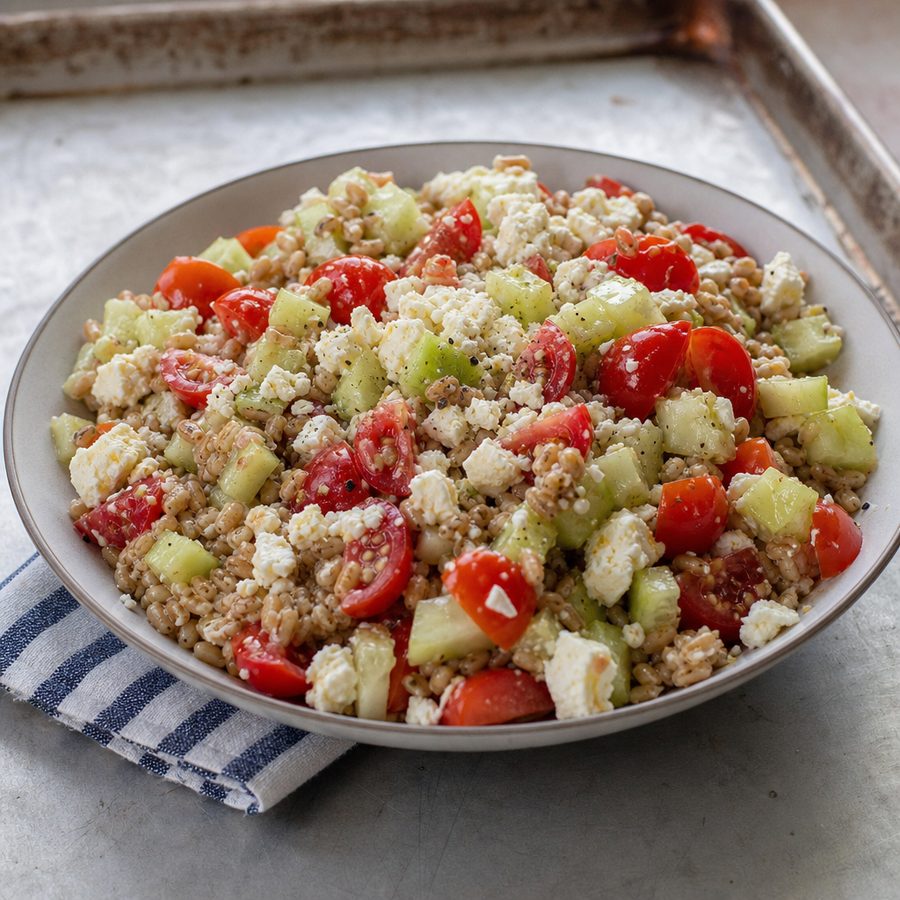
Chewy farro tossed with crisp cucumber, halved cherry tomatoes, thin-sliced red onion, and briny crumbled feta in a bright lemon-and-oregano olive oil dressing.
Why You'll Love This Recipe
This is a cold grain bowl built for anyone who wants a lunch that eats like a real meal rather than a side salad. It comes together in one bowl, travels well, and holds up for hours without wilting, which makes it a reliable option for people packing food to eat at a desk or on the go. It is filling enough to stand alone yet light enough that you do not feel weighed down afterward.
Contrast is what this bowl is for. Cooking the farro until it is tender but still chewy gives the bowl a backbone with real bite, and cooling the grain before dressing keeps the vegetables crisp instead of steaming them soft. The dressing is deliberately simple, letting the lemon juice sharpen the briny feta while the dried oregano ties the tomatoes, cucumber, and onion together into one bright, savory whole.
Chewy grain, juicy tomato, cool cucumber, and salty cheese in every forkful, so no single texture dominates. The farro brings fiber and staying power, the olive oil and feta add richness that keeps you full, and the raw vegetables deliver water and crunch. Together they make a bowl that feels substantial and nourishing without being heavy. Dressed farro also holds up overnight in a way that a leafy salad never does, which makes this one of the better bowls to build on a Sunday.
Ingredients
- 4 cups cooked farro
- 1 1/3 cups crumbled feta
- 2 cucumbers, diced
- 2 cups cherry tomatoes, halved
- 1/2 small red onion, thin sliced
- 4 tbsp olive oil
- 2 tbsp lemon juice
- 1 tsp dried oregano
Instructions
- Cook the farro: Rinse the farro under cold water, then simmer it in a pot of water until the grains are tender but still chewy, about 25 to 30 minutes. Drain well and spread it out to cool to room temperature so it does not steam the vegetables later.
- Prep the vegetables: While the farro cools, dice the cucumbers into bite-size pieces, halve the cherry tomatoes, and slice the red onion as thinly as you can. If the onion tastes sharp, soak the slices in cold water for a few minutes and drain.
- Whisk the dressing: In a large bowl, whisk together the olive oil, lemon juice, and the dried oregano until the mixture looks slightly thickened and evenly blended.
- Fold in grain and vegetables: Add the cooled farro, cucumber, cherry tomatoes, and red onion to the bowl. Fold everything together until each piece is lightly coated in the dressing.
- Finish with feta: Crumble the feta over the top and fold it in gently so the pieces stay intact rather than smearing. Taste, then brighten it with more lemon juice if you like; the feta already carries plenty of salt.
Variations
- Herb garden: Fold in a generous handful of chopped fresh dill, mint, or parsley along with the vegetables for a greener, more fragrant bowl.
- Olive and pepper: Add pitted Kalamata olives and diced jarred roasted red peppers for a saltier, sweeter Mediterranean-leaning version with more color.
- Creamy chickpea: Stir in drained and rinsed canned chickpeas for extra plant protein and a softer, creamier bite alongside the chewy farro.
- Peppery green: Toss in a few handfuls of baby arugula or chopped romaine just before serving to bulk it up with fresh greens and a peppery edge.
- Grain swap: Use cooked pearl barley or wheat berries in place of the farro when you want a similar chew from a different whole grain.
Storage & Leftovers
Stored in an airtight container in the refrigerator, this bowl keeps well for about three to four days. The flavor actually deepens after the first several hours as the farro soaks up the lemon and oregano, so a next-day portion often tastes even better than a fresh one.
This dish is meant to be eaten cold or at room temperature, so there is no reheating needed. If it has been in the refrigerator, let it sit on the counter for ten to fifteen minutes to take the chill off, then stir and taste. A fresh squeeze of lemon and a pinch of salt will wake it back up.
To make it ahead, cook and cool the farro and prep the vegetables up to a day in advance, storing them separately. Hold off on adding the feta and dressing until a few hours before you plan to eat so the cheese stays firm and the cucumber stays crisp.
Notes & Tips
- Buy the right farro: Pearled farro cooks fastest and turns tender in under half an hour, while whole or semi-pearled farro takes longer and needs a soak; check the package so you can time it right.
- Cool the grain fully: Warm farro will steam the cucumber and onion and dull their crunch, so spread it on a plate or sheet to cool quickly before it meets the vegetables.
- Choose block feta: Feta sold in a block packed in brine has more flavor and a firmer, creamier texture than pre-crumbled tubs, and it crumbles cleanly with your fingers.
- Tame the onion: If raw red onion is too sharp for you, soak the slices in cold water for a few minutes before adding them; it softens the bite without losing the color.
- Salt with a light hand: The feta is already salty, so taste before adding more salt at the end and let the cheese do most of the seasoning work.
- Serve it alongside: This bowl pairs naturally with warm pita, a bowl of lemony lentil soup, or grilled vegetables when you want to stretch it into a larger spread.
- Serve it warm with chickpeas: Leave out the red onion, warm the cooked farro in a skillet with olive oil and two cloves of minced garlic, then toss it with a drained can of chickpeas along with the cucumber and tomatoes. Serve it warm or at room temperature. The numbers above are for the version without chickpeas.
Nutrition & Mindful Eating
- The tomatoes do more work here than they look like they do. Salted and left to sit, they let go of their juice, the farro drinks it up along with the oil and lemon, and the bowl ends up tasting of tomato rather than of dressing.
- Farro is the grain that survives a wet bowl. It holds its chew even after an hour in the dressing rather than going soft, and the bran keeps its fiber somewhere you can actually feel it in the bite.
- Red onion sliced into thin half moons and left in the lemon juice loses its sharpness and turns sweet and pink at the edges, bringing prebiotic fibers along with that mellowed bite.
- Feta broken into large pieces by hand gives you a whole mouthful of it now and then, salty and slightly chalky against the grain, and a little calcium and protein come with it.
- Dried oregano and good olive oil are the finish, poured over the top rather than whisked in, and cucumber cut thick keeps every few bites cool and watery against all that salt and grain.
- As you eat, keep an eye on how much tomato the farro has taken on, and finish slowly enough to feel full before the bowl is empty rather than after.
Frequently Asked Questions
Can I make this the night before for lunch?
Yes, and it holds up well. For the best texture, keep the feta and dressing separate and fold them in the morning, though a fully assembled bowl will still taste good and even more flavorful the next day.
My farro turned out mushy. What went wrong?
It was likely simmered too long or the wrong type was used. Cook it just until the grains are tender with a distinct chew, drain immediately, and cool it so it stops cooking; pearled farro especially can go soft fast.
Is this bowl meant to be served warm or cold?
It is designed to be eaten cold or at room temperature, which keeps the cucumber crisp and the feta firm. Let a refrigerated portion sit out for a few minutes and refresh it with lemon before eating.
How do I keep it from tasting bland?
Blandness usually means it needs acid or salt. Add a fresh squeeze of lemon juice first, then a small pinch of salt, and taste again; because the feta carries a lot of salt, adjust in small increments.