
Kalamata and White Bean Tapenade
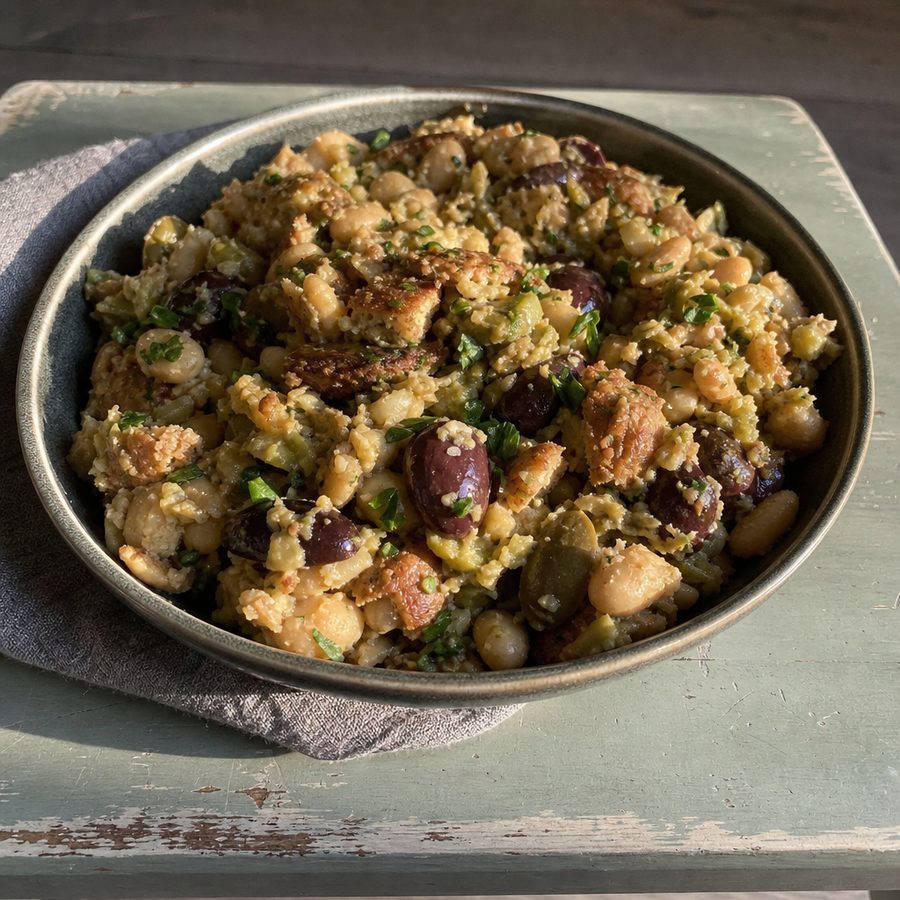
This tapenade blends briny kalamata olives with creamy white beans, lemon, and olive oil into a savory Mediterranean spread that comes together in about ten minutes.
Why You'll Love This Recipe
This is a spread that rewards being made early. Mixed on a Sunday and left in a covered jar, it is better by Tuesday: the olive oil carries the garlic and the lemon down into the beans, the parsley settles in, and the sharp corners that stick out on the first afternoon knit together into something round and savory. White beans are the reason it can do that. They are the quiet backbone here, soft enough to turn creamy on their own and mild enough to take on whatever is sitting next to them, which is also what keeps a small scoop of it feeling like food rather than a garnish.
Kalamata olives and olive oil bring the flavor that defines this spread, and they bring more than taste. Both carry the polyphenols found across olive-based foods, part of what makes olives such a steady presence in Mediterranean kitchens. The lemon and garlic sharpen everything, cutting through the richness so each bite stays lively. A spoonful carries a lot of flavor, which is part of what makes olives so useful in everyday cooking.
What I like most is how much this spread does with so few ingredients. Beans, olives, olive oil, lemon, parsley, and garlic add up to something layered and satisfying without a long list or any fuss. You can spread it on toast, spoon it over roasted vegetables, or scoop it with cucumber. It keeps well and travels easily, which makes it an easy thing to have ready.
Ingredients
- 1 can cannellini beans, drained
- 3/4 cup kalamata olives
- 3 tbsp olive oil
- 1 1/2 tbsp lemon juice
- 1/3 cup parsley
- 2 cloves garlic
Instructions
- Drain the beans and rinse them properly: Tip the can of cannellini beans into a sieve and rinse them under cold water for a good 15 seconds, until the water runs clear and the foam stops. The liquid in the can is starchy and carries a faintly tinny taste that goes straight into a spread this simple, where there is nothing to hide behind. Shake the sieve dry afterward, because water left on the beans thins the tapenade and you cannot take it back out.
- Pit the olives and then check them again: Press each olive between a finger and thumb and pull the pit out, then run your fingers through the whole bowl a second time. Olives sold as pitted regularly are not, and a single pit will chip a processor blade or a tooth, neither of which is a good afternoon. Peel the garlic while you are there and pick the parsley leaves from their stems, since the stems stay stringy however long the machine runs.
- Chop the olives and garlic before the beans go in: Put the pitted olives and the garlic in the processor on their own and pulse eight or ten times, about 10 seconds in all, until they are chopped into coarse flecks. Doing this first is what gives the finished spread its texture: added at the same time as soft beans, the olives simply blend away and you get an evenly colored paste that tastes of everything at once instead of a spread with olive running through it.
- Add the beans, oil, and lemon, and keep it coarse: Add the drained beans, the olive oil, and the lemon juice, then pulse in short bursts, scraping the sides down once. Eight to ten pulses, about 10 seconds in all, is usually enough. Stop while there are still visible pieces of bean in it, because this is a tapenade rather than a hummus and the difference is entirely in the texture. If it seems stiff, another spoonful of olive oil loosens it without watering the flavor down.
- Fold the parsley in by hand and taste it last: Take the bowl off the machine and stir the chopped parsley through with a spoon until it is evenly flecked. Parsley pulsed in the processor bruises and tints the whole spread a dull green, where folding it in at the end leaves bright flecks you can see. Now taste it, and taste it before you reach for salt: olives vary enormously from jar to jar, and this often needs none at all. A squeeze more lemon is the usual answer instead.
Variations
- Green olive version: Swap in green olives for a brighter, more peppery bite that leans a little sharper.
- Sun-dried tomato: Add two chopped sun-dried tomatoes for a sweeter, deeper red-tinged spread.
- Caper kick: Stir in a teaspoon of rinsed capers for extra brine and a classic tapenade edge.
- Herb shift: Use fresh basil or oregano in place of parsley to match a specific dish or mood.
- Chili warmth: Add a pinch of crushed red pepper flakes for gentle heat behind the salt.
Storage & Leftovers
Store the tapenade in an airtight container in the fridge for up to five days. The olives and olive oil help it hold well, and the flavor often deepens after a day as the garlic settles in. Stir before serving if any oil separates to the top.
Freezing works better here than with most bean spreads because the olives keep their character. Freeze in a small container for up to two months, leaving a little headspace, then thaw overnight in the fridge and stir well before you serve it.
For packing along to work or a picnic, keep the tapenade cold and bring a small spoon for stirring. A thin drizzle of olive oil over the surface before sealing helps guard the top layer and keeps everything tasting fresh.
Notes & Tips
- Buy pitted: I buy pitted kalamata olives to save time, but I always double-check for a stray pit before blending.
- Go coarse: I keep the pulses short because I like seeing flecks of olive rather than a uniform paste.
- Skip the salt: I never add salt to this one since the olives bring plenty on their own.
- Rinse the beans: I rinse the cannellini beans well for a cleaner taste and a little less sodium.
- Let it sit: I let the tapenade rest for an hour when I can, because the flavor rounds out beautifully.
- Save some oil: I hold back a little olive oil to drizzle on top right before serving for shine.
Nutrition & Mindful Eating
- Beans and olives are an unlikely pair that works because they meet in the middle. The olives are sharp, briny and assertive, the beans are soft and mild and faintly sweet, and blended together they become one spread rather than two.
- Cannellini beans blend into something genuinely creamy, closer to whipped than mashed, and their fiber and plant protein are what let a spoonful or two carry you all the way to dinner.
- Kalamata olives bring the salt, the brine and a bitterness that keeps the spread interesting past the third bite, and their oil carries the polyphenols behind that peppery catch at the back of the throat.
- Raw garlic goes in whole and the blender does the rest, spreading its heat evenly through everything, and lemon juice at the end lifts the brine so the spread reads bright rather than only salty.
- A large handful of parsley turns the whole thing pale green and adds a grassy note that cuts the oil, and a final pour of extra virgin olive oil gives it gloss along with the monounsaturated fat that makes it feel rich on the tongue.
- As you eat, let the brine and the bitterness settle before the next spoonful, and see how quickly something this concentrated satisfies once you give it your attention.
Frequently Asked Questions
Can I use a different bean?
Yes, great northern or butter beans work just as well and stay creamy. The flavor and fiber stay close to the original, so the swap is an easy one.
How far ahead can I make it?
Up to two days ahead is ideal, and it actually improves as it sits. Keep it sealed in the fridge and stir before serving.
What counts as one serving?
A serving is about a quarter cup, which is plenty next to crackers or vegetables. The recipe makes six servings in all.
Where does the fiber come from?
The white beans, which also bring plant protein. The olives, olive oil, and lemon are core to the Mediterranean approach and carry the flavor.