
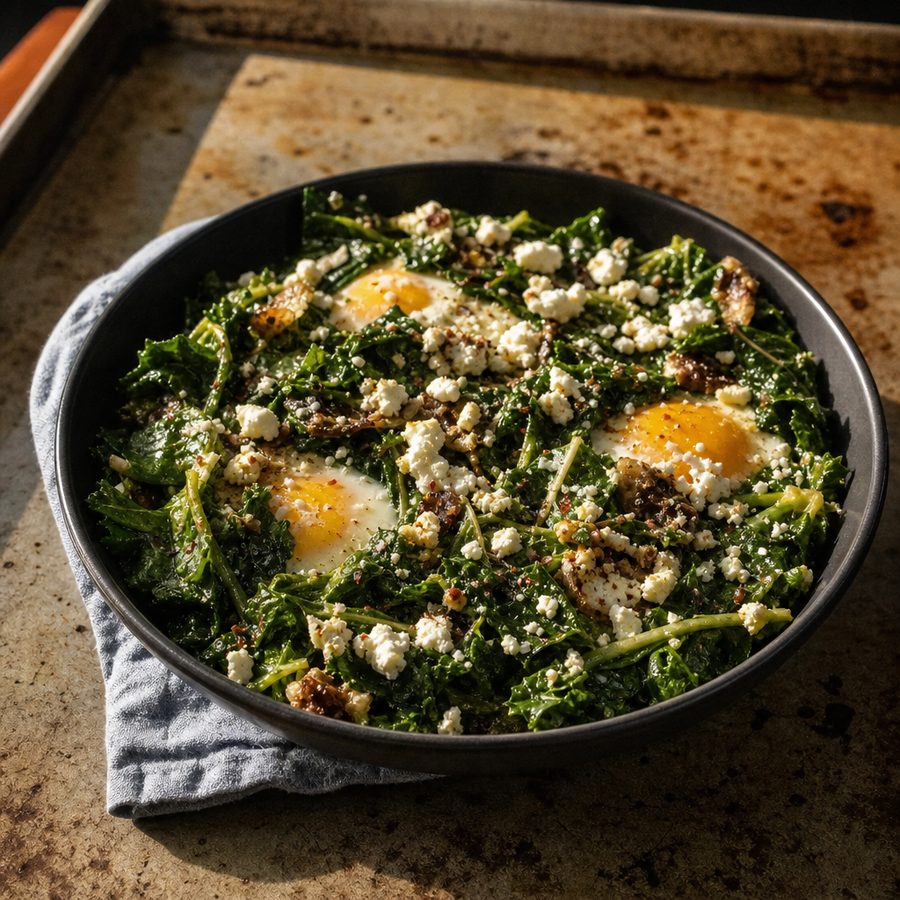
Green Shakshuka With Chard and Spinach
Soft-poached eggs settled into a garlicky, cumin-scented tangle of wilted swiss chard, baby spinach, and sweet leek, finished with crumbled feta.
Why You'll Love This Recipe
More nourishing than toast, and still fast enough for a weekday morning. It takes the familiar idea of eggs poached in a flavorful base and swaps the usual tomato for a deep bed of greens, so it lands lighter and fresher on the plate. It suits people who like a vegetable-forward start to the day, cooks who want a one-pan meal with little cleanup, and anyone feeding a household who wants each person's plate portioned straight from the skillet.
Go slow with the aromatics and slower still with the greens. Softening the leek and garlic slowly in olive oil before the cumin goes in builds a mellow, sweet foundation, and blooming the cumin in the hot oil for a few seconds releases its warm, earthy aroma far more than tossing it in later would. Wilting the chard and spinach down until their liquid cooks off keeps the base from turning watery, which matters because a soupy pan will not hold clean wells for the eggs. Covering the skillet traps steam so the tops of the eggs set gently while the yolks stay soft.
Runny egg yolk, tender greens, and salty feta land in every bite, a combination of richness, freshness, and tang that feels like a complete meal. The eggs bring high-quality protein that helps you feel full, the leafy greens add plenty of fiber and volume, and the olive oil and feta carry fat that makes the whole thing taste rich and keeps you satisfied for hours. It is the kind of breakfast that is filling without feeling heavy.
Ingredients
- 8 large eggs
- 1 bunch swiss chard, chopped
- 6 cups baby spinach
- 1 leek, sliced
- 3 garlic cloves, minced
- 1/2 cup crumbled feta
- 3 tbsp olive oil
- 1 tsp ground cumin
- 1/4 tsp salt
Instructions
- Prep the vegetables: Trim the root end and dark green tops from the leek, halve it lengthwise, rinse well between the layers to wash out grit, and slice thinly. Peel and mince the garlic. Strip the swiss chard leaves from the stems and keep them apart, since the stems need several minutes and the leaves need about two. Finely chop the stems and roughly chop the leaves. Rinse the baby spinach and shake it dry.
- Build the green base: Warm the olive oil in a large skillet over medium heat. Add the sliced leek, the chopped chard stems, and the garlic and cook, stirring often, until soft and fragrant but not browned, about 4 minutes. Stir in the ground cumin and let it toast for about 30 seconds until you can smell it.
- Wilt the greens: Add the chard leaves and the salt and cook, tossing, until they begin to collapse, about 2 minutes. Add the baby spinach in batches, stirring each handful until it wilts down before adding the next. Cook until all the greens are tender and any watery liquid has mostly cooked off, about 5 minutes total, then spread the greens into an even layer.
- Poach the eggs: Using the back of a spoon, make evenly spaced wells in the bed of greens, spacing them apart. Crack one egg into each well. Cover the skillet with a lid and cook over medium-low heat until the whites are fully set and opaque but the yolks are still soft, 6 to 8 minutes. Cook a minute or two longer if you prefer firmer yolks.
- Finish and serve: Scatter the crumbled feta over the top off the heat, since it softens against the hot greens without melting away into them. Serve immediately, spooning a portion of greens and eggs straight from the skillet onto each plate, because the yolks go on setting in a pan this hot.
Variations
- Swap the greens: Use chopped kale, escarole, or the tops of beet greens in place of some or all of the chard. Sturdier leaves like kale need a couple of extra minutes to turn tender before you make the wells.
- Add warmth and heat: Stir a pinch of red pepper flakes or a little chopped fresh chile in with the cumin for a gentle background heat that plays well against the salty feta.
- Brighten it up: Finish the skillet with a handful of chopped fresh dill, parsley, or cilantro and a squeeze of lemon just before serving for a fresher, more herbal finish.
- Different tangy cheese: Trade the feta for crumbled goat cheese or grated pecorino for a different salty, tangy note. This keeps the dish dairy-based, just with a new flavor.
- Make it heartier: Fold cooked, drained white beans or chickpeas into the warm greens before adding the eggs for extra body and staying power. This adds legumes and more fiber to the plate, and it takes the skillet off keto and low-carb.
Storage & Leftovers
The eggs are best eaten right away while the yolks are soft, but leftovers keep in an airtight container in the refrigerator for up to three days. The yolks will continue to firm up as they sit, so cooked-through leftovers hold better than ones you meant to keep runny.
Reheat gently to avoid turning the yolks rubbery. Warm a portion in a covered skillet over low heat with a splash of water to create steam, or microwave at reduced power in short bursts, checking often. The greens reheat well; it is the eggs that need a light touch.
To get ahead, make the green base through the wilting step, cool it, and refrigerate it for up to three days. In the morning, warm the greens in the skillet until steaming, make the wells, and poach fresh eggs, which takes only a few minutes and gives you soft yolks without the full cook.
Notes & Tips
- Wash the leek well: Leeks trap grit and sand deep between their layers. After slicing, swish the pieces in a bowl of cold water and lift them out, leaving any sand behind, so your base is never gritty.
- Do not waste the chard stems: The stems are edible and slightly sweet, but they take longer to soften than the leaves. Chop them fine and cook them with the leek so they turn tender rather than staying crunchy in the finished dish.
- Cook off the liquid: Greens release a lot of water as they wilt. Let most of it evaporate before you crack in the eggs, or the wells will fill with liquid and the whites will spread and poach unevenly.
- Judge the eggs by the whites: The whites should be fully opaque with no clear, jiggly spots before you take the pan off the heat. Give the skillet a gentle shake; a soft yolk will wobble slightly while a set white stays put.
- Salt with the feta in mind: Feta is quite salty, so taste the greens before you add it and go easy on extra salt. You can always sprinkle a little more at the table.
- Round out the plate: A piece of warm crusty bread or a spoon of thick yogurt on the side is lovely for mopping up the yolk and greens and turns this into a more filling meal.
Nutrition & Mindful Eating
- Greens, eggs and feta are the three things at work here. The chard and spinach cook down into a soft green bed, the eggs sit in it and set gently in the steam, and the feta melts into salty pockets between them.
- Swiss chard is two vegetables in one pan. The stems go in early and stay slightly crunchy and faintly sweet, the leaves go in last and collapse in about a minute, and both carry magnesium and vitamin K into the dish.
- Eggs cooked this way stay soft, the whites just set and the yolks still loose, and breaking one open turns it into the sauce for everything around it. Their protein and choline arrive in the same spoonful.
- Leeks cooked slowly in oil until they give up their sharpness are the sweet base under all that green, and with sliced garlic softening alongside them they bring the prebiotic fibers your gut bacteria feed on.
- Cumin toasted in the oil before the greens go in is the earthy smell that fills the kitchen, and crumbled feta added near the end goes soft and creamy in the heat, giving the pan the salt that draws the sweetness out of the chard.
- As you eat, break the yolk at the table and watch it run into the greens, and take the pan slowly enough that breakfast still feels like a proper sit down.
Frequently Asked Questions
How do I keep the yolks runny?
Keep the heat at medium-low once the eggs go in, cover the pan to set the tops with steam, and start checking at the six-minute mark. Pull the skillet off the heat as soon as the whites turn opaque; the residual warmth will keep cooking them, so it is easy to overshoot if you wait too long.
My greens turned watery around the eggs. What went wrong?
The greens most likely had not released and cooked off enough of their liquid before the eggs went in. Next time, let the wilted greens cook until the bottom of the pan looks dry rather than pooling, then make the wells so the whites can set in place instead of spreading into the liquid.
Can I make this for one or two people instead of a crowd?
Yes. Because the recipe is scaled to your household, everything adjusts together and the method stays exactly the same. Just use a smaller skillet so the bed of greens stays deep enough to cradle the eggs.
What should I serve with it?
It stands on its own, but crusty bread or warm flatbread is perfect for soaking up the yolk and greens. A dollop of plain yogurt on the side or a simple tomato-and-cucumber salad also rounds it into a fuller meal.