
Ground Beef and Cheddar Bake
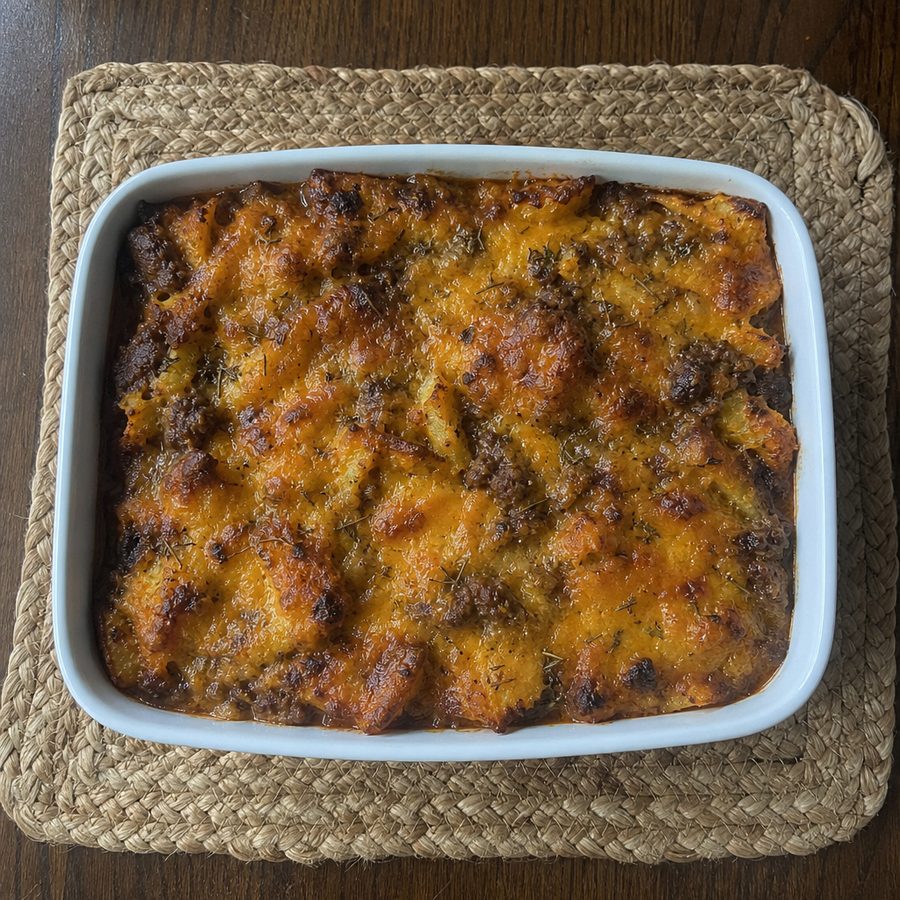
A hearty baked casserole of seasoned ground beef bound with egg and blanketed in melted cheddar, baked until the top is bubbling and golden.
Why You'll Love This Recipe
This is a warm, filling weeknight casserole for anyone who wants a substantial, meat-forward dinner without a long ingredient list or much fuss. It comes together in one skillet and one baking dish, uses ingredients most people already keep on hand, and delivers real comfort-food satisfaction. It is a good fit for cooks who want something rich and savory that reheats well and keeps them full for hours.
A beaten egg goes into the browned beef off the heat. The egg acts as a binder: as the casserole bakes, it sets around the meat crumbles and holds everything together so the dish slices instead of falling apart into loose ground beef. Adding the egg off the heat, after the skillet has cooled slightly, keeps it from scrambling into dry bits and lets it fold smoothly through the meat. Splitting the cheddar between the inside and the top gives you melted cheese woven all through the bake plus a browned, bubbling crust.
Well-browned beef, savory rendered flavor, and gooey cheddar in every bite. The beef and eggs together make it rich in protein, which is what keeps you feeling full and steady after eating. Cheddar adds calcium and a deep savory note, while the browning on the beef and the golden cheese top build flavor without needing anything else. It is simple food that eats like a treat.
Ingredients
- 2 lb ground beef
- 1 1/2 cup shredded cheddar
- 2 large eggs
- 1/4 tsp salt
Instructions
- Preheat and prep: Preheat the oven to 375°F (190°C). Crack the eggs into a small bowl and beat them well with a fork until the yolks and whites are fully blended. Shred the cheddar if it is not already shredded.
- Brown the beef: Set a large skillet over medium-high heat and add the ground beef along with the salt. Cook, breaking the meat into small crumbles with a wooden spoon, until it is browned and no longer pink, about 8 to 10 minutes. Tip the skillet and spoon off or drain away the excess fat that has rendered out.
- Combine off the heat: Take the skillet off the heat and let it cool for a couple of minutes so the eggs will not scramble on contact. Stir in the beaten eggs and about half of the shredded cheddar, mixing until the egg coats the meat evenly and the cheese begins to melt into it.
- Assemble: Spread the beef mixture into a baking dish, pressing it into an even layer. Sprinkle the remaining cheddar evenly over the top.
- Bake: Bake at 375°F (190°C) for about 25 minutes, until the egg is set, the cheese on top is fully melted and bubbling, and the edges are lightly browned. Let it rest for about 5 minutes before serving so it firms up and slices cleanly.
Variations
- Swap the cheese: Trade the cheddar for another firm melting cheese such as Gruyère, Colby, or Monterey Jack for a different flavor and melt. This keeps the dish dairy-based, as cheddar already does.
- Mixed meats: Use a blend of ground beef and ground pork, or part ground lamb, for a richer, more layered flavor in the base.
- Bacon-loaded: Cook chopped bacon until crisp, drain it, and fold it into the beef along with the egg and cheese. This adds more pork and a smoky, salty edge.
- Extra-custardy set: Stir in an additional beaten egg for a softer, more custard-like texture that holds together even more firmly once baked. This adds more egg.
- Parmesan crust: Sprinkle grated Parmesan over the cheddar on top before baking for a sharper, crispier browned crust. This adds more hard cheese.
Storage & Leftovers
Refrigerate leftovers in an airtight container once fully cooled. The bake keeps well for up to four days, and the flavor actually deepens by the next day as the beef and cheddar settle together.
To reheat, cover a portion loosely and warm it in a 350°F (175°C) oven until heated through, about 10 to 15 minutes, which keeps the cheese from turning rubbery. A microwave works for a single serving in a pinch; heat in short bursts and stop as soon as it is hot to avoid drying out the egg.
To make ahead, brown the beef, stir in the egg and cheese, and assemble the whole thing in the baking dish up to a day in advance. Cover and refrigerate, then bake straight from the fridge, adding a few extra minutes since it starts cold.
Notes & Tips
- Choose your beef fat wisely: An 80/20 ground beef gives the best flavor and juiciness here; a drier grind works too, but it can bake up firmer, so avoid draining away every last bit of fat.
- Cool before adding egg: Let the browned beef sit off the heat for two or three minutes before the egg goes in. If the skillet is still ripping hot, the egg cooks into scrambled bits instead of binding the meat smoothly.
- Shred your own cheese: Block cheddar shredded at home melts more smoothly than pre-shredded bagged cheese, which is coated with anti-caking starch that can make the top slightly grainy.
- Know when it's set: The bake is done when the center no longer looks wet or jiggly and the cheese on top is bubbling; a knife inserted in the middle should come out clean of loose egg.
- Let it rest before cutting: Give it about five minutes out of the oven before serving. It firms up as it cools slightly and holds its shape far better on the plate.
- Season to taste: Salt is the only seasoning here, so taste a bit of the browned beef before the egg goes in and adjust; different cheddars vary in saltiness, so a sharp aged cheddar may mean you need a lighter hand with the salt.
- Cheddar-stuffed burgers: Mix the raw beef with one egg and the salt, press it into thin wide patties, mound shredded cheddar in the center of half of them, and seal a second patty over each. Sear about four minutes a side in a hot dry skillet and rest them three minutes so the cheese stays put when you cut in.
Nutrition & Mindful Eating
- Beef, egg and cheddar hold each other together here. The egg sets around the meat and binds it into something you can cut, the cheese melts down through the top and back into the beef, and the whole thing comes out of the dish in squares.
- Browning the beef properly before it goes into the dish is the difference between a good bake and a gray one. The crust that forms in the pan is where the flavor comes from, and the meat brings iron, zinc and B12 along with it.
- Eggs beaten in raw are the reason this sets. They firm up in the oven and turn a loose pan of meat into something sliceable, and the yolks add richness along with vitamins A and D and the choline they are known for.
- Sharp cheddar over the top does two things at once. Where it touches the dish it goes lacy and crisp and browns almost to the edge of burnt, and in the middle it stays molten and pulls when you lift a piece out.
- Salt is doing real work here, drawing the savory depth out of the browned beef and keeping the cheese from tasting flat. A bake this rich holds you for a long stretch, and the protein and fat together are why a modest square eats like a full plate.
- As you eat, give the first square a minute so the cheese firms enough to cut, then take the browned crust and the soft middle slowly enough to feel the richness telling you it is enough.
Frequently Asked Questions
Why did my bake come out greasy?
That usually means not enough fat was drained after browning. Tip the skillet and spoon off the pooled fat before stirring in the egg and cheese; a little richness is good, but the meat should not be swimming in grease.
Do I really need to drain the beef?
Yes, at least most of it. Excess rendered fat keeps the egg from binding the meat and can leave the finished bake loose and oily. Leaving a small amount behind keeps it moist, but pour off the bulk of the pooled fat.
Can I use a 93/7 ground beef?
You can. A 93/7 grind makes a slightly less rich, drier bake, so hold back on draining and do not overbake it. Fattier beef, around 80/20, gives the juiciest, most flavorful result.
How do I know when it's fully cooked?
The center should look set rather than wet, the cheese on top should be melted and bubbling, and a knife slid into the middle should come out clean with no runny egg clinging to it.