
Ground Lamb and Feta Skillet
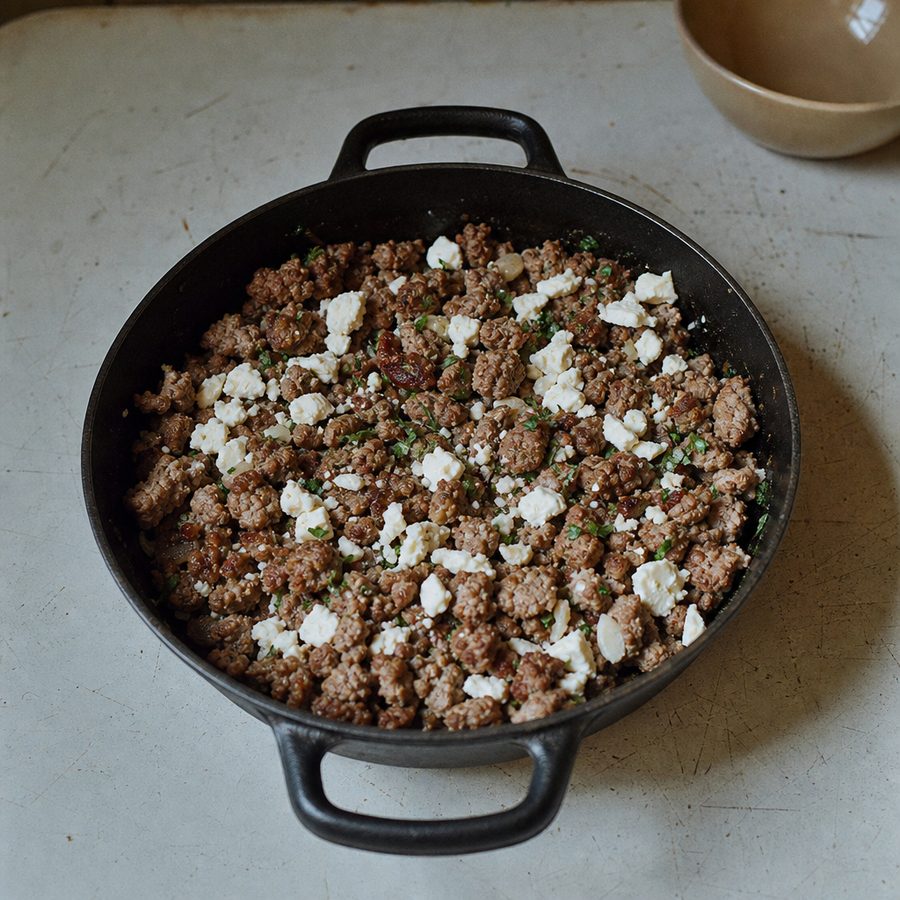
Browned ground lamb, richly savory and just-crisp in spots, folded off the heat with crumbled feta that softens into creamy, salty pockets throughout.
Why You'll Love This Recipe
Very few parts, one pan, and a satisfying plate of food at the end of it. It leans entirely on the deep, slightly gamey richness of lamb and the sharp, salty tang of feta, so it delivers a lot of flavor from very few parts. If you cook for yourself on a busy weekday, or you want something hearty that comes together in under fifteen minutes, this is built for you.
Give the lamb room and then leave it alone. Lamb is fatty enough that it renders and crisps on its own if you give it space in a hot pan and resist the urge to stir constantly. Those browned, caramelized edges are where the savory depth comes from. The second move that matters is folding the feta in off the heat: added while the pan is hot but no longer on the burner, the cheese warms and turns creamy without breaking down into a greasy melt, so you get distinct soft, tangy pockets against the crisp meat.
Substantial protein and rich fat together fill you up and keep you there for hours. Lamb brings iron, zinc, and B12, while the feta adds calcium and a bright, salty contrast that keeps each bite interesting. It eats like comfort food and is really just two whole ingredients and salt, cooked properly. There is also nothing in it to go soft, so it reheats on the third day exactly as it was on the first.
Ingredients
- 1 1/2 lb ground lamb
- 1 cup crumbled feta
- 1/2 tsp salt
Instructions
- Heat a dry pan for a minute: Set a wide skillet over medium-high heat and give it a full 2 minutes to come up to temperature. Add no oil at all: ground lamb carries plenty of its own fat and it renders within the first couple of minutes, so anything added at the start simply makes the finished skillet greasy.
- Brown the lamb 8 to 10 minutes: Add the lamb and break it into small clumps with a wooden spoon, then spread it out and leave it undisturbed for a minute or two at a time so it browns rather than steams. Keep breaking it up and stirring for 8 to 10 minutes, until no pink remains and much of the meat is deep brown with crisp edges. Ground lamb should reach 160°F (71°C), which browning it properly will pass well before the color is right.
- Salt it, then taste before adding more: Stir the salt evenly through the browned lamb, taste a piece, and add more only if it needs it. Hold back here, since the feta going in next is salty enough to season the whole pan on its own and a skillet salted twice cannot be fixed.
- Fold in the feta off the heat: Take the skillet off the burner, crumble the feta over the hot lamb, and fold it in gently for about 30 seconds. Off the heat is the whole trick: the residual warmth softens the cheese into creamy pockets, while a live flame underneath would melt it into a smooth, oily sauce and you would lose the salty pockets that make this worth eating.
- Serve it while the feta is still soft: Spoon it into bowls and serve warm, within 5 minutes, while the feta is still soft and the lamb is at its juiciest. Feta firms up again as the pan cools, so a skillet left standing for a quarter of an hour is a different and lesser dish.
Variations
- Swap in ground beef: Use ground beef in place of the lamb for a milder, less gamey version. Choose a fattier grind so it browns and stays juicy the same way lamb does.
- Add crisp bacon: Cook chopped bacon in the pan first, then brown the lamb in its rendered fat and stir the crisp bacon back in at the end. This adds pork and a smoky, salty layer.
- Top with a fried egg: Fry an egg in a little of the rendered lamb fat and set it on top of each bowl; break the runny yolk to coat the meat. This adds egg.
- Trade feta for a hard cheese: Fold in finely grated aged parmesan or a sharp aged cheddar instead of feta for a nuttier, more intense finish. This keeps the dish dairy-rich with a firmer, saltier bite.
- Enrich with extra fat: Fold a spoonful of butter into the hot lamb along with the cheese for a rounder, richer mouthfeel. This adds dairy.
Storage & Leftovers
Store leftovers in an airtight container in the refrigerator for up to four days. The lamb firms up as its fat cools, which is normal.
To reheat, warm it in a skillet over medium heat, breaking up the clumps as it comes back to temperature, until it is hot and the fat has loosened again. The microwave is quicker, but the stovetop is what brings the crisp edges back. Either way, a little warmth loosens the feta again once it has set cold.
To get ahead, you can brown and salt the lamb up to a couple of days in advance and refrigerate it, then simply reheat and fold in fresh feta off the heat just before serving so the cheese stays soft and distinct rather than dried out.
Notes & Tips
- Pick a fattier grind: Ground lamb with little marbling can turn dry and tight in the pan. A grind with visible marbling browns better and stays juicy, and the rendered fat is what carries the flavor of the whole dish.
- Buy block feta and crumble it yourself: Feta sold in a block, crumbled by hand just before you fold it in, is creamier and less chalky than the pre-crumbled tubs, which are often coated to keep them separate and can stay dry in the pan.
- Salt with a light hand first: Feta is quite salty, so season the lamb lightly, taste after the cheese goes in, and only then add more salt if it truly needs it. It is easy to over-salt this dish.
- Do not drain all the fat: You can pour off excess if there is a real pool, but leave most of the rendered lamb fat in the pan. It keeps the meat moist and coats the feta as it softens.
- Know your browning cue: You are done browning when the pinkness is gone and a good share of the meat has turned deep brown with crisped edges, not just gray. Gray, steamed lamb means the pan was too crowded or not hot enough.
- Double the batch for the week: This reheats well, so it is worth browning extra lamb at once. Fold feta only into the portion you are eating now and add fresh cheese to reheated servings later for the best texture.
Nutrition & Mindful Eating
- Lamb and feta are the whole dish, and they work because one is hot, fatty and deeply savory while the other is cool, salty and sharp. Every bite lands somewhere between the two.
- Ground lamb renders as it cooks, so the meat ends up frying in its own fat and crisping at the edges, and that fat carries the flavor along with the iron and B12 that lamb is rich in.
- Feta crumbled over the hot skillet softens without fully melting, holding its shape just long enough to give you a cool, tangy pocket against the meat, and it brings calcium and a little more protein with it.
- The pan should be hot and the lamb should be left alone. Crowding it or stirring too early steams the meat and costs you the browned crust, which is where nearly all the flavor of a dish this short lives.
- Meat this rich holds you for a long stretch. The protein is doing most of that work and the rendered fat slows everything down, which is why a plain plate of this eats like a full meal.
- As you eat, follow the crisp dark edges of the lamb into the cool feta beside them, and let a dish this rich set your pace so you finish when you are satisfied rather than when the pan is empty.
Frequently Asked Questions
My lamb released a lot of grease. Should I pour it off?
A little pooling is normal because lamb is fatty. If there is a puddle you can spoon some off, but leave most of it in the pan. That rendered fat keeps the meat moist and helps the feta turn creamy when you fold it in.
Why fold the feta in off the heat instead of while it is cooking?
Feta added while the pan is still on the burner tends to break down into a greasy, uniform melt. Off the heat, the residual warmth softens it just enough to stay in distinct creamy, tangy pockets against the browned lamb, which is the texture that makes this dish work.
The lamb tastes gamey to me. Can I tone that down?
Lamb's flavor is strongest when overcooked, so brown it well but stop as soon as the pink is gone. The salty feta also mellows and balances the richness. If you still find it too strong, the variation using ground beef gives you a milder result.
Do I need to add oil to the pan?
No. Ground lamb renders plenty of its own fat as it browns, so it cooks in that fat. Starting in a dry, hot skillet lets the meat crisp rather than steam.