
Lemon Halibut Over Asparagus Cauliflower Rice
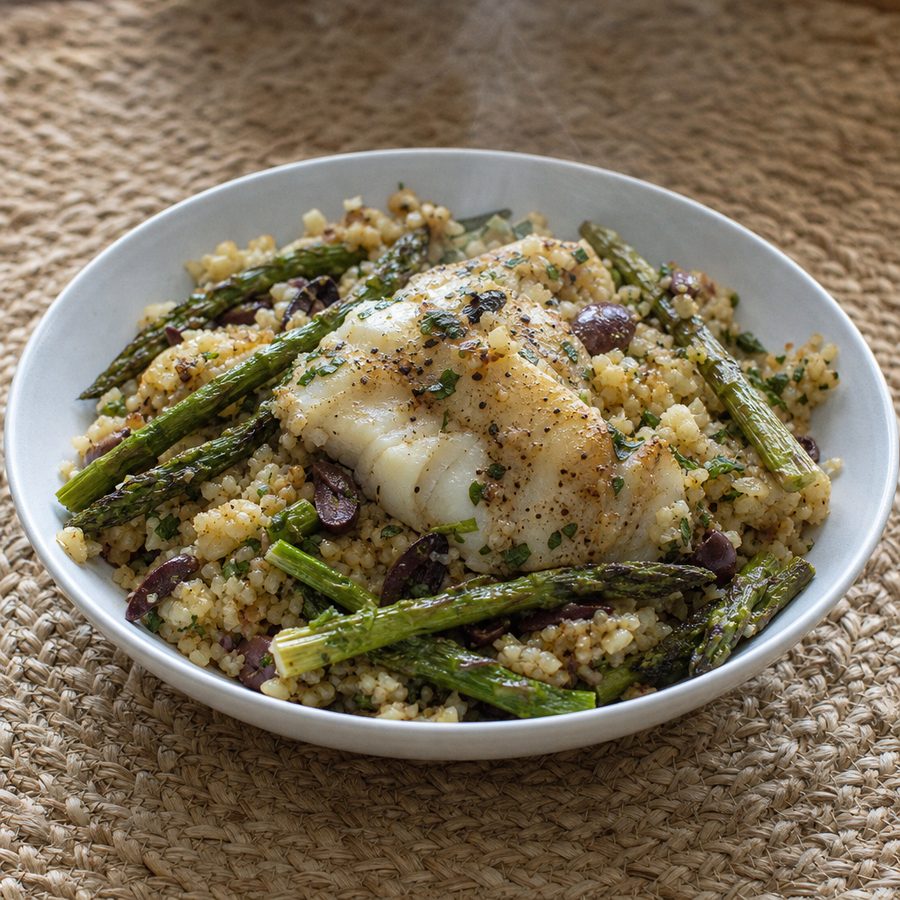
Roasted halibut fillets rest over garlicky, lemon-brightened cauliflower rice with blistered asparagus, halved kalamata olives, sliced avocado, and fresh parsley.
Why You'll Love This Recipe
Build this bowl in spring, when asparagus is thick and plentiful and the stems snap rather than bend. Out of season the spears come in thin and stringy and the plate leans on the halibut to carry all of it; in March and April they blister dark at the tips, stay sweet down at the stem, and hold their own beside the fish. Everything else is arranged to stay out of their way: mild flakes of halibut, garlicky cauliflower rice, salty olives, and cool avocado, on one sheet pan and one skillet. Anyone cooking without grains, dairy, eggs, or nightshades can eat it exactly as written.
Halibut and asparagus roast together at high heat so both cook in the same short window. Halibut firms up fast, so pulling it the moment it flakes keeps it moist rather than dry and cottony, while the asparagus picks up browned, blistered edges on the hot pan. Cooking the cauliflower rice separately in the skillet lets it lose its raw taste and take on the garlic and a hit of fresh lemon juice, so it reads as a real base rather than a bland filler.
Contrast is what carries it: warm flaky fish against crisp-tender asparagus, salty olives against creamy avocado, and a clean lemon lift running through it all. The halibut brings a generous amount of protein, the cauliflower and asparagus add fiber and volume for very few carbohydrates, and the avocado and olive oil supply the kind of fat that makes a meal stay with you. It eats light yet keeps you full, which is exactly what you want in the middle of the day.
Ingredients
- 4 halibut fillets (about 640g)
- 1 bunch asparagus, trimmed
- 5 cups riced cauliflower
- 1 large avocado, sliced
- 2/3 cup kalamata olives, halved
- 1/4 cup olive oil
- 3 cloves garlic, minced
- 2 tbsp lemon juice
- 3 tbsp chopped parsley
- 1/2 tsp salt
Instructions
- Prep everything within reach of the stove: Pat the halibut fillets dry with paper towel, mince the garlic, chop the parsley, trim the woody ends off the asparagus, halve the olives, and juice the lemon. Dry fish is the one that matters most, since a wet fillet steams in the oven and the surface never firms up the way roasted halibut should.
- Roast the fish and asparagus, 12 to 14 minutes: Heat the oven to 425°F (220°C). Set the halibut in the center of a sheet pan and lay the asparagus alongside in a single layer, not on top of the fish, so both get direct heat. Drizzle with olive oil, sprinkle with salt, and roast for 12 to 14 minutes, until the halibut is opaque and flakes easily, about 130 to 135°F (54 to 57°C) at the thickest part, which is the medium range where the flakes still slide apart wetly, and the asparagus is tender with blistered spots. The FDA figure for all seafood is 145°F (63°C), so give it another minute or two if you would rather cook to that number.
- Cook the cauliflower rice while it roasts: Warm olive oil in a large skillet over medium heat, add the garlic, and cook about 30 seconds, until fragrant but not browned, because garlic scorches quickly in a dry pan and turns bitter. Add the riced cauliflower and saute, stirring often, for about 5 minutes, until it softens and loses its raw crunch. Stir in the lemon juice and a pinch of salt and take it off the heat.
- Slice the avocado at the last minute: Halve the avocado, lift out the pit, scoop the flesh from the skin, and slice it just before the bowls are built, since cut avocado starts browning within about 10 minutes and there is nothing on this plate to hide it under.
- Build the bowls with the rice underneath: Divide the lemony cauliflower rice among the bowls and top each with a halibut fillet, a share of the asparagus, the olives, and the avocado, then drizzle with the remaining olive oil and scatter the parsley. The rice goes underneath so it catches the oil and the juices coming off the fish, which is what seasons it beyond the lemon.
Variations
- Swap the white fish: Cod, haddock, or another firm white fish stands in nicely for the halibut. These are thinner, so check for doneness a minute or two earlier, when the flesh turns opaque and flakes.
- Go with salmon: Use salmon fillets instead of halibut for a richer, oilier fish. Roast skin-side down and pull it at the same opaque, just-flaking stage; this adds a fattier fish to the plate.
- Change the fresh herb: Swap the parsley for chopped fresh dill or basil to shift the aroma. Dill leans grassy and bright against the lemon, while basil turns it softer and sweeter.
- Add capers: Stir a spoonful of rinsed capers into the finished bowl along with the olives for an extra pop of salty, tangy brightness that plays off the lemon.
- Roast fennel alongside: Add thinly sliced fennel to the sheet pan with the asparagus. It caramelizes and turns sweet as it roasts, adding a gentle anise note under the fish.
Storage & Leftovers
Store leftovers in an airtight container in the refrigerator for up to three days. Keep the avocado separate and slice it fresh when you serve, since it browns and softens quickly once cut. The cauliflower rice and asparagus hold up well; the halibut is best eaten within a couple of days for the freshest flavor and texture.
Reheat the halibut and vegetables gently to protect the delicate fish. Warm them in a covered skillet over low heat with a splash of water to create steam, or in a low oven just until heated through. Avoid a high microwave setting, which can turn the fillet rubbery and overcook the edges before the center warms.
To get ahead, roast the asparagus and cook the lemony cauliflower rice a day in advance and refrigerate them. When you are ready to eat, roast the halibut fresh, rewarm the components, and slice the avocado at the last minute so the bowl tastes just-made.
Notes & Tips
- Buy fillets of even thickness: Pick halibut pieces that are similar in thickness so they finish roasting at the same time. If one is much thinner, place it toward the cooler outer part of the pan and check it first.
- Dry the fish first: Patting the halibut dry before it goes on the pan helps it roast rather than steam, so the surface firms up instead of turning soft and watery.
- Do not skip draining frozen cauliflower rice: If you use thawed frozen riced cauliflower, press out the excess water in a clean towel first, or it will steam and stay wet instead of taking on the garlic and lemon.
- The avocado is easy to leave out: The avocado is there for creaminess and richness, not structure. Skip it if you do not have a ripe one, and the bowl still holds together on the fish and olives.
- Season the rice at the end: Olives and fish both bring salt, so taste the cauliflower rice after you stir in the lemon and add salt only if it needs it, to keep the whole bowl from turning too salty.
- Serve it warm, not hot: This bowl is best just after assembling, while the fish is warm and the avocado cool. Let a fresh-out-of-the-oven fillet sit a minute before plating so it does not fall apart when you move it.
Nutrition & Mindful Eating
- The fish, the cauliflower and the asparagus all cook quickly and all want the same lemon and garlic, which is why this reads as one bowl rather than three separate things sharing a plate.
- Halibut is firm and close grained, so it holds together in thick flakes rather than falling apart, and it is a quiet, faintly sweet fish that brings protein and some omega-3 fats into the bowl.
- Cauliflower broken down into small grains and cooked in garlic oil goes nutty and barely golden, soaking up everything in the pan and giving the bowl a soft base with fiber and vitamin C in it.
- Asparagus roasted rather than boiled keeps its squeak and its grassy flavor, and the olives scattered over bring a salty, briny punctuation that makes you notice the fish more than you would otherwise.
- Avocado and a hard squeeze of lemon finish the bowl, one soft and rich, the other sharp, and along with the parsley they are what keep something this simple from ever tasting flat.
- As you eat, break the halibut apart with the side of your fork and see how the lemon and the olives change each other, and let a bowl that took a quarter of an hour still be worth sitting down for.
Frequently Asked Questions
How do I know when the halibut is done without overcooking it?
The fish is ready when it turns from translucent to opaque and flakes apart when you press it gently with a fork, around an internal temperature of 130 to 135°F (54 to 57°C). Halibut dries out fast, so pull it as soon as it flakes rather than waiting for it to firm up completely. That is medium, and it is where halibut tastes best. The FDA recommends 145°F (63°C) for all seafood, so cook it longer if you prefer that mark, knowing the fish will come out firmer and a good deal drier.
Can I use frozen halibut?
Yes. Thaw it fully in the refrigerator, then pat it very dry before roasting so the surface can firm up instead of steaming in its own moisture. Frozen fillets often release extra water, and drying them makes a real difference in texture.
My cauliflower rice turns out mushy. What am I doing wrong?
Mushy cauliflower rice usually means too much moisture or too much time in the pan. Cook it over medium heat just until it softens and loses its raw crunch, and if you started with thawed frozen cauliflower, squeeze out the excess water in a towel first.
What can I use instead of kalamata olives?
Any brine-cured olive works, such as green Castelvetrano or oil-cured black olives. Each brings its own level of saltiness and bite, so taste before adding extra salt to the rest of the bowl.