
Halibut and Cabbage Taco Bowls
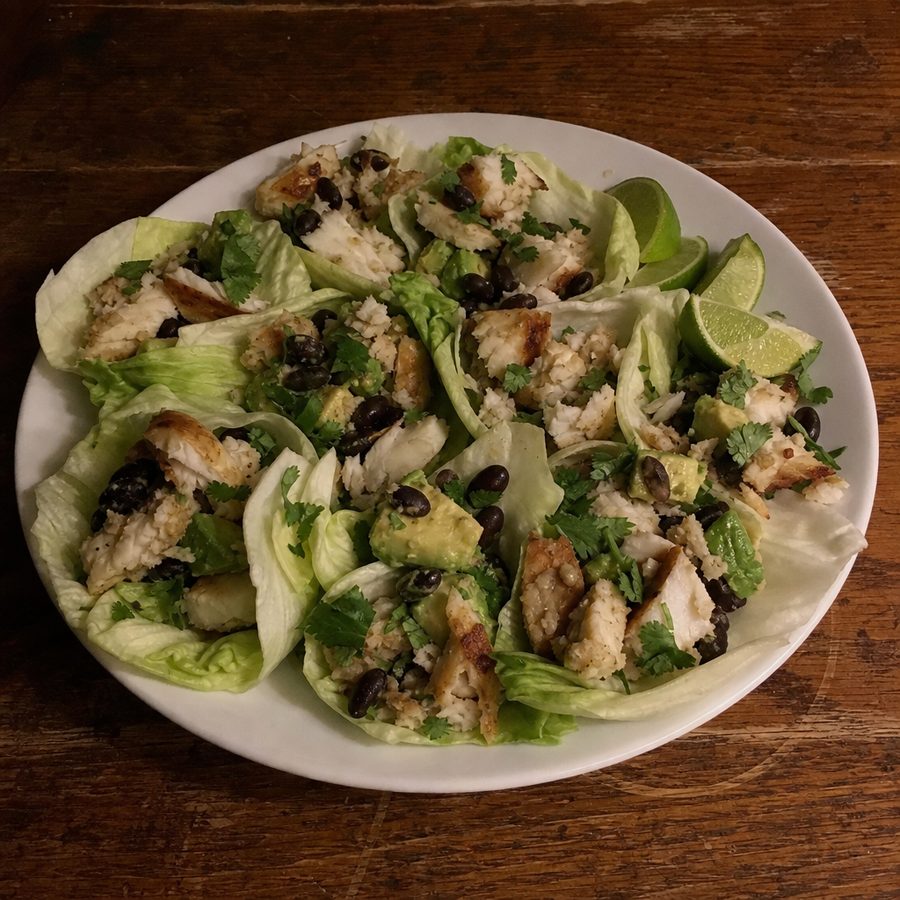
Flaky cumin- and chili-rubbed halibut flaked over shredded cabbage with warm black beans, sliced red bell pepper, avocado, a squeeze of lime and fresh cilantro.
Why You'll Love This Recipe
This is a bright, handheld lunch built around flaky white fish and crisp raw vegetables, meant for anyone who wants something fresh and filling in the middle of the day without a heavy, sleepy aftermath. It comes together quickly, travels well in a container, and lets each person build their own bowl, which makes it an easy fix for a solo desk lunch or a casual family meal.
A dry rub, a hot pan, and not much time. Patting the halibut dry and searing it undisturbed lets the cumin and chili powder toast against the fish and form a browned, savory crust, while the short cook time keeps the interior moist and just-flaked. Meanwhile the raw cabbage is dressed with lime juice and olive oil, which tenderizes the ribbons enough to eat comfortably while keeping their signature crunch, and the acid brightens everything it touches.
Flaky fish, creamy avocado, tender-crisp cabbage and pepper, and soft black beans turn up in every bite, and the textures and the staying power both come out of that mix rather than any one part of it. The protein from the halibut and the fiber from the beans, cabbage, and avocado work together to keep you full and steady, while the lime and cilantro keep the whole bowl tasting light rather than rich.
Ingredients
- 560 g halibut fillets
- 1/2 head cabbage, leaves separated and shredded
- 1 cup black beans, drained
- 1 avocado, sliced
- 1 red bell pepper, sliced
- 3 tbsp lime juice
- 2 tbsp olive oil
- 2 tsp ground cumin
- 2 tsp chili powder
- 4 tbsp cilantro, chopped
- 1/4 tsp salt
Instructions
- Prep the vegetables: Separate the cabbage into leaves, keeping a few of the largest whole to use as bowls, and shred the rest into thin ribbons. Slice the red bell pepper into thin strips, discarding the core and seeds. Halve the avocado, remove the pit, and slice the flesh. Roughly chop the cilantro. Set everything aside.
- Season the halibut: Pat the halibut fillets dry with a paper towel so they sear rather than steam. Rub them all over with the ground cumin, chili powder, salt, and half of the olive oil until evenly coated.
- Sear the halibut: Heat a skillet over medium-high until hot. Lay the fillets in the pan and cook without moving them until the underside is golden, about 4 minutes, then turn once and cook the second side until the fish is opaque through and flakes easily with a fork, about 4 minutes more (internal temperature 145°F (63°C)). Transfer to a plate and break into large flakes with two forks.
- Warm the beans and dress the cabbage: Drain and rinse the black beans, then warm them in a small saucepan over low heat, stirring, until heated through. In a bowl, toss the shredded cabbage with the lime juice and the remaining olive oil so the ribbons soften slightly and glisten.
- Build the bowls: Line each serving bowl with a whole cabbage leaf, then pile in the dressed shredded cabbage. Top with the flaked halibut, warm black beans, red bell pepper strips, and avocado slices. Finish with a shower of chopped cilantro and a squeeze of any remaining lime.
Variations
- Shrimp instead of halibut: Swap the halibut for peeled shrimp, tossing them in the same cumin and chili rub and searing just until pink and opaque, about two minutes per side. This keeps it seafood-forward with a springier bite.
- Corn and tomato: Fold charred corn kernels and diced tomato into the beans for extra sweetness and juiciness that plays against the lime-dressed cabbage.
- Smoky chipotle heat: Stir a little minced chipotle in adobo or a pinch of smoked paprika into the fish rub for a deeper, smokier warmth. Adjust to your tolerance for spice.
- Creamy lime drizzle: Thin plain yogurt with a little lime juice and drizzle it over the finished bowls for tang and richness. Note that this adds dairy.
- Grain-bowl version: Spoon the fish, beans, and vegetables over cooked quinoa or brown rice instead of using cabbage leaves as bowls, for a heartier, more filling meal. Both are grains, so this version is no longer low-carb.
Storage & Leftovers
Store the components in the refrigerator, ideally kept separate, for up to three days. The flaked halibut and warmed beans keep well; the dressed cabbage stays crisp for a day or two before it begins to soften, so it is best eaten sooner. Add the avocado only when serving, since it browns once cut.
This dish is designed to be eaten cold or at room temperature, so no reheating is strictly needed. If you prefer the fish warm, gently reheat the flaked halibut on its own in a skillet over low heat or in short bursts in the microwave just until warmed through, being careful not to overcook it, then assemble the cold vegetables around it.
To make ahead, sear and flake the halibut, warm and cool the beans, and shred the cabbage and slice the pepper up to a day in advance, storing each in its own container. Keep the cabbage undressed until you are ready to eat, then toss it with the lime juice and oil and slice the avocado fresh so the bowl tastes just-made.
Notes & Tips
- Choosing the halibut: Look for fillets that are firm, moist, and smell clean like the sea, not fishy. If halibut is pricey or unavailable, cod, mahi-mahi, or any firm white fish takes the same rub and cooking method well.
- Dry fish sears better: Take a moment to pat the fillets truly dry before rubbing on the spices. Surface moisture is what keeps fish from browning, and a dry surface is the difference between a golden crust and a pale, steamed piece.
- Pick a ripe avocado: An avocado that yields to gentle pressure but is not mushy will slice cleanly and add the creamy contrast this bowl needs. If yours is underripe, mash it with a little lime juice instead so it still spreads.
- Shred cabbage thin: The thinner you slice the cabbage, the more the lime and oil can soften it and the easier it is to eat raw. A sharp knife or the slicing side of a box grater both work; green or red cabbage is fine.
- Adjust the heat and salt at the end: Chili powders vary in punch, so taste a flake of the cooked fish and add a little more chili, a pinch of salt, or an extra squeeze of lime before building the bowls.
- Double the fish: Sear extra halibut while the pan is already hot; the flaked leftovers keep for a few days and make quick work of the next day's lunch on their own or folded into greens.
Nutrition & Mindful Eating
- The fish, the beans and the cabbage cover three different textures in one bowl, warm and flaky, soft and starchy, cold and crisp, and the avocado is what ties the three of them together.
- Halibut seared hot breaks into big white flakes and takes cumin and chili powder well, staying mild underneath the spice, and the protein in it is what gives the bowl its weight.
- Black beans warmed through with a little of the same spice go creamy inside while their skins stay intact, bringing plant protein and the kind of fiber that makes a bowl feel substantial.
- Cabbage shredded thin and left raw is the crunch this whole bowl is built on, and it stays crisp under the hot fish, carrying vitamin C and a peppery bite that wakes the rest of it up.
- Lime juice over the top and cilantro torn on by hand are what make this taste like tacos, and the avocado underneath softens the acid so no bite ever goes sharp all the way through.
- As you eat, build each forkful so it has some fish, some beans and some cabbage in it, and notice how differently each one lands, which is reason enough to slow down and stop when you are full.
Frequently Asked Questions
How do I know when the halibut is done?
The fish turns from translucent to opaque and flakes apart easily when nudged with a fork, which happens at an internal temperature of 145°F (63°C). It cooks fast, so start checking around the four-minute mark on the second side to avoid drying it out.
Can I eat this cold or make it for meal prep?
Yes. It is designed to be eaten cold or at room temperature, which makes it ideal for a packed lunch. Keep the components separate and dress the cabbage and slice the avocado just before eating for the best texture.
What can I use instead of cabbage bowls?
If you would rather not use whole cabbage leaves as bowls, simply pile everything over the shredded cabbage in a regular bowl, or serve it over cooked grains or inside warm tortillas. The filling works the same way regardless of the vessel.
My avocado browns before I eat it. What can I do?
Avocado oxidizes once cut, so slice it right before serving. If you must prep ahead, toss the slices with a little of the lime juice, which slows the browning, and press plastic wrap directly against the surface.