
Roasted Halibut With Fennel And Orange
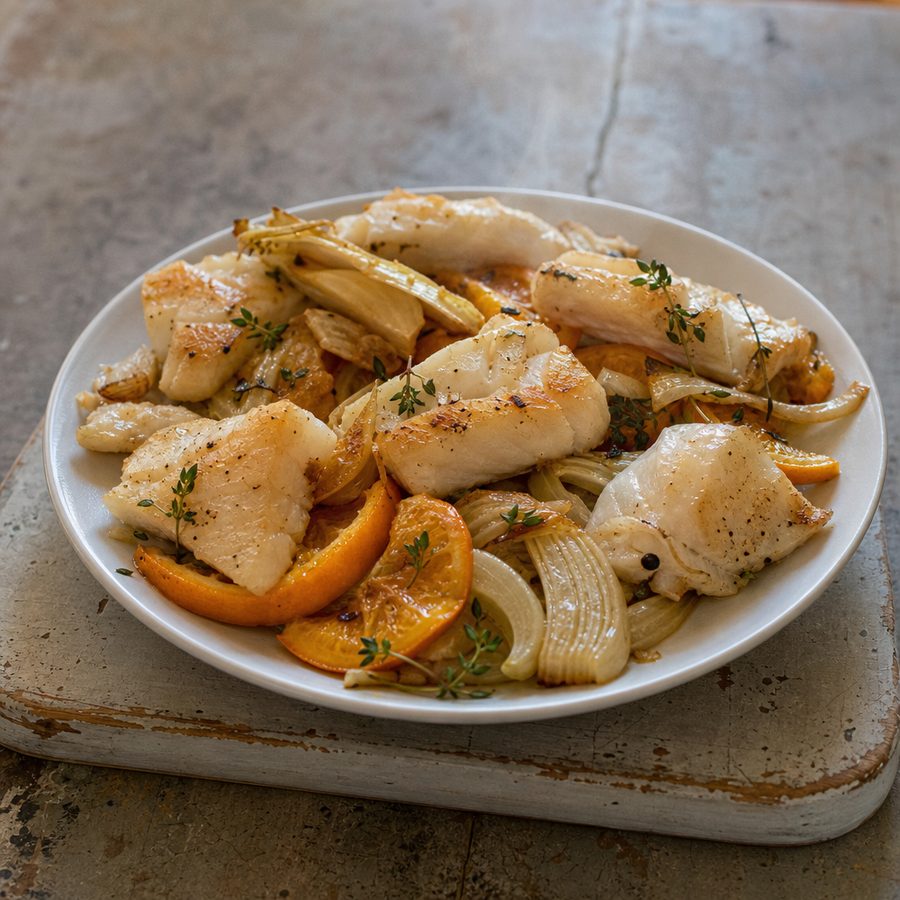
Mild halibut fillets roasted over shaved fennel, baby gold potatoes, and orange slices with garlic, thyme, and olive oil, then finished with the bright citrus pan juices.
Why You'll Love This Recipe
This is a bright, simple sheet-pan dinner built around white fish and vegetables that roast in the same pan, so it comes together with very little hands-on work. It suits anyone who wants a light but filling evening meal, a cook who does not want a sink full of pots, or someone easing into more fish-forward cooking who wants a forgiving, mild fillet to start with.
The dense vegetables get a head start. Potatoes and fennel need longer than fish to turn tender and sweet, so they roast alone first; the delicate halibut goes in only for the final stretch, which keeps it moist instead of dry. Roasting the fennel concentrates its flavor and softens its anise sharpness into something gentle and almost sweet, while the orange slices and juice break down into a light pan sauce that seasons the fish as it cooks.
A generous portion of protein with hearty potatoes and plenty of vegetables, so you leave the table full without feeling heavy. The fish is rich in protein, the fennel and potatoes add fiber and potassium, and the olive oil and citrus give it enough flavor that no heavy sauce is needed. It feels refined and light at once, the kind of plate that reads as a treat while still being nourishing.
Ingredients
- 4 halibut fillets (about 150 g each)
- 2 fennel bulbs, thinly wedged
- 2 oranges, 1 sliced and 1 juiced
- 2 cups halved baby gold potatoes
- 4 garlic cloves, sliced
- 2 tsp fresh thyme
- 3 tbsp olive oil
- 1/2 tsp sea salt
Instructions
- Preheat and prep: Preheat the oven to 425°F (220°C). Trim the stalks from the fennel bulbs, cut them in half through the core, then slice into thin wedges, since the core is what holds each wedge together on the pan. Halve the baby gold potatoes. Thinly slice the garlic cloves. Slice one orange into thin rounds and juice the other.
- Roast the base: On a large sheet pan, toss the fennel wedges, halved potatoes, and sliced garlic with olive oil and a little of the sea salt until evenly coated. Spread them in a single layer, because anything piled on top of itself steams instead of browning, and roast for 15 minutes, until the potatoes are beginning to soften and the fennel edges start to color.
- Add the halibut: Pat the halibut fillets dry and season them with the remaining sea salt and the fresh thyme, since a wet surface holds seasoning poorly and turns pale in the oven. Set the fillets over the vegetables, lay the orange rounds on top of the fish, and pour the fresh orange juice over everything. Drizzle the fillets with the remaining olive oil.
- Roast the fish: Return the pan to the oven, where the fish now sits on a bed hot enough to keep cooking from underneath, and roast for 12 to 14 minutes, until the halibut turns opaque and flakes easily when nudged with a fork, or reaches an internal temperature of 130 to 135°F (54 to 57°C) at the thickest part, which is halibut at medium. The FDA gives 145°F (63°C) for seafood, and halibut carries so little fat of its own that the difference between the two is easy to taste. The potatoes should be fork-tender by now.
- Serve: Transfer each fillet to a plate with a portion of the roasted fennel and potatoes. Spoon the citrusy pan juices from the sheet pan over each portion, because that liquid is the whole sauce and there is not much of it, and serve warm.
Variations
- Swap the fish: Use cod, haddock, or another firm, mild white fillet in place of halibut. Adjust the final roasting time to the thickness of the fillet, cooking until it flakes.
- Change the citrus: Trade the orange for blood orange, or use half orange and half lemon for a sharper, more tart pan sauce.
- Add a briny note: Tuck a few pitted olives among the vegetables before roasting for a salty, savory contrast to the sweet fennel and citrus.
- Add greens: In the last few minutes, tuck a handful of baby spinach or thin kale ribbons around the fish so they wilt in the warm pan juices.
- Finish with herbs: Sprinkle the finished dish with chopped fresh dill or parsley for a fresh, green lift alongside the thyme.
Storage & Leftovers
Store leftovers in an airtight container in the refrigerator for up to two days. Fish is best eaten soon after cooking, so keep the halibut and vegetables together with any pan juices to help them stay moist.
Reheat gently to avoid drying the fish. Warm the fillet and vegetables in a covered dish in a 300°F (150°C) oven until just heated through, or use short bursts in the microwave at reduced power. A splash of the reserved pan juices or a squeeze of fresh citrus revives the flavor.
To get ahead, you can slice the fennel, halve the potatoes, and slice the garlic a day early and keep them refrigerated in a sealed container. Roast the vegetable base up to the point of adding the fish, then cool and refrigerate; the next day, reheat the vegetables briefly, add the fresh fish and orange, and finish roasting.
Notes & Tips
- Choose the fillets: Look for halibut that is firm, translucent, and smells clean like the sea, not fishy. Fillets of even thickness cook most evenly; if one is much thinner, add it a couple of minutes later.
- Cut fennel to hold together: Slice the fennel wedges through the core rather than across, so each piece stays intact on the pan instead of falling into loose shards that can scorch.
- Do not skip drying the fish: Patting the fillets dry before seasoning helps the surface color lightly rather than steam, and keeps the seasoning in place.
- Know when it is done: Halibut is finished the moment it turns opaque and flakes with gentle pressure; it dries out quickly if pushed past that, so check at the earlier end of the time range.
- Use the fennel fronds: Save the feathery fronds from the fennel tops and sprinkle a few over the finished plate for color and a soft anise aroma.
- Serve alongside: A simple green salad or a piece of crusty bread to soak up the citrus pan juices rounds this into a complete meal.
Nutrition & Mindful Eating
- Everything roasts in one pan and that is why it works. The fennel and potatoes go in first and soften in the oil, the orange releases its juice into them, and the fish finishes on top of all that.
- Fennel loses its anise sharpness in a hot oven and turns silky and sweet, which is a different vegetable altogether from the raw bulb, and it brings fiber and potassium to a light plate.
- Orange slices roasted with the peel on go slightly bitter at the edges and sweet in the middle, and the juice that runs out of them makes the pan sauce, carrying vitamin C along with all that brightness.
- Halibut is firm enough to roast without falling apart and mild enough to sit under citrus without disappearing, and it brings the protein and omega-3 fats that give the plate its substance.
- Yukon golds roasted in their skins go creamy inside and crisp at the corners, and the garlic and thyme underneath them scent the whole pan while the oven does the rest.
- As you eat, let the smell of citrus and thyme reach you before the first bite, then spoon the pan juices over everything and take the meal at the same unhurried pace it was cooked.
Frequently Asked Questions
How do I know when the halibut is cooked through?
The fish is done when it turns from translucent to opaque and flakes easily when you nudge it with a fork. If you use a thermometer, aim for 130 to 135°F (54 to 57°C) at the thickest part. Halibut dries out fast, so check at the early end of the roasting time.
Can I use frozen halibut?
Yes. Thaw it fully in the refrigerator first, then pat it very dry before seasoning, since excess moisture from thawing can keep the surface from cooking well. Frozen fillets often release more liquid, so drain any pooled water off the pan if needed.
My fennel still tastes sharp. What went wrong?
Raw fennel has a strong anise bite that mellows only with enough roasting time. If it came out sharp, it likely needed longer in the first roasting stage; make sure the wedges are thin and the pieces have room to caramelize rather than steam.
What can I serve with this to make it more filling?
There are already potatoes in the pan, but a green salad, a grain like farro or rice, or crusty bread to soak up the citrus pan juices all round it into a fuller meal without overwhelming the delicate fish.