
Seared Halibut Lemon Couscous Bowl
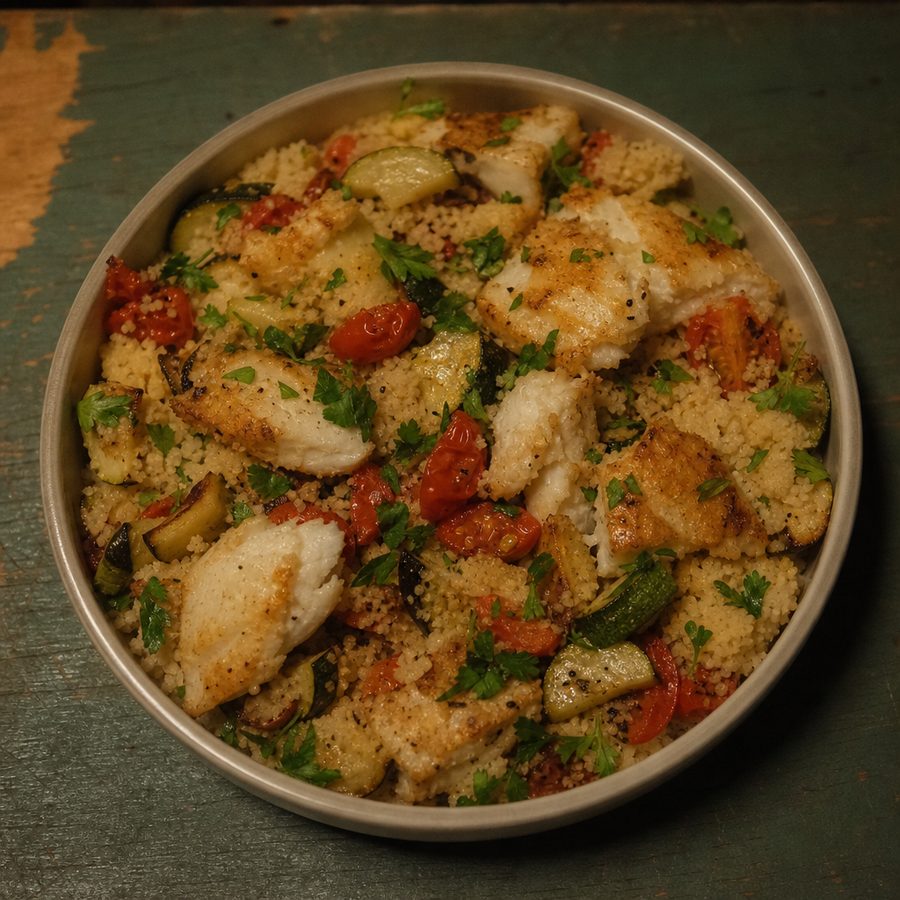
Pan-seared halibut fillets rest over lemon-and-basil couscous, alongside sautéed zucchini, cherry tomatoes, and garlic in a bright, herb-forward bowl.
Why You'll Love This Recipe
Mild, flaky white fish over a bed of tender couscous is the whole of it. It suits anyone who wants a midday meal that leaves them satisfied rather than heavy, and it comes together fast enough for a weekday, making it a good fit for cooks who want something fresh and protein-forward without a long ingredient list or fussy technique. It is also a good bowl to make when there is one nice piece of fish in the refrigerator and it needs to feed the whole table, because the couscous and vegetables carry most of the volume.
A hot, dry pan is what this hinges on. Patting the halibut dry and giving it space over medium-high heat lets the surface brown into a golden crust that adds flavor and texture, while the fish stays moist inside because you pull it the moment it flakes. Cooking the zucchini, tomatoes, and garlic in that same pan picks up the browned bits the fish leaves behind, and tossing the couscous with lemon juice and fresh basil while it is still warm helps it drink in the brightness.
Flaky fish for staying power, couscous for a soft base, and a generous amount of vegetables for volume and color. The lemon and basil keep every bite tasting clean, so the bowl is substantial without being rich. Halibut is worth the money it costs precisely here, since it is firm enough to sit on top of a bowl in one piece rather than falling apart into the grain the way a softer white fish would.
Ingredients
- 4 halibut fillets (about 560g)
- 3 1/2 cups cooked couscous
- 2 zucchini, diced
- 2 cups cherry tomatoes
- 3 cloves garlic, minced
- 3 tbsp olive oil
- 2 tbsp lemon juice
- 1/3 cup chopped basil
- 1/2 tsp salt
Instructions
- Steam the couscous off the heat: Bring the water to a boil, stir in the couscous, cover the pan, and take it straight off the burner, leaving it to stand about 5 minutes until the water is absorbed and the grains are tender. Couscous is steamed and dried before it is sold, so it only needs soaking; left over a flame it turns gluey.
- Cut the vegetables and split the basil: While the couscous stands, dice the zucchini into bite-size pieces, halve the cherry tomatoes, mince the garlic, and chop the basil. Keep the basil in two piles, because some goes into the warm couscous where it wilts and perfumes the grain, and the rest goes on raw at the end where it stays green and sharp.
- Sear the halibut 3 to 4 minutes a side: Pat the fillets dry and season them with salt. Heat olive oil in a skillet over medium-high until it shimmers, lay the halibut in, and sear undisturbed for 3 to 4 minutes a side, until it is opaque, flakes easily, and reads 145°F (63°C). Leave it alone on the first side, since fish releases from the pan on its own once a crust has formed and lifting it early tears it.
- Use the same pan for the vegetables: Add a little more olive oil to the skillet and cook the zucchini, tomatoes, and garlic for about 5 minutes, stirring often, until the zucchini is tender and lightly browned and the tomatoes start to burst. The pan already carries the browned bits from the fish, so the vegetables pick them up rather than leaving them to be washed away.
- Dress the couscous while it is warm: Add the lemon juice, the remaining olive oil, and part of the basil to the warm couscous and toss until it is evenly coated. Doing it warm matters, since the grains are still open and take the lemon into themselves, where a cold couscous only carries it on the surface and tastes plain underneath.
- Build the bowls, basil last: Divide the couscous among bowls, spoon the vegetables and their juices over it, set a halibut fillet on each, and finish with the reserved basil. Those pan juices are the only sauce here, so scrape the skillet out rather than leaving them behind.
Variations
- Swap the fish: Cod, haddock, or another firm white fish sears the same way and keeps the mild, flaky character. Adjust the searing time to the thickness of the fillet and pull it as soon as it flakes.
- Salmon bowl: Trade the halibut for salmon fillets for a richer, more buttery fish. Salmon is oilier, so it browns beautifully and can take a slightly longer sear; cook until it flakes and reaches 145°F (63°C).
- Add briny olives: Stir chopped Kalamata or green olives into the couscous along with the lemon and basil for a salty, savory edge. Taste before adding more salt, since the olives bring their own.
- Feta finish: Crumble feta over the assembled bowls for a tangy, creamy contrast against the lemon and herbs. This adds dairy.
- Grain swap: Use quinoa in place of the couscous, simmered until the grains are tender and the little tails uncurl. This makes the base gluten-free and adds a nuttier flavor and a bit more chew.
Storage & Leftovers
Keep leftovers in an airtight container in the refrigerator for up to three days. Store the halibut on top of or beside the couscous rather than buried in it, so the fish keeps its texture and the grains do not turn soggy.
Reheat gently to protect the fish, which overcooks easily. Warm a portion in a covered skillet over low heat with a splash of water to loosen the couscous, or microwave in short bursts at reduced power just until heated through. A fresh squeeze of lemon and a few torn basil leaves revive the flavor after chilling.
To get ahead, cook the couscous and prep the vegetables a day in advance and refrigerate them separately, then sear the halibut and sauté the vegetables fresh when you are ready to eat. The fish is best cooked to order, so save that step for serving time.
Notes & Tips
- Choose the fillets: Look for halibut that smells clean and briny, not fishy, with firm, translucent flesh that springs back when pressed. Fillets of even thickness sear more evenly than tapered tail pieces.
- Dry fish browns better: Moisture is the enemy of a good sear, so pat the fillets thoroughly dry before they hit the pan. Wet fish steams and stays pale instead of building that golden crust.
- Do not crowd the pan: Give each fillet room so the heat stays high and the surface browns. If your skillet is small, sear in two batches rather than steaming the fish in a packed pan.
- Let the tomatoes carry the seasoning: Cherry tomatoes taste sweeter and burst faster when they are ripe and in season. If yours are pale, a small pinch of salt as they cook helps draw out their juices.
- Adjust the brightness to taste: The lemon can fade as the couscous sits, so taste before serving and add a little more lemon juice if the bowl needs lifting. Start light; you can always add more.
- Round out the plate: A handful of baby spinach wilted into the vegetables, or a side of leafy greens dressed with lemon, stretches the meal and adds more color without much extra work.
Nutrition & Mindful Eating
- Couscous, fish and vegetables share one bowl but keep their own character. The couscous absorbs the lemon and the juices, the zucchini stays soft, and the halibut sits on top in flakes you break apart yourself.
- Halibut seared in a hot pan builds a golden crust on one side and stays moist and just set in the middle, and it brings protein and omega-3 fats to a bowl built mostly on vegetables and grain.
- Whole wheat couscous steams in minutes and comes out light and separate, and because the bran stays on it has a nutty flavor and fiber that stand up to all the lemon going over the top.
- Cherry tomatoes cooked until they burst are what make the sauce here, their juice mixing into the oil and lemon, and the zucchini going in beside them takes on that liquid while keeping some bite.
- Basil torn in at the end and lemon zest over the top keep the bowl smelling green and sharp, and that fresh finish is what stops a warm grain bowl from ever tasting heavy.
- As you eat, taste how much the couscous underneath has quietly taken on, the lemon, the oil, the tomato juice, and let that be reason enough to eat this sitting down with your full attention.
Frequently Asked Questions
How do I know when the halibut is done?
It turns from translucent to opaque and flakes apart easily when you press it with a fork, at an internal temperature of 145°F (63°C). Halibut overcooks quickly, so pull it the moment it flakes to keep it moist.
Can I use frozen halibut?
Yes. Thaw it fully in the refrigerator, then pat it very dry before seasoning and searing. Excess moisture from freezing will keep the fish from browning, so drying it well is the key step.
My couscous turned out clumpy. What went wrong?
It usually needs a quick fluff with a fork right after it absorbs the water, before it cools and sets. Tossing it warm with the olive oil and lemon juice also helps the grains stay separate.
Can I make this as a cold bowl instead?
Yes. The lemon couscous and sautéed vegetables are good chilled or at room temperature, and flaked leftover halibut works well tossed through. Add a fresh squeeze of lemon and torn basil just before serving to wake it back up.