
Halibut With Olive-Herb Tapenade
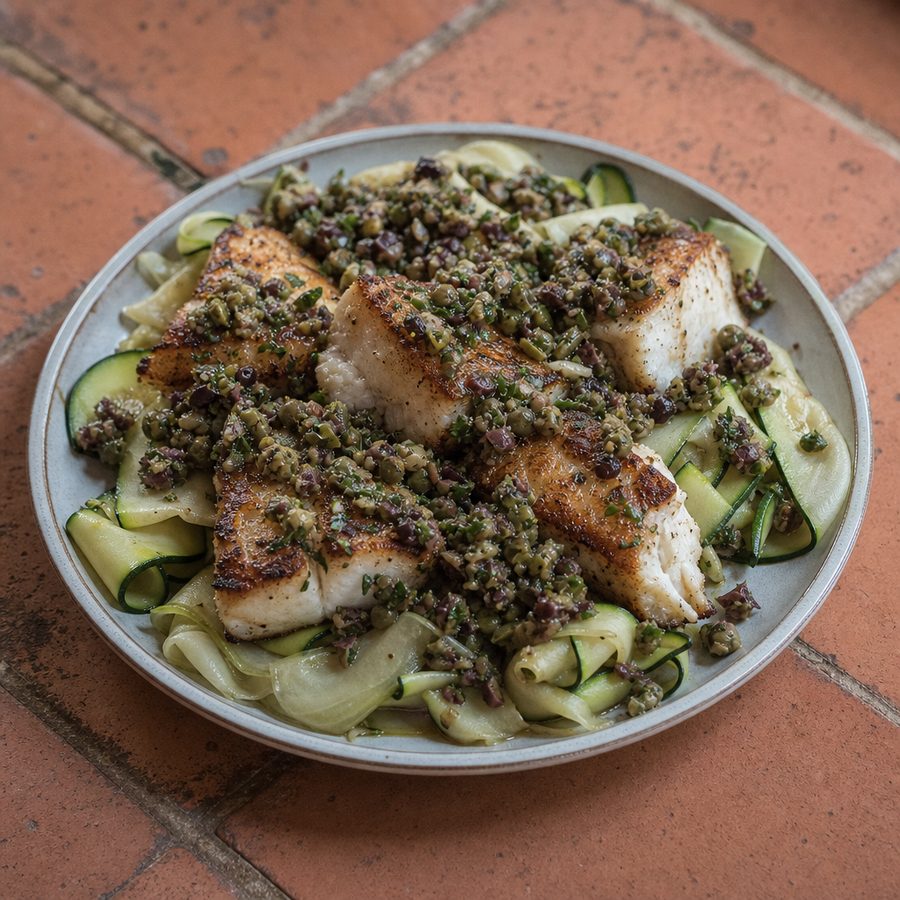
Seared halibut fillets crowned with a briny kalamata olive, parsley, garlic, and lemon tapenade, set over ribbons of olive-oil-sauteed zucchini.
Why You'll Love This Recipe
This is a quick, restaurant-feeling dinner built around a mild, meaty white fish and a punchy, no-cook topping. It comes together in one skillet in under half an hour, which makes it a realistic weeknight plate that still feels special enough for company. It suits anyone who wants a light but filling meal without a long ingredient list or unusual techniques. The tapenade is the part worth knowing on its own, since a jar of it in the refrigerator turns any plain piece of fish, chicken, or roasted vegetable into dinner on a night you have nothing planned.
The magic here is contrast. Halibut is delicate and almost sweet, so it needs a partner with backbone, and the tapenade delivers that: salty kalamata olives, sharp garlic, bright lemon, and grassy parsley bound with olive oil. Searing the fillets hard in a hot pan builds a golden, savory crust that stands up to the bold topping, while the zucchini ribbons, cooked only until barely tender, keep their fresh snap and soak up the oil and juices underneath.
It satisfies because it leans on protein and healthy fat rather than heavy starch, so you feel full and steady rather than weighed down. The fish is rich in protein, the olives and olive oil bring monounsaturated fats, and the zucchini and parsley add water, fiber, and a load of color. It is the kind of plate that tastes indulgent thanks to the briny, oily tapenade but still leaves you feeling light.
Ingredients
- 4 halibut fillets (about 640 g total)
- 3/4 cup pitted kalamata olives
- 3 zucchini, cut into ribbons
- 4 tbsp olive oil, divided
- 1/2 cup chopped parsley
- 3 garlic cloves
- 2 tbsp fresh lemon juice
- 1/2 tsp salt
Instructions
- Prep the ingredients: Pat the halibut fillets very dry on both sides with paper towels and let them sit at room temperature while you prep everything else. Trim the ends off the zucchini and, using a vegetable peeler or mandoline, shave them lengthwise into long, thin ribbons. Roughly chop the parsley, peel and mince the garlic, and squeeze the lemon for fresh juice.
- Make the tapenade: Add the pitted kalamata olives, chopped parsley, minced garlic, lemon juice, and olive oil to a food processor. Pulse in short bursts until you have a chunky, spoonable spread with visible pieces of olive, stopping before it turns into a smooth paste. Set aside so the flavors can mingle while you cook.
- Saute the zucchini: Heat olive oil in a large skillet over medium-high heat until it shimmers. Add the zucchini ribbons and cook, tossing gently with tongs, for 3 to 4 minutes until just tender but still bright green and holding their shape. Season lightly with salt, then transfer to plates or a platter and spread into a bed.
- Sear the halibut: Wipe the skillet clean and add the remaining olive oil over medium-high heat. Season the fillets with salt on both sides. Lay them in the hot pan and sear undisturbed for about 4 minutes until the underside is golden and releases easily. Flip and sear the second side about 4 minutes more, until the fish is opaque throughout, flakes with gentle pressure, and reaches an internal temperature of 130 to 135°F (54 to 57°C) at the thickest part, which is medium. The FDA gives 145°F (63°C) for seafood, so cook it further if that is the number you follow.
- Assemble and serve: Set each seared fillet on top of a bed of zucchini ribbons. Spoon the olive-herb tapenade generously over each piece of halibut so it spills a little onto the zucchini, and serve right away while the fish is hot.
Variations
- Swap the fish: If halibut is pricey or hard to find, use another firm white fish such as cod, haddock, or striped bass. Adjust the sear time to the thickness of the fillet, cooking until the fish is opaque and flakes easily.
- Change the herbs: Trade some or all of the parsley for fresh basil, mint, or a mix. Basil leans sweet and aromatic, mint adds cool brightness, and each gives the tapenade a different character while keeping it green and fresh.
- Add capers: Fold a spoonful of rinsed capers into the tapenade for an extra layer of briny, tangy pop alongside the olives. Reduce the added salt slightly, since capers are already salty.
- Use green olives: Substitute pitted green olives, such as Castelvetrano, for the kalamata. The tapenade will taste brighter, buttery, and less intensely salty than the deep, wine-dark kalamata version.
- Switch the vegetable base: Instead of zucchini, sear the fillets over sauteed spinach, thinly sliced fennel, or ribbons of summer squash. Cook whichever green just until tender so it stays fresh under the fish.
Storage & Leftovers
Store leftover halibut, zucchini, and tapenade in separate airtight containers in the refrigerator. The cooked fish and zucchini keep about two days, while the tapenade holds up for about five days since the olive oil, lemon, and salt help preserve it.
Reheat the fish gently to avoid drying it out: warm the fillets in a covered skillet over low heat with a small drizzle of olive oil, or in a low oven just until heated through. The zucchini is best reheated quickly in a hot pan so it does not turn watery, or simply eaten cold. Add the tapenade after reheating, straight from the fridge, so it stays fresh and bright.
The tapenade is the ideal make-ahead component; pulse it a day or two in advance and keep it covered in the fridge, where the flavors deepen. You can also shave the zucchini into ribbons ahead of time and store them wrapped in a paper towel so they stay dry until you cook. Sear the halibut fresh for the best texture.
Notes & Tips
- Dry the fish well: The single biggest factor in a good golden crust is a dry surface. Blot the halibut thoroughly with paper towels right before it hits the pan; any surface moisture will steam instead of sear and leave the fish pale.
- Do not overpulse the tapenade: Use short pulses and stop while you can still see distinct flecks of olive and parsley. A chunky spread clings to the fish and gives you texture in every bite, whereas a smooth puree turns pasty and muddy.
- Choose good olives: Since the topping is mostly olives, quality shows. Buy kalamata olives from the deli or a jar rather than the canned sliced type, and if you can only find them with pits, pit them yourself by pressing each one flat with the side of a knife.
- Keep the zucchini bright: Cook the ribbons hot and fast and pull them the moment they turn tender but still vivid green. Overcooked zucchini weeps water and goes limp, which waters down the plate.
- Season with the olives in mind: Kalamata olives and their brine are salty, so go light with added salt on the fish and zucchini and taste before adding more. You can always finish with a pinch at the table.
- Serve it promptly: This dish is at its best hot from the pan, when the crust is crisp and the tapenade glistens against the warm fish. If you are plating for guests, have the zucchini and tapenade ready so the halibut goes straight from skillet to plate.
Nutrition & Mindful Eating
- The fish and the zucchini are cooked plainly and the tapenade does everything else. That division of labor is the recipe, and it is why the halibut still tastes like halibut under all that salt and herb.
- Olives are the engine of the tapenade, briny and a little bitter, and they carry the same soft monounsaturated fat as the oil, which is what gives the sauce its body once everything is blended.
- Parsley goes in by the handful rather than the sprig, which keeps the tapenade green and grassy and keeps the olives from taking over, and it carries vitamin K and vitamin C into the sauce.
- Halibut is mild, firm and white, exactly the fish you want under a sauce this assertive, and it brings the protein and omega-3 fats that make this dinner rather than a side dish.
- Zucchini cooked quickly in olive oil holds its shape and stays a little squeaky, and it is the part that soaks up the tapenade, catching the lemon and the garlic in every piece.
- As you eat, see how much the tapenade changes from one bite to the next depending on what your fork picks up, and let that unevenness be a reason to slow down and pay attention.
Frequently Asked Questions
How do I know when the halibut is done without a thermometer?
Look for the flesh to turn from translucent to opaque all the way through and to flake apart when you press it gently with a fork. If you have a thermometer, aim for 130 to 135°F (54 to 57°C) at the thickest part; the fish will finish carrying over as it rests a minute on the plate.
Can I use frozen halibut?
Yes. Thaw it fully in the refrigerator overnight, then pat it very dry before seasoning and searing. Frozen fish releases more moisture, so drying it thoroughly is especially important for getting a golden crust rather than a steamed surface.
My tapenade tastes too salty. What can I do?
Olives vary a lot in saltiness. Balance it by pulsing in more parsley and a little extra lemon juice and olive oil, which stretches the mixture and softens the brine. Rinsing the olives briefly before pulsing also helps if you know they are very salty.
Can I make this on a grill instead of a skillet?
You can grill the halibut over medium-high heat, brushing it with olive oil first so it does not stick, and cooking a few minutes per side until it flakes. Cook the zucchini ribbons in a grill basket or a pan on the side, then top the fish with the tapenade just before serving.