
Halibut with Olive Tapenade and Green Beans
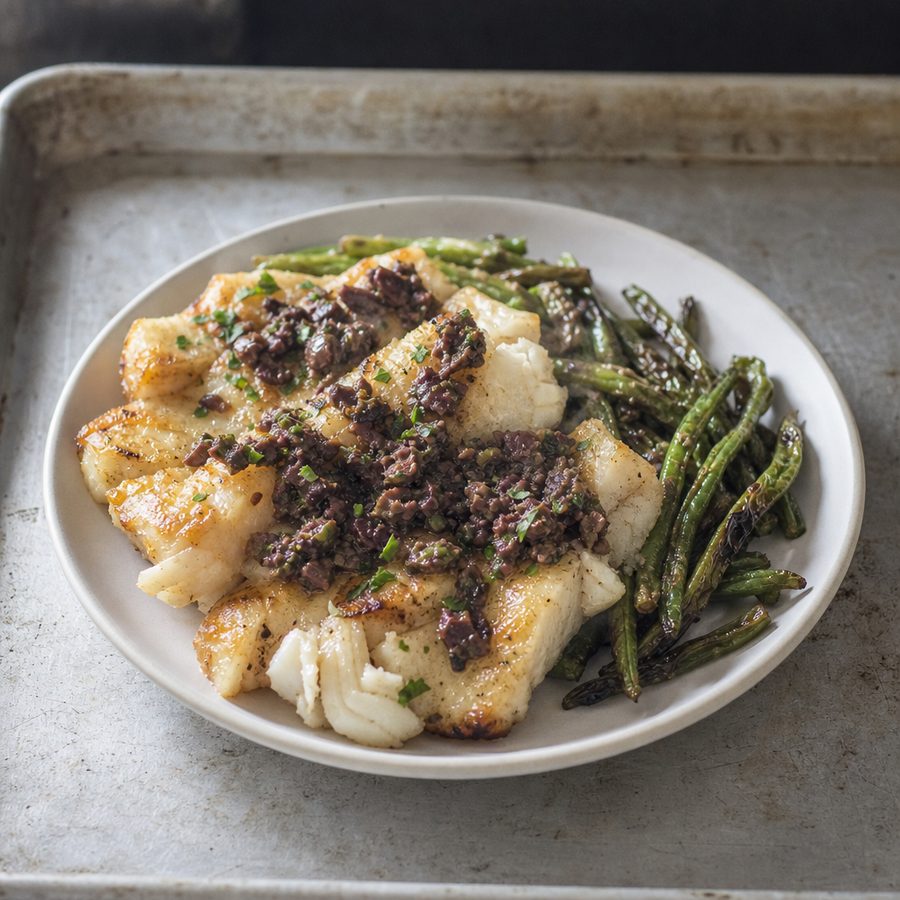
Buttery pan-seared halibut fillets crowned with a briny kalamata olive tapenade and cool diced avocado, served over blistered green beans and cherry tomatoes brightened with garlic, lemon, and parsley.
Why You'll Love This Recipe
This is a quick, elegant one-skillet dinner for anyone who wants a restaurant-style plate on a weeknight without a long ingredient list. Halibut is a mild, meaty white fish that even hesitant fish eaters tend to like, and the briny olive topping does most of the flavor work, so the cooking itself stays simple. It is a good fit for people watching carbohydrates closely, for those who eat fish but not meat, and for anyone who just wants a light but filling plate.
A mild fish needs a bold counterpoint. Halibut is mild and sweet-tasting, so it needs a bold counterpoint, and the kalamata tapenade delivers it with salt, acid, and the fruity depth of good olives loosened with olive oil and lemon. Searing the fillets in butter over medium-high heat browns the surface for flavor and gives the fish an appealing golden crust, while the green beans are cooked hot and fast so they blister and stay crisp rather than turning soft. The diced avocado adds a cool, creamy note that rounds out all that brine.
Rich, and yet not at all heavy. Halibut is an excellent source of protein that keeps you full, and the fats here come from wholesome sources: olive oil, avocado, and olives. The green beans and tomatoes add fiber, color, and a bit of natural sweetness that balances the salty topping, so every bite has something bright, something rich, and something fresh. The salt in the plate is doing real work as well, since the olives season the fish from the outside and mean you need very little on the fillet itself.
Ingredients
- 4 halibut fillets (about 5 oz each)
- 5 tbsp olive oil
- 3/4 cup pitted kalamata olives, chopped
- 3 tbsp butter
- 1/2 avocado, diced
- 3/4 lb green beans, trimmed
- 3/4 cup cherry tomatoes, halved
- 3 cloves garlic, minced
- 1 1/2 tbsp lemon juice
- 1/4 cup chopped parsley
- 1/2 tsp salt
Instructions
- Prep the aromatics: Mince the garlic. Chop the parsley. Chop the pitted kalamata olives fairly fine so they hold together as a topping. Trim the stem ends off the green beans, halve the cherry tomatoes, and dice the avocado just before serving so it stays fresh and green.
- Make the tapenade: In a small bowl, stir together the chopped olives, about half of the minced garlic, most of the chopped parsley, the lemon juice, and half of the olive oil until it forms a loose, spoonable relish. Set aside so the flavors mingle while you cook.
- Sear the halibut: Pat the halibut fillets dry with paper towels and season them with salt. Melt the butter in a large skillet over medium-high heat until it foams. Lay the fillets in and sear undisturbed 3 to 4 minutes, until the underside is golden. Flip once and cook another 3 to 4 minutes, until the fish is opaque all the way through, flakes easily with a fork, and reaches 130 to 135°F (54 to 57°C) at the thickest point. The FDA number for seafood is 145°F (63°C); halibut there is firm and dry enough that the tapenade has to work harder, which is why this stops at medium. Transfer to a plate.
- Blister the green beans: Wipe the skillet if needed, add the remaining olive oil, and set over medium-high heat. Add the trimmed green beans and the remaining garlic and cook, tossing occasionally, until the beans are bright green and crisp-tender with a few blistered spots, about 5 to 7 minutes. Add the halved cherry tomatoes and cook another 1 to 2 minutes, just until they soften and their skins loosen. Season with a pinch of salt.
- Plate and finish: Divide the green beans and tomatoes among plates. Rest a halibut fillet on top of or alongside the beans, spoon the olive tapenade over each fillet, and scatter the diced avocado over the top. Garnish with the reserved parsley and serve right away.
Variations
- Swap the fish: No halibut at the counter? Use another firm, meaty white fish such as cod, haddock, or sea bass, or use salmon for a richer result. Adjust the sear time to the thickness of the fillet.
- Caper and herb tapenade: Stir a spoonful of rinsed capers and a little fresh oregano or basil into the olive mixture for a sharper, more herbal topping.
- Asparagus instead of green beans: Trade the green beans for trimmed asparagus, cooked the same way in the skillet until bright green and crisp-tender, for a spring-forward version.
- Add a little heat: Sprinkle a pinch of red pepper flakes into the green beans as they blister, or stir a little into the tapenade, for a gentle warmth that plays well with the brine.
- Feta finish: Crumble a little feta over the plated beans for a tangy, salty accent; note that this adds dairy.
Storage & Leftovers
Store leftover halibut and green beans in separate airtight containers in the refrigerator for up to two days; fish is best eaten soon after cooking, and keeping the components apart keeps the beans from going soggy. Add the avocado only when serving, since it browns quickly once cut.
Reheat the fish gently to avoid drying it out: warm it in a covered skillet over low heat with a few drops of olive oil, or in a low oven until just heated through. Reheat the green beans quickly in a hot skillet so they crisp back up rather than steam. The tapenade is best at room temperature and does not need reheating.
To get ahead, make the tapenade up to three days in advance and keep it covered in the refrigerator; the flavor deepens as it sits. You can also trim the green beans and halve the tomatoes ahead of time, so at dinner you only need to sear the fish and cook the vegetables.
Notes & Tips
- Buy the thickest fillets you can: Thicker, evenly cut halibut fillets sear better and are more forgiving; thin, tapered pieces overcook at the edges before the center is done. Ask the fishmonger for center-cut portions of even thickness.
- Dry fish browns best: Patting the fillets truly dry before they hit the butter is the difference between a golden crust and a pale, steamed surface. Give them a good blot with paper towels.
- Taste before you salt: Kalamata olives and their tapenade are already quite salty, so season the fish lightly and taste the finished plate before adding more salt. The topping carries a lot of the seasoning.
- Pick a good olive: Since the tapenade is the star flavor, buy whole pitted kalamata olives packed in brine rather than pre-chopped, and chop them yourself for a fresher, less watery result.
- Know when the fish is done: Halibut turns dry fast. Pull it the moment it flakes with gentle pressure and looks opaque through the center; carryover heat finishes it on the plate.
- Add avocado last: Dice the avocado right before serving and set it on top at the very end so it stays bright green and creamy rather than browning or warming into mush.
Nutrition & Mindful Eating
- Fish, beans and a spoonful of olives on top is the whole plate, and it works because each part stays distinct. The halibut is soft and flaky, the beans are firm, and the olives are salty enough to season whatever they touch.
- Halibut basted in butter and oil picks up a nutty, browned flavor at the surface while staying moist in the center, and its protein is what makes a plate this plain eat like a full dinner.
- Green beans blistered in a hot pan keep their squeak and pick up dark spots that taste faintly of smoke, and they bring fiber and vitamin C to the plate along with that texture.
- Chopped olives and tomato stirred together with lemon make a loose, bright topping rather than a smooth paste, so whole pieces of both, salty and sweet, land on the fish in bursts.
- Avocado sliced alongside and the butter from the pan give the plate two soft, rich elements, and together with the fish they are why a dinner that looks light holds you well into the evening.
- As you eat, take note of the browned butter coming off the fish and the way a single olive changes an entire forkful, and let the plate be a reason to sit still for a while.
Frequently Asked Questions
How do I keep the halibut from sticking to the pan?
Make sure the butter is hot and foaming before the fish goes in, pat the fillets dry, and then leave them undisturbed. Fish releases naturally once a crust forms; if it resists when you try to flip, give it another 30 to 60 seconds before trying again.
Can I use frozen halibut?
Yes. Thaw it fully in the refrigerator overnight, then pat it very dry before cooking. Frozen fish releases extra moisture, so drying it well is key to getting a good sear instead of steaming it.
Is the tapenade very salty?
Kalamata olives are naturally briny, so the topping is assertively salty by design. That is why you season the fish itself lightly. If you want to soften the intensity, rinse the olives before chopping and add a touch more lemon and olive oil.
What can I serve alongside to make it more filling?
The fish and green beans already make a complete plate, but a side of cauliflower rice, a simple green salad, or roasted zucchini rounds it out nicely without weighing it down.