
Ham and Cheddar Egg Scramble
Soft, glossy scrambled eggs folded with lightly browned diced ham, melted sharp cheddar, and a little butter for a rich, savory breakfast.
Why You'll Love This Recipe
This is a fast, filling breakfast for anyone who wants something hot and substantial without much fuss or cleanup. It comes together in one skillet in under ten minutes, using ingredients most people already keep on hand, which makes it just as suited to a rushed weekday morning as to a slow weekend plate. It is also a good choice for anyone building a meal around protein and satisfying fat rather than starch.
The ham browns hot, then the heat comes down. Browning the ham first in butter builds a savory, slightly caramelized base, and then cooking the eggs low and slow keeps the curds soft and custard-like instead of dry and rubbery. Pulling the pan off the burner before folding in the cheddar lets the cheese melt gently into the warm eggs rather than seizing or turning greasy, so every bite stays creamy.
The result is satisfying because protein and fat both slow digestion and keep you full for hours. Eggs bring complete protein and a rich, tender texture; the ham adds savory, salty depth and even more protein; and the sharp cheddar ties it together with its tang and melt. Between the three of them there is enough salt in the pan already that the eggs need very little of their own, which is worth knowing if you are watching sodium. It eats rich enough to feel like a treat while still being simple, whole-food cooking.
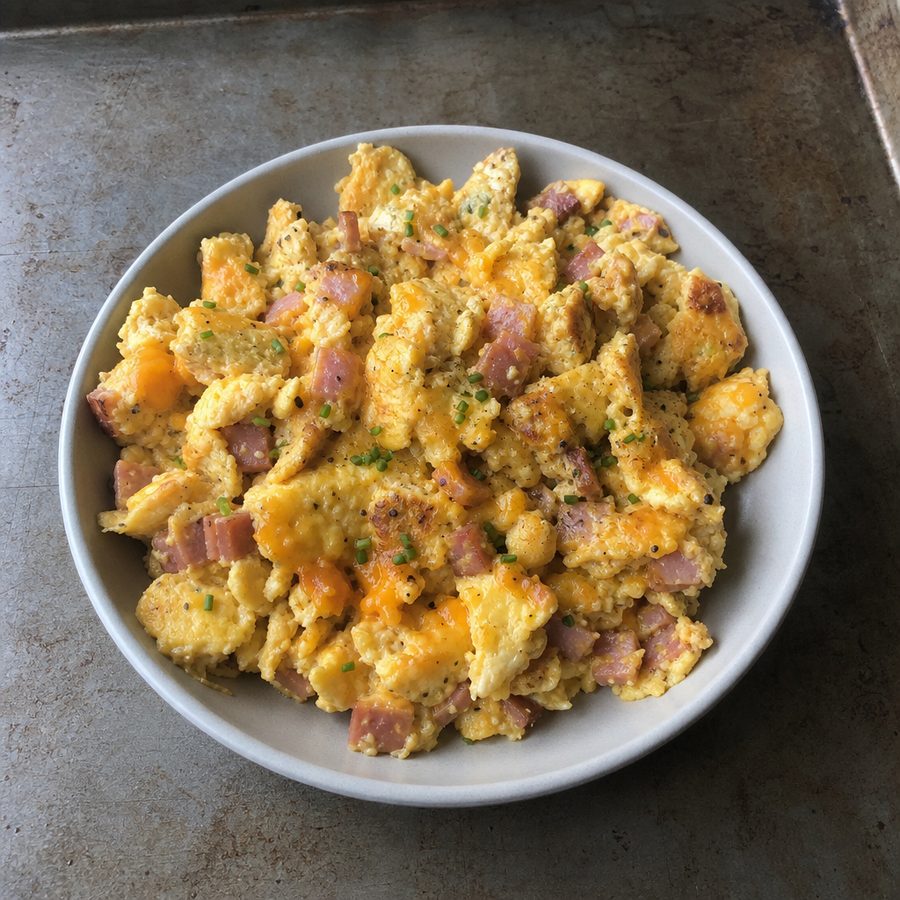
Ingredients
- 8 large eggs
- 2 cups diced cooked ham
- 1 cup shredded cheddar
- 2 tbsp butter
- 1/2 tsp salt
Instructions
- Prep the ham and cheddar: Dice the cooked ham into small, even cubes so it warms through quickly and distributes evenly. If you are using a block of cheddar, shred it now on the large holes of a box grater and set both aside within reach of the stove.
- Warm the ham in butter: Melt the butter in a nonstick or well-seasoned skillet over medium heat until it stops foaming. Add the diced ham and cook, stirring now and then, until the edges brown lightly and the pieces are heated through, about 3 to 4 minutes.
- Beat and add the eggs: Crack the eggs into a bowl, add the salt, and beat with a fork until the yolks and whites are fully blended and slightly frothy. Pour the eggs over the warm ham and let them sit undisturbed for a few seconds until the bottom just begins to set.
- Scramble low and slow: Lower the heat to medium-low. Using a silicone spatula, push the eggs slowly from the edges toward the center, folding the soft curds over as they form. Keep the curds large and moving; stop while the eggs still look glossy and slightly wet, about 2 to 3 minutes, since they will finish setting off the heat.
- Fold in the cheddar and serve: Pull the pan off the heat and scatter the shredded cheddar over the eggs. Fold it in gently so the residual warmth melts the cheese without overcooking the eggs. Serve immediately while soft and creamy.
Variations
- Bacon instead of ham: Swap the ham for chopped cooked bacon, adding it to the melted butter and warming until crisp before the eggs go in. This adds bacon in place of the ham for a smokier, crunchier bite.
- Ground beef scramble: Replace the ham with cooked, crumbled ground beef, browned in the butter until no pink remains. This adds beef and gives the dish a heartier, more meaty character.
- Creamier curds: Beat a splash of heavy cream into the eggs along with the salt before pouring them in. This adds dairy and yields softer, more custardy curds.
- Cream cheese fold-in: Fold in a spoonful of cream cheese along with the cheddar off the heat. This adds dairy and makes the scramble noticeably richer and silkier.
- Different cheese: Use shredded Swiss or Gruyère in place of the cheddar for a nuttier, mellower melt. This keeps the dish cheese-forward while changing its flavor and tang.
Storage & Leftovers
Store leftover scramble in an airtight container in the refrigerator for up to three days. Let it cool for a few minutes before sealing so condensation does not make the eggs watery.
Reheat gently to protect the soft texture. Warm it in a skillet over low heat with a small pat of butter, stirring just until hot, or microwave it in short bursts at reduced power, stirring between each, so the eggs heat evenly instead of turning tough.
To get ahead, dice the ham and shred the cheddar the night before and keep them in separate covered containers in the refrigerator. In the morning the dish comes together in one quick pass at the stove.
Notes & Tips
- Buy a block and shred it yourself: Freshly shredded cheddar from a block melts more smoothly than pre-shredded bags, which are coated with anti-caking starch that can leave the melt slightly grainy.
- Choose a good ham: A thick-cut cooked ham steak dices into meatier cubes with better browning than thin deli slices, which tend to dry out and curl in the pan.
- Season lightly and taste: Both the ham and the cheddar are already salty, so start with less salt in the eggs than you think you need and adjust only after tasting the finished scramble.
- Take them off early: Eggs carry enough residual heat to keep cooking after the pan leaves the burner, so pull them while they still look glossy and slightly underdone to avoid a dry, overcooked scramble.
- Use a nonstick or well-seasoned pan: A slick surface lets you fold the delicate curds without tearing them and makes cleanup far easier, since egg and melted cheese cling stubbornly to bare stainless steel.
- Double it for a crowd: This scales up cleanly for feeding several people; brown the ham in batches so the pan is not crowded, then cook the eggs in two rounds so the curds stay soft rather than steaming.
Nutrition & Mindful Eating
- Eggs, ham and cheddar are three savory things that soften into each other on the same plate. The eggs stay creamy, the ham holds its chew, and the cheddar pulls it all together as it melts.
- Eggs cooked over low heat and pulled off the pan while still glossy stay custardy rather than dry, and the yolks bring choline, vitamin D and the fat that makes the scramble taste as rich as it does.
- Ham browned in the pan before the eggs go in is what gives the scramble its depth, since the edges caramelize and leave salty flavor behind in the butter, and it adds protein of its own.
- Cheddar stirred in at the very end melts in ribbons rather than disappearing into the eggs, and a sharp one gives the plate a tang that cuts the butter, with calcium riding along in it.
- Butter is the cooking fat and the flavor at once, coating the curds so they stay soft, and between the butter, the eggs and the ham this is a breakfast that holds you through a long morning.
- As you eat, start while the curds are still soft and the cheese is still stretching, and let a breakfast this rich set its own pace rather than being eaten on the way out the door.
Frequently Asked Questions
Why did my eggs turn out rubbery?
Almost always the heat was too high or they cooked too long. Keep the burner at medium-low once the eggs go in, move them slowly, and take the pan off the heat while they still look glossy and a little wet, since they keep setting off the stove.
Can I use a different cheese?
Yes. Any good melting cheese works well here. Swiss, Gruyère, Monterey Jack, or Colby all fold in smoothly; sharp cheddar just gives the most pronounced tang against the salty ham.
Do I need to cook the ham first if it is already cooked?
You are not cooking it for safety, only warming and browning it. Giving the diced ham a few minutes in the butter caramelizes the edges and builds savory flavor that plain warm ham would not have.
How do I keep the cheese from turning greasy?
Add it off the heat. Melting the cheddar in the residual warmth of the cooked eggs lets it melt gently and stay creamy, whereas melting it over an active burner can cause it to break and release oil.