
Hearty Three-Bean Chili
A smoky, thick chili of kidney, pinto, and black beans simmered with red bell pepper, onion, garlic, and crushed tomatoes, ladled over warm brown rice.
Why You'll Love This Recipe
This is a pot of honest, stick-to-your-ribs chili built entirely from pantry staples, made for anyone who wants a filling, no-fuss dinner that comes together in about half an hour of active cooking. Three kinds of beans give it body and a mix of textures, and a bed of brown rice turns a bowl of chili into a complete, satisfying meal. It is forgiving, budget-friendly, and easy to make in a big batch for the week.
The flavor hinges on two small moves. First, the onion and red bell pepper cook down until soft and sweet, which builds a savory base before anything else goes in. Second, the chili powder and cumin get a minute in the hot oil to bloom, which draws out their aroma and depth so the finished chili tastes layered rather than dusty. Mashing some of the beans as it simmers releases their starch and thickens the pot naturally, giving you that glossy, clingy texture without any flour or thickener.
The nourishment and the satisfaction come from the same place. The beans bring a substantial amount of plant protein and fiber, which slows digestion and keeps you full long after the meal. The crushed tomatoes and red bell pepper add brightness and vitamins, the olive oil carries flavor and healthy fat, and the brown rice rounds everything out with steady, whole-grain energy. It is the kind of warm, hearty bowl that feels like comfort food while quietly doing your body a lot of good.
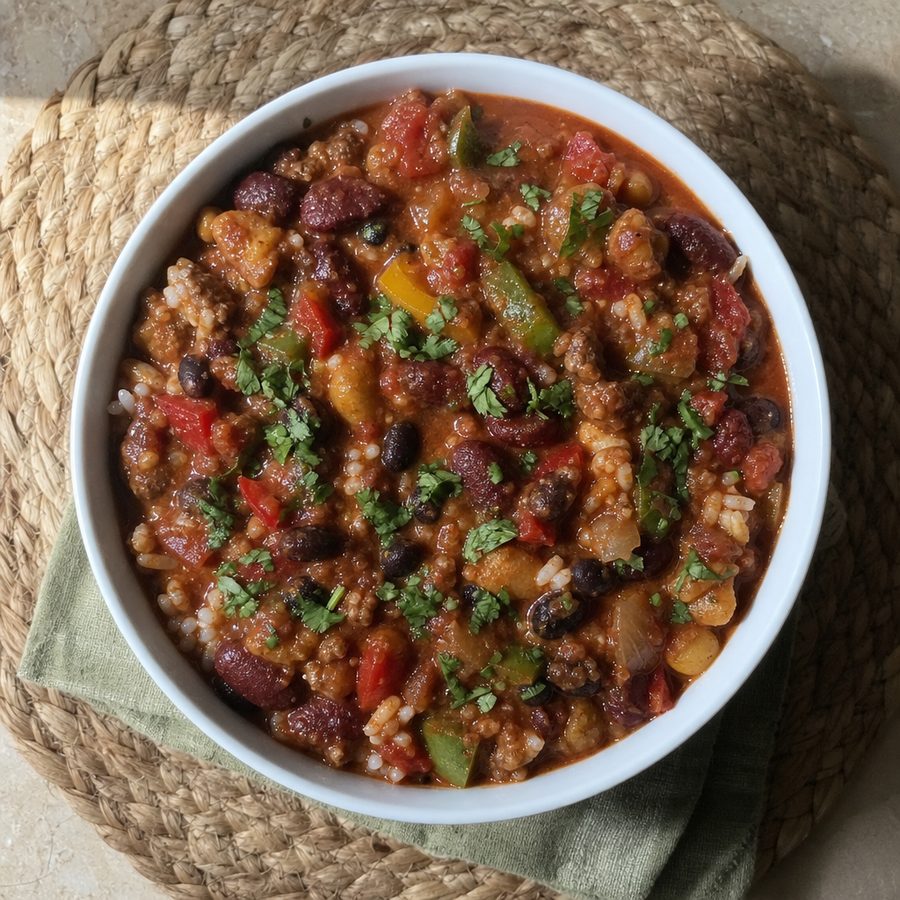
Ingredients
- 1 can kidney beans, drained
- 1 can pinto beans, drained
- 1 can black beans, drained
- 2 1/2 cups cooked brown rice
- 1 can crushed tomatoes
- 1 red bell pepper, diced
- 1 onion, diced
- 3 cloves garlic, minced
- 3 tbsp olive oil
- 4 tsp chili powder
- 2 tsp cumin
- 1/2 tsp salt
Instructions
- Cook the brown rice: Rinse the brown rice under cold water until it runs clear, since the loose starch on the surface is what makes a pot of rice gummy. Simmer it in a covered pot of water until the grains are tender and have absorbed the liquid, about 40 minutes, then fluff with a fork and set aside.
- Prep the vegetables: Dice the onion and the red bell pepper into small, even pieces. Peel and mince the garlic. Open the cans of kidney beans, pinto beans, and black beans, then drain and rinse them in a colander until the foam is gone, because that canning liquid is salty and cloudy and it will dull the chili.
- Build the base: Heat the olive oil in a large pot over medium heat. Add the diced onion and red bell pepper and cook, stirring now and then, until softened and the onion is translucent, about 6 minutes, so the sweetness has come up before anything acidic goes into the pot.
- Bloom the spices: Add the minced garlic, chili powder, and cumin and stir constantly for about 1 minute, until the spices smell toasty and fragrant. The hot oil is what wakes their flavor up, and once liquid goes in the chance is gone.
- Simmer the chili: Add the drained kidney, pinto, and black beans, the crushed tomatoes, and a good splash of water. Bring to a gentle simmer and cook for about 22 minutes, stirring occasionally. Partway through, mash some of the beans against the side of the pot with the back of a spoon, since the starch they release is what thickens the chili into a hearty, spoon-coating body.
- Season and serve: Stir in the salt, then taste and adjust. Spoon the warm brown rice into bowls and ladle the chili generously over the top, because the rice keeps drinking up liquid if the two sit together in the pot.
Variations
- Smoky heat: Stir in a spoonful of chopped chipotle in adobo or a pinch of cayenne along with the spices for a deeper, smokier burn.
- Corn and lime: Add a handful of corn kernels in the last few minutes of simmering and finish each bowl with a squeeze of fresh lime for sweetness and brightness.
- Extra vegetables: Fold in diced zucchini or chopped spinach during the simmer to stretch the pot and add more color and nutrients.
- Creamy avocado: Top each bowl with sliced avocado for a cool, buttery contrast to the warm, spiced chili.
- Cheesy finish: Sprinkle shredded cheddar over the top just before serving; this adds dairy.
Storage & Leftovers
Cooled leftovers keep well in an airtight container in the refrigerator for up to four days. Store the chili and rice separately if you can, so the rice does not soak up the sauce and turn soft; the chili actually deepens in flavor by the second day.
Reheat the chili gently in a saucepan over medium-low heat, stirring in a splash of water to loosen it back to a saucy consistency, since it thickens as it sits. Warm the rice separately with a sprinkle of water, covered, until steaming. The microwave handles it. Stop and stir every minute so the beans heat through rather than just the broth around them.
For a make-ahead meal, the chili freezes beautifully. Cool it fully, portion it into freezer-safe containers, and freeze for up to three months. Thaw overnight in the refrigerator and reheat gently, cooking the rice fresh when you are ready to eat.
Notes & Tips
- Rinse your beans: Draining and rinsing the canned beans washes away the starchy, salty liquid, which keeps the chili from tasting flat or overly salty and lets you control the seasoning yourself.
- Adjust the thickness: Mash more beans for a thicker, almost refried texture, or fewer for a brothier chili. If it tightens up too much as it cooks, loosen it with a splash of water.
- Season at the end: Add the salt after the chili has simmered and reduced, then taste. The flavors concentrate as it cooks, so salting too early can push it too far.
- Dial the spice: Chili powder blends vary a lot in heat. Start with a little less if yours is fiery, taste after the spices bloom, and build up from there.
- Make it a big batch: This recipe doubles easily and the flavor only improves overnight, so it is worth cooking extra for lunches through the week.
- Serve it up: A handful of chopped fresh cilantro, sliced scallions, or a few pickled jalapeños on top add freshness and crunch against the soft, hearty chili.
Nutrition & Mindful Eating
- Beans, tomato and rice work as one thing here. The beans bring the protein and the body, the tomato cooks down into the sauce that carries all the spice, and the rice underneath soaks up whatever runs off the spoon.
- Pinto beans are the ones that break down. Some of them go to mush at the edges and thicken the pot on their own, which is where the body of the sauce comes from, and they bring fiber along with that creaminess.
- Kidney beans hold firm through a long simmer and black beans keep their dark skins intact, so you still get whole beans in every spoonful, along with the folate and the deep pigments those skins carry.
- Chili powder and cumin need to hit hot oil with the onion and garlic before any liquid goes in. That single step is the difference between a chili that smells deep and one that tastes dusty.
- Brown rice underneath keeps a little chew and gives the bowl a base, and between the rice and the beans a bowl of this holds you for hours, which is why chili always eats better than it looks.
- As you eat, keep the spoon slow enough to taste the difference between the three beans and the cumin sitting underneath them, and let a bowl this warm be somewhere you rest rather than refuel.
Frequently Asked Questions
Can I use dried beans instead of canned?
Yes. Soak them overnight, then simmer until fully tender before they go into the chili, since they will not soften much further in the tomato base. You will need to cook them separately first, then add them at the same stage as canned beans.
My chili turned out too thin. How do I fix it?
Let it simmer uncovered for a few more minutes to reduce, and mash more of the beans against the side of the pot. The released starch thickens the chili naturally without any flour.
Can I make this in a slow cooker?
Yes. Do the onion, pepper, and spice steps on the stove first so the aromatics develop, then transfer everything to the slow cooker with the beans, tomatoes, and water and cook on low for several hours. Mash some beans and season at the end.
What can I serve with it besides rice?
The chili is hearty on its own, but it also pairs well spooned over baked potatoes, tucked into warm tortillas, or served alongside cornbread for a bigger meal.