
Classic Vegetable Minestrone
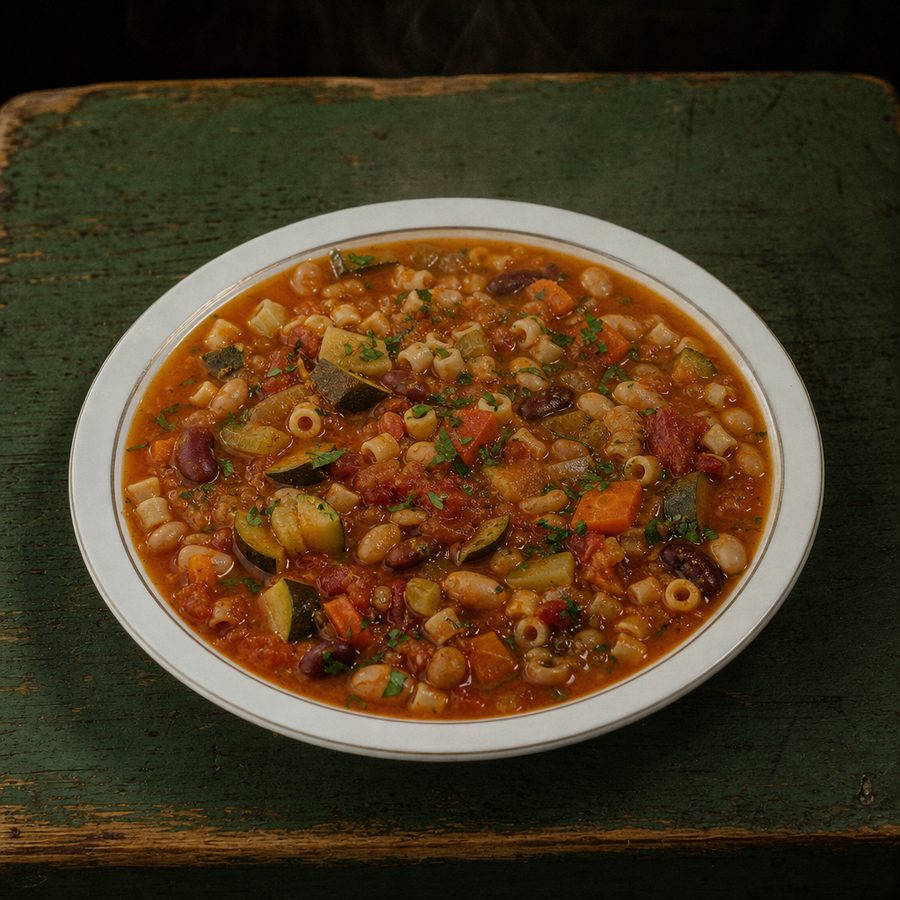
A thick, savory tomato broth loaded with cannellini beans, carrots, celery, zucchini, kale, and whole wheat pasta, finished with garlic, oregano, basil, and fresh parsley.
Why You'll Love This Recipe
This is a one-pot dinner soup for anyone who wants a bowl that eats like a full meal without any meat or dairy. It leans on humble, affordable ingredients like beans, root vegetables, greens, and a little pasta, and turns them into something hearty and deeply comforting. It suits a cook who wants leftovers that hold up all week and a family meal that pleases people looking for something both light and filling.
The flavor is built in layers. Cooking the onion, carrots, and celery slowly in olive oil first draws out their natural sweetness and creates the aromatic backbone the whole pot rests on. Blooming the garlic and oregano in that warm oil releases their aroma before any liquid goes in, and the long simmer with crushed tomatoes and beans lets everything marry into a broth that tastes like it cooked all day. Adding the zucchini and kale near the end keeps them tender and fresh rather than washed out.
Beans gone soft, vegetables gone tender, and pasta suspended in a savory tomato broth. Every spoonful has body. The beans and vegetables bring plenty of fiber, which is what makes the bowl feel filling and steadying rather than heavy, while the olive oil rounds everything out and carries the flavor. A shower of fresh parsley at the end lifts the whole thing with a bright, green note.
Ingredients
- 2 cans cannellini beans, drained
- 2 1/2 cups cooked whole wheat pasta
- 1 can crushed tomatoes
- 2 carrots, diced
- 2 celery stalks, diced
- 1 zucchini, diced
- 1 onion, diced
- 3 cloves garlic, minced
- 1/3 cup fresh basil
- 3 tbsp olive oil
- 1 1/2 tsp dried oregano
- 1/2 tsp salt
- 3 cups chopped kale, stems removed
- 1/4 cup chopped fresh parsley
Instructions
- Prep the vegetables: Dice the onion, carrots, celery, and zucchini into small, even pieces. Mince the garlic. Strip the kale leaves from their thick stems and roughly chop them. Roughly chop the parsley and tear the basil leaves, and set both aside for serving.
- Cook the pasta: Bring a pot of salted water to a boil, add the small pasta, and cook until just tender, a minute short of the package time. Drain and set aside; a little residual firmness is fine since it warms again in the soup.
- Saute the base: Warm the olive oil in a large pot over medium heat. Add the onion, carrots, and celery and cook, stirring now and then, until softened and the onion is translucent, about 8 minutes. Stir in the garlic and oregano and cook until fragrant, about 1 minute.
- Simmer the broth: Drain and rinse the cannellini beans, then add them to the pot along with the crushed tomatoes and enough water to make a brothy soup. Bring to a gentle simmer and let it cook for 15 minutes so the flavors meld.
- Add the tender vegetables: Stir in the diced zucchini and chopped kale. Simmer until the zucchini is tender and the kale has wilted and softened, about 8 minutes.
- Finish and serve: Stir in the drained pasta and the salt, and warm through for a minute or two. Taste and adjust the salt. Ladle into bowls and top with the chopped parsley and the torn basil.
Variations
- Swap the greens: Trade the kale for chopped spinach or Swiss chard. Stir tender spinach in at the very end and let it wilt from the residual heat rather than simmering it.
- White bean swap: Use great northern or navy beans in place of the cannellini for the same creamy texture and mild flavor.
- Extra vegetables: Fold in diced green beans or a handful of frozen peas along with the zucchini for even more color and bite.
- Herb finish: Stir a spoonful of prepared basil pesto into each bowl at the table for a burst of herbal richness (check the label, as some pesto adds dairy).
- Heartier grain: Swap the small pasta for cooked farro or brown rice, cooked separately until tender and stirred in at the end, for a chewier, nuttier bowl.
Storage & Leftovers
Cooled leftovers keep in an airtight container in the refrigerator for up to four days. The flavor actually deepens overnight as the vegetables and broth continue to mingle.
Reheat gently in a pot over medium-low heat, adding a splash of water to loosen the broth, since the pasta and beans drink it up as they sit. Warm just until steaming and stir so nothing catches on the bottom.
To make ahead, cook the soup through the vegetables but leave out the pasta, and refrigerate. Boil and add the pasta fresh when you reheat, which keeps it from turning soft and starchy in the broth.
Notes & Tips
- Cook the pasta separately: Always boil the pasta on its own and add it at the end. If you cook it in the broth it releases starch and keeps absorbing liquid, leaving you with a mushy, thick stew instead of a brothy soup.
- Rinse your beans: Draining and rinsing canned cannellini beans washes away the thick canning liquid, which keeps the broth clean-tasting and lowers the sodium that liquid carries.
- Season at the end: Wait to add the salt until the pasta is in and everything has simmered. The tomatoes and beans concentrate as they cook, so tasting at the finish keeps you from over-salting.
- Save the kale stems: The chopped kale stems are edible. Dice them small and add them with the carrots and celery so they have time to soften, rather than tossing them out.
- Make it a bigger batch: This soup doubles beautifully and freezes well if you leave the pasta out. Freeze the bean-and-vegetable base flat in a bag, then add fresh-cooked pasta when you reheat.
- Serve it right: A drizzle of good olive oil over each finished bowl adds richness and aroma. A slice of crusty bread on the side is perfect for mopping up the broth.
Nutrition & Mindful Eating
- The beans, the pasta and the vegetables are what make this a meal rather than a side. The white beans give the broth body, the whole wheat pasta gives it something to chew, and the carrot, celery and zucchini keep every spoonful tasting fresh.
- White beans turn creamy at the edges as they sit in the hot broth, thickening it slightly on their own, and they carry plant protein and soluble fiber that let a bowl of soup hold like a real lunch.
- Crushed tomatoes cooked down with the olive oil are where the sweetness and the deep red color come from, and heat and fat together make the lycopene behind that color easier for your body to take up.
- Garlic and dried oregano go into the warm oil early so their edges soften, and the oregano keeps working through the whole simmer, which is why the broth tastes seasoned all the way down rather than only on top.
- Fresh basil torn in off the heat keeps its perfume rather than cooking away, and it is the thing that makes the bowl smell like summer even after the pot has been going for an hour.
- As you eat, let the steam and the basil reach you before the first spoonful, and keep the spoon slow enough to feel the bowl filling you rather than finishing it on the way to something else.
Frequently Asked Questions
How do I keep the soup from getting too thick in the fridge?
The pasta and beans keep soaking up broth as the soup sits, so leftovers naturally tighten up. When reheating, stir in a splash of water until it loosens back to the consistency you like, then taste and adjust the salt.
Can I use dried beans instead of canned?
Yes. Soak the dried cannellini beans overnight, then simmer them in plenty of unsalted water until fully tender before you start, since they will not soften much once tomatoes are added. Use them in place of the drained canned beans.
My broth tastes flat. What happened?
Usually it needs salt, which wakes up the tomato and vegetable flavors, so add a little at a time and taste. A slow saute of the onion, carrot, and celery at the start also builds much of the depth, so give that step its full time.
What pasta shape works best?
Small shapes like ditalini, small shells, elbows, or broken spaghetti are ideal because they fit on a spoon with the beans and vegetables. Cook it just to tender since it warms again in the hot soup.