
Herb-Roasted Salmon With Sweet Potato
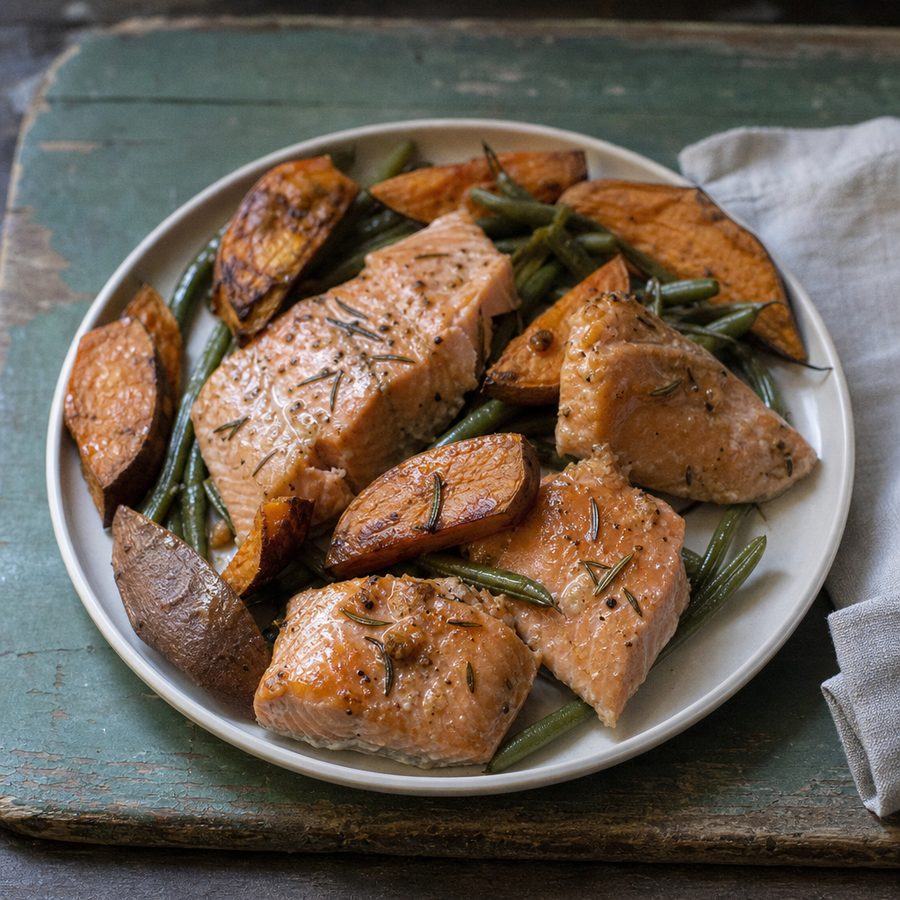
Flaky salmon fillets roasted with garlic, fresh rosemary, and lemon alongside caramelized sweet potato wedges and tender-crisp green beans, all finished with a drizzle of olive oil on a single pan.
Why You'll Love This Recipe
This is a warm, complete one-pan dinner built for anyone who wants real nourishment without a sinkful of dishes or a long list of steps. It pairs a rich, tender piece of fish with a sweet roasted root vegetable and a crisp green, so a single plate covers protein, slow-burning starch, and vegetables at once. It suits a busy weeknight just as easily as a quiet dinner for guests, and it is naturally free of the heavy sauces and excess salt that weigh down so many roasted fish dinners.
One pan, but not one timer. Sweet potato wedges need more time and higher heat to caramelize and turn tender inside, so they go in first; the salmon and green beans, which cook fast, join partway through and finish at the same moment. Coating the fish and beans with a quick emulsion of olive oil, lemon juice, garlic, and rosemary lets the herbs bloom in the oven heat and the lemon brighten everything, while patting the salmon dry first helps its surface firm up rather than steam.
Silky, flaky salmon against caramelized sweet potato and beans with a little snap left in them. The fish delivers lasting, high-quality protein and heart-friendly fats, the sweet potato brings fiber and natural sweetness that keeps you full, and the whole plate leans on herbs, garlic, and lemon rather than salt for flavor. It is the kind of dinner that feels indulgent while quietly doing your body good.
Ingredients
- 4 salmon fillets (about 150 g each)
- 2 medium sweet potatoes, cut into wedges
- 3 cups trimmed green beans
- 3 tbsp olive oil
- 2 tbsp fresh lemon juice
- 4 garlic cloves, minced
- 2 tsp chopped fresh rosemary
- 1/2 tsp sea salt
Instructions
- Preheat and prep the pan: Preheat the oven to 425°F (220°C) and line a rimmed sheet pan with parchment paper so the potatoes release cleanly and the pan stays easy to clean.
- Cut and season the sweet potatoes: Scrub the sweet potatoes and cut them into wedges about a half inch thick so they cook through in the same time. Toss the wedges with a little of the olive oil until lightly coated, spread them in a single layer on the pan, and season with a pinch of the sea salt.
- Roast the potatoes first: Roast the sweet potato wedges for 15 minutes to give them a head start, since they take longer than the fish. They should just be starting to soften and brown at the edges.
- Make the herb-garlic oil and prep the rest: While the potatoes roast, mince the garlic and finely chop the fresh rosemary. Trim the stem ends from the green beans. In a small bowl, stir together the remaining olive oil, the lemon juice, the minced garlic, and the chopped rosemary. Pat the salmon fillets dry with a paper towel.
- Add the salmon and green beans: Slide the pan out and push the potatoes to one side. Lay the salmon fillets skin-side down in the center and arrange the green beans around them in a single layer. Spoon the herb-garlic oil over the salmon and beans, then season everything with the remaining sea salt.
- Roast to finish: Return the pan to the oven and roast for 12 to 15 minutes, until the salmon flakes easily with a fork and reaches an internal temperature of 145°F (63°C) at its thickest point, the beans are tender-crisp and bright green, and the potatoes are fork-tender. Serve hot straight from the pan.
Variations
- Maple-glazed sweet potato: Brush the sweet potato wedges with a little pure maple syrup in the last few minutes of roasting for a deeper caramelized sweetness. This adds a small amount of added sugar.
- Extra citrus and herbs: Lay thin lemon slices over the salmon before it goes in the oven and add a little chopped fresh dill or parsley along with the rosemary for a brighter, more aromatic finish.
- Warm spice rub: Rub the salmon with ground ginger and a pinch of cinnamon before roasting for a warm, gently spiced crust that plays well with the sweet potato and keeps clear of nightshades.
- Swap the green vegetable: Trade the green beans for asparagus spears or broccoli florets, arranging them around the fish the same way; add tender vegetables like asparagus at the same point as the beans, and denser broccoli a few minutes earlier.
- Ginger-lime kick: Add a spoonful of grated fresh ginger to the herb-garlic oil and swap the lemon juice for lime for a livelier, warmer version. Adjust the ginger to taste.
Storage & Leftovers
Refrigerate leftovers in an airtight container within two hours of cooking. The salmon and vegetables keep well for up to three days; store the fish and vegetables together or separately, whichever is easier, and keep them cold at the back of the fridge rather than in the door.
To reheat, warm portions in a 300°F (150°C) oven or toaster oven for about eight to ten minutes until just heated through, which keeps the salmon moist and the potato edges crisp. A microwave works in a pinch on medium power in short bursts, though the fish will be softer. Avoid overheating, since salmon dries out quickly once it is cooked a second time.
To get ahead, cut the sweet potato wedges, trim the green beans, and stir together the olive oil, lemon juice, garlic, and rosemary up to a day in advance and keep them chilled in separate covered containers. With the prep done, the whole dish comes together and roasts in one uninterrupted stretch.
Notes & Tips
- Choose the salmon: Look for fillets of even thickness so they finish cooking at the same time; a center-cut piece is more uniform than a thin tail end. Either wild or farmed works, and skin-on holds together better on the pan.
- Cut potatoes evenly: Keep the sweet potato wedges roughly the same size, about a half inch thick, so none are raw in the center while others turn mushy. Uniform wedges are the single biggest factor in even roasting.
- Judge salmon doneness: The fish is done when it flakes with gentle pressure and looks opaque through the center; an instant-read thermometer showing 145°F (63°C) at the thickest point takes the guesswork out entirely.
- Keep the beans crisp: Spread the green beans in a single layer with a little space between them so they roast rather than steam. Piled up, they turn limp and dull instead of tender-crisp and bright.
- Adjust the seasoning: The salt here is deliberately light and leans on garlic, rosemary, and lemon for flavor. Taste at the end and, if you like, add a fresh squeeze of lemon or a few extra rosemary needles rather than more salt.
- Round out the plate: This dinner stands on its own, but a spoonful of cooked quinoa or brown rice alongside stretches it further and soaks up the lemony pan juices nicely. Both are grains, which the autoimmune protocol leaves out.
Nutrition & Mindful Eating
- Fish, roots and beans on one pan give you three textures at once: salmon that separates into wide flakes, sweet potato gone soft and sugary at the edges, and green beans that still snap. The olive oil and lemon tie all three together.
- Salmon has enough fat running through it that it bastes itself in the oven, staying moist even where the edges brown, and that same fat is where its long-chain omega-3s live.
- Sweet potatoes roast until their sugars caramelize and the outsides go almost sticky, and the deep orange flesh is beta-carotene showing itself, which the olive oil in the pan helps your body take up.
- Green beans take the hottest part of the pan so they blister and char in spots, giving the plate a bit of bitterness and crunch to push against all that softness.
- Garlic and rosemary roasted with the fish turn mellow and piney, and the lemon squeezed over everything at the table is what keeps a rich piece of salmon tasting clean right down to the last bite.
- As you eat, see how little pressure the salmon needs to come apart and let the lemon land at the end of each bite, then finish at the table rather than on your way somewhere.
Frequently Asked Questions
How do I know when the salmon is done without overcooking it?
The fish is ready when it turns opaque and flakes with light pressure from a fork, or when an instant-read thermometer reads 145°F (63°C) at the thickest part. Because the fillets join the pan partway through, they typically need only 12 to 15 minutes; start checking at 12 so they stay moist.
Can I use frozen salmon or frozen green beans?
Yes. Thaw salmon fully in the fridge and pat it very dry before roasting so it browns instead of steaming. Frozen green beans work too, but thaw and drain them first and expect them softer than fresh, since they carry extra moisture.
My sweet potatoes never get tender in time. What am I doing wrong?
They are usually cut too thick or crowded on the pan. Cut them into even half-inch wedges, spread them in a single layer with room around each piece, and give them the full 15-minute head start before the salmon goes in.
Do I have to use the skin-on fillets, and should I eat the skin?
Skin-on fillets hold together better on the pan and are easy to lift off after roasting if you prefer not to eat the skin. The skin is edible and crisps somewhat in the oven, so it comes down to personal preference; skinless fillets work fine, just handle them gently when serving.