
Herbed Tilapia Couscous Primavera
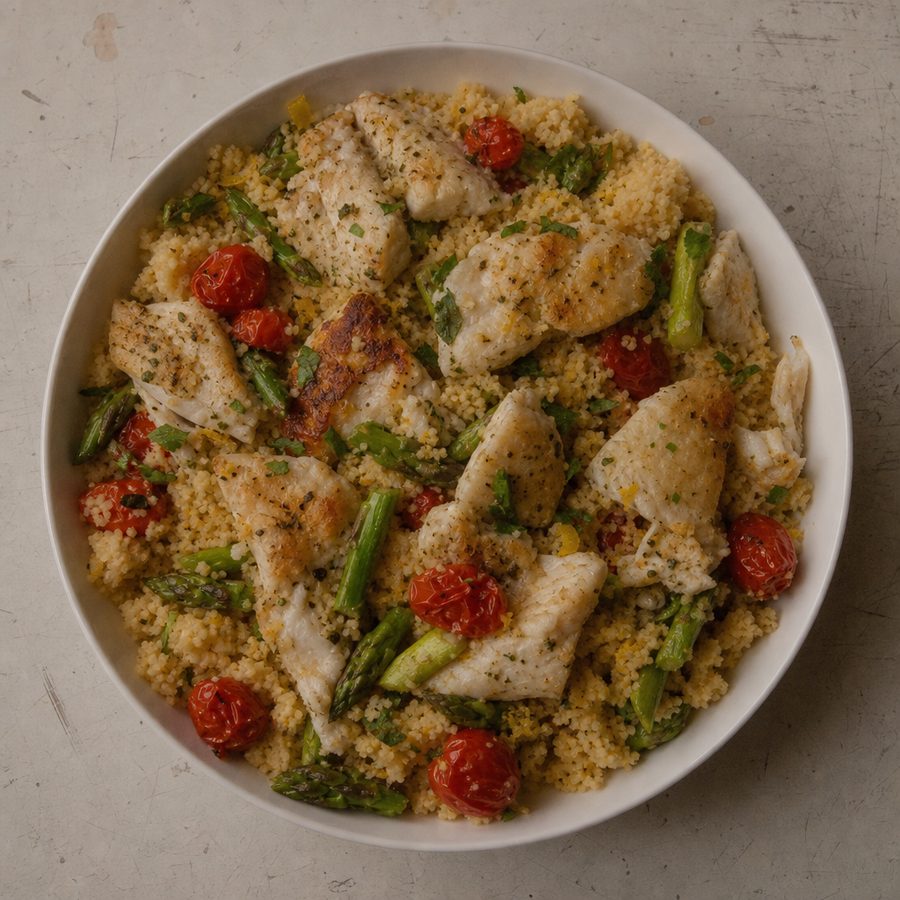
Flaky lemon-herb tilapia rests over fluffy couscous tossed with tender asparagus, blistered cherry tomatoes, garlic, dill, and thyme, finished with a bright squeeze of fresh lemon and a drizzle of olive oil.
Why You'll Love This Recipe
This is a light, quick-cooking plate built for an easy weekday lunch that still feels finished and fresh. Mild tilapia cooks in minutes and takes on lemon, thyme, and dill without any fuss, while the couscous and spring vegetables round it into a full meal in one skillet. It suits anyone who wants a mild, flaky protein and plenty of produce without a long cook time or a sink full of pans.
One skillet, and everything through it in sequence. Searing the tilapia first leaves flavorful browned bits and rendered oil in the pan, and the asparagus and garlic pick those up as they saute. Dressing the warm couscous with raw lemon juice and olive oil, then folding in the just-cooked vegetables, keeps the herbs bright and the tomatoes juicy rather than muddy, so each component still tastes like itself.
Flaky, savory fish against fluffy grains, crisp-tender asparagus, and sweet tomatoes that burst on the fork. Tilapia brings mild, flaky protein, the vegetables add fiber and color, and the olive oil ties it together with a little richness that helps everything feel like a complete plate rather than a diet lunch. It is filling without being heavy, which is exactly what you want in the middle of the day.
Ingredients
- 4 tilapia fillets (about 130 g each)
- 3 cups cooked couscous
- 1 bunch asparagus, cut into 2-inch pieces
- 1 1/2 cups cherry tomatoes
- 4 tbsp olive oil, divided
- 2 tbsp fresh lemon juice
- 2 garlic cloves, minced
- 1/4 cup chopped dill
- 1 tsp fresh thyme
- 1/2 tsp salt
Instructions
- Cook the couscous: Bring water to a boil in a saucepan and add a small pinch of the salt. Stir in the couscous, cover, remove from the heat, and let stand until the grains are tender and the water is absorbed, about 5 minutes. Fluff with a fork to separate the grains and set aside, since couscous left packed in the pot sets into a single block as it cools.
- Prep the aromatics and vegetables: Snap or trim the woody ends off the asparagus and cut the spears into 2-inch pieces, because the bottom inch or two stays fibrous no matter how long it spends in the pan. Mince the garlic, roughly chop the dill, and strip the thyme leaves from their stems. Halve the cherry tomatoes if any are large, and squeeze the lemon to get fresh juice.
- Sear the tilapia: Pat the fillets dry and season them on both sides with the thyme and half the salt. Heat 1 tablespoon of the olive oil in a large skillet over medium-high heat. Lay the fillets in the pan and cook undisturbed about 3 minutes per side, since tilapia is thin and delicate and every time it gets moved it loses a little more of itself to the pan, until the fish is opaque, browned at the edges, and flakes easily with a fork (internal temperature 145°F (63°C)). Transfer to a plate.
- Saute the vegetables: In the same skillet, add a little more of the olive oil if the pan looks dry, and do not wipe it out first, because the browned bits the fish left behind are the seasoning for everything that follows. Add the asparagus and minced garlic and cook, stirring, about 4 minutes, until the asparagus is bright green and crisp-tender. Add the cherry tomatoes and continue cooking until they soften and their skins begin to blister and burst, 2 to 3 minutes more.
- Dress the couscous: Add the fresh lemon juice, the remaining olive oil, the chopped dill, and the remaining salt to the couscous and toss to coat evenly. Fold in the sauteed asparagus and tomatoes along with any pan juices, so that the couscous drinks up the burst tomato liquid instead of leaving it on the plate.
- Plate and serve: Divide the couscous primavera among plates and top each portion with a tilapia fillet. Serve warm, with an extra squeeze of lemon if you like.
Variations
- Swap the protein: Use shrimp or another firm white fish such as cod or halibut in place of the tilapia, adjusting the cooking time so the fish is just opaque and flakes easily.
- Change the grain: Trade the couscous for cooked quinoa, farro, or orzo for a different texture; farro and quinoa give a chewier, heartier base.
- More green vegetables: Fold in fresh baby spinach or peas along with the asparagus, letting the spinach wilt in the warm pan just before you toss it with the couscous.
- Add a creamy, salty finish: Crumble feta over the plated dish for a tangy, briny note; this adds dairy.
- Brighten with citrus and heat: Stir in lemon zest and a pinch of red pepper flakes with the dressing for a sharper, gently spicy version.
Storage & Leftovers
Store leftovers in an airtight container in the refrigerator for up to three days. Keep the fish and couscous together or separate, as you prefer; the tilapia is delicate and will flake apart more as it sits, which is fine for a next-day lunch.
To reheat, warm the couscous and vegetables gently in a skillet or microwave with a splash of water to loosen the grains, then add the fish for just the last minute so it heats through without drying out or overcooking. A fresh squeeze of lemon after reheating wakes the flavors back up.
To get ahead, cook the couscous and prep the asparagus, garlic, dill, and tomatoes a day in advance and refrigerate them separately. When you are ready to eat, all that is left is to sear the fish, quickly saute the vegetables, and toss everything together.
Notes & Tips
- Buy the right asparagus: Look for firm spears with tight, closed tips. Thinner spears cook fastest and stay tender; if yours are thick, cut them a bit smaller so they finish in the same time as everything else.
- Dry the fish first: Pat the tilapia thoroughly dry with paper towels before it hits the pan. A dry surface browns instead of steaming, which gives you those flavorful edges and keeps the fillet from sticking.
- Know when the fish is done: Tilapia is ready the moment it turns from translucent to opaque and flakes when you nudge it with a fork. It is thin and cooks fast, so pull it early rather than late to avoid a rubbery texture.
- Dill is flexible: Fresh dill gives this its signature lift, but fresh parsley, basil, or chives work well too if that is what you have. Stir soft herbs in at the end so they stay bright.
- Season the couscous while warm: Add the lemon and olive oil while the couscous is still warm so the grains drink in the dressing. Taste before serving and adjust with a little more lemon or a pinch of salt to your liking.
- Double it for meal prep: This scales easily and holds up well, so cook extra couscous and vegetables for grab-and-go lunches through the week, searing fresh fish or reheating gently as you go.
Nutrition & Mindful Eating
- The fish, the couscous and the vegetables all land on the plate within minutes of each other, so the couscous is still steaming when the tomatoes and asparagus go over it and the tilapia settles on top.
- Tilapia is mild, fine-textured and quick to cook, going opaque and flaking within a couple of minutes, and it brings a lot of protein onto a plate that is otherwise vegetables and grain.
- Whole wheat couscous swells in hot liquid and stays loose and separate, giving the plate a soft base that catches the garlic-warmed olive oil and lemon juice, along with the fiber the whole grain carries.
- Asparagus cooked briefly keeps its squeak and its grassy flavor, and the spears bring folate along with a slight bitterness that makes the tomatoes beside them taste sweeter.
- Fresh dill and thyme with a hard squeeze of lemon go on at the very end, off the heat, so the herbs stay bright green and their aroma comes up with the steam as you carry the plate to the table.
- As you eat, watch the tilapia break apart against the soft couscous while the asparagus still resists a little, and give a quick lunch the same attention you would give a slow one.
Frequently Asked Questions
Can I use frozen tilapia?
Yes. Thaw the fillets fully in the refrigerator, then pat them very dry before seasoning and searing. Excess water will make the fish steam rather than brown, so drying is the key step.
Why is my tilapia sticking to the pan?
The fish usually sticks when the pan or oil is not hot enough, or when the fillet is still wet. Make sure the oil is shimmering before the fish goes in, and let each side cook undisturbed until it releases naturally before you try to flip it.
My couscous turned out clumpy. What happened?
Clumping comes from not fluffing it soon enough. As soon as the grains are tender and the liquid is absorbed, run a fork through to separate them, then dress them while warm so they stay loose.
Can I serve this cold as a grain salad?
Yes. The couscous with lemon, herbs, and vegetables holds up beautifully chilled. Flake the tilapia over the top just before serving, and add a fresh squeeze of lemon to brighten it back up.