
Herbless Whole Roast Chicken
A whole chicken rubbed with softened butter and salt, then roasted until the skin turns deep golden and crackling and the meat underneath stays juicy.
Why You'll Love This Recipe
Roast a whole bird on a Sunday and you are cooking for more than Sunday. This one is stripped to butter, salt, and heat, and that is the point: with no herbs and no spice blend on it, the meat tastes of chicken and browned skin and nothing else, so it can go into anything later in the week without dragging yesterday's flavors along with it. It is for the cook who wants the honest taste of good chicken and crackling skin without opening a cabinet of jars, and for anyone building meals around simple animal foods. Nothing here competes with the bird, so the quality of the chicken and the color you get on the skin are what carry the plate.
Dry skin and plenty of fat, and that is all. Patting the bird bone-dry removes the surface moisture that would otherwise steam the skin instead of crisping it, and the butter both browns the skin and bastes the meat as it renders. Pushing some butter under the skin against the breast keeps that quick-cooking cut moist, while roasting breast-up at a steady, fairly hot oven drives the skin to a deep golden crackle by the time the thigh reaches a safe temperature. The 15-minute rest lets the juices redistribute through the meat so they stay in the bird rather than running out on the board.
A lot of protein and rich, rendered fat come out of one uncomplicated dish. The dark thigh meat stays juicy and full-flavored, the breast comes out tender when buttered under the skin, and the crisp, salty skin gives every bite contrast. Spooning the pan drippings back over the meat means none of that flavor or fat is wasted, making a plate that is filling and keeps you full for hours.
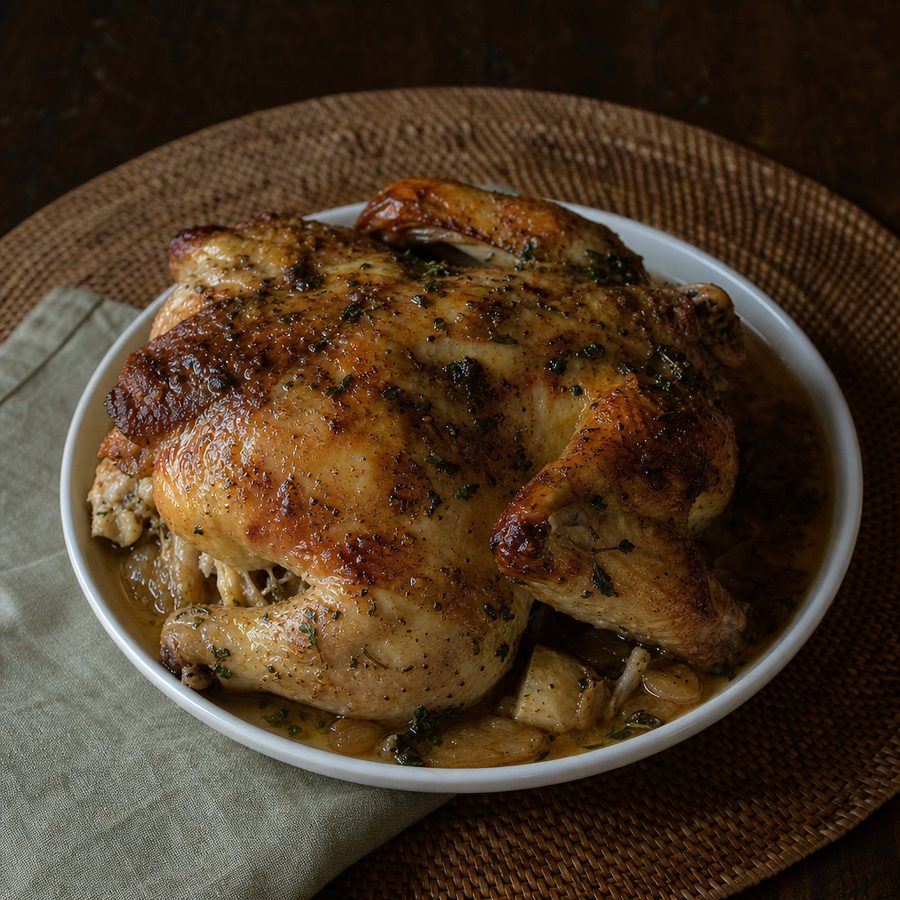
Ingredients
- 1 whole chicken (about 4 lb)
- 6 tbsp butter, softened
- 1 tsp salt
Instructions
- Preheat the oven and prep the bird: Preheat the oven to 425°F (220°C). Reach into the cavity and pull out the bag of giblets and the neck if they are inside; set them aside for another use or discard. Pat the whole chicken very dry all over with paper towels, including inside the cavity, since dry skin is what crisps.
- Dry the skin, and give it an hour if you have one: Pat the bird dry inside and out with paper towels, getting into the creases where the legs meet the body, then salt the skin and leave it uncovered on a plate in the refrigerator for 1 hour if the timing allows. You are waiting until the surface looks matte rather than slick and feels tacky under a fingertip. Wet skin steams before it browns, and an hour of dry cold air is what pulls that surface moisture out. If you have no hour to spare, dry it thoroughly and carry on; the difference is real but it is not the difference between good and bad.
- Butter and salt the skin: Set the softened butter within reach. Gently slide your fingers between the skin and the breast meat to loosen a pocket without tearing the skin, and push some butter up under the skin against the meat. Rub the rest of the butter over the entire outside of the bird. Season the skin all over generously with salt, and sprinkle a little salt inside the cavity.
- Roast breast-up: Place the chicken breast-up in a roasting pan or a large oven-safe skillet. Roast for 70 to 80 minutes, until the skin is deep golden and crisp and an instant-read thermometer inserted into the thickest part of the thigh, not touching bone, reads 165°F (74°C). If the skin browns faster than the inside cooks, loosely lay a piece of foil over the top.
- Rest, carve, and spoon over the drippings: Transfer the chicken to a board and let it rest for 15 minutes so the juices settle and carving stays neat. Carve into quarters by separating each leg-and-thigh from the body and splitting the breast down the keel bone. Spoon the buttery pan drippings over the pieces before serving.
Variations
- Ghee-rubbed: Swap the softened butter for ghee. It has the milk solids cooked out, so it browns the skin without scorching and gives a cleaner, slightly nutty flavor. This still adds dairy.
- Duck fat or tallow: Rub the bird with soft duck fat or beef tallow in place of butter for a richer, more savory crust. This changes the fat to rendered poultry or beef fat rather than dairy.
- Hard cheese crust: In the last few minutes of roasting, grate a hard aged cheese over the breast and let it melt and crisp into the skin. This adds dairy.
- Spatchcocked: Cut out the backbone with kitchen shears and press the bird flat before buttering and salting. It roasts faster and more evenly, and more skin lies flat against the heat for extra crackle.
- Roasted with the giblets: Tuck the neck, heart, and gizzard into the pan around the bird to roast alongside it. They brown in the drippings and give you rich little bites of extra meat. This adds organ meat.
Storage & Leftovers
Refrigerate leftover chicken in an airtight container within two hours of cooking, and it will keep well for up to four days. Carving the meat off the bones first saves space and makes it faster to grab for later meals; keep any crisp skin in the same container.
Reheat gently to keep the meat from drying out. Warm pieces in a 325°F (163°C) oven, loosely covered, until heated through, or set them in a skillet over medium heat with a little of the reserved drippings or a small piece of butter to refresh the skin. A microwave works in a pinch but softens the crisp skin.
To get ahead, salt the buttered bird and leave it uncovered on a rack in the refrigerator overnight before roasting. The surface dries out further and seasons more deeply, so the skin crisps even better the next day and all that is left to do is put it in the oven.
Notes & Tips
- Buy for the skin: Look for an air-chilled chicken if your market carries one. It holds less surface water than a water-chilled bird, so the skin dries and crisps more readily under the butter and salt.
- Dry-brine ahead when you can: If you have the time, salt the buttered bird and leave it uncovered in the refrigerator overnight. The extra hours of drying give you noticeably crisper skin and meat seasoned all the way through.
- Take the chill off first: Let the buttered chicken sit at room temperature for about 30 minutes before it goes in the oven. A bird that starts less cold roasts more evenly and the breast is less likely to overcook before the thighs are done.
- Mind salted versus unsalted butter: If all you have is salted butter, hold back a little on the salt you sprinkle over the skin so the finished bird is not over-seasoned. Taste a bit of the drippings before spooning them over to check.
- Trust the thermometer over the clock: Every oven and every bird is a little different, so the 70 to 80 minutes is a guide. An instant-read thermometer in the thickest part of the thigh reading 165°F (74°C) is what tells you it is done; the juices should run clear, not pink.
- Save the carcass and the fat: Do not throw out the bones or the pan. Simmer the picked carcass in water to make a rich broth, and pour off the rendered fat and drippings to keep in the refrigerator for cooking later.
Nutrition & Mindful Eating
- Three things make this dish: the bird, the butter, and the heat. The butter goes under and over the skin so it browns evenly, the oven does the rest, and the chicken bastes itself in its own rendering fat as it turns gold.
- A whole chicken gives you two kinds of meat off the same bird. The breast stays mild and firm, the thighs and drumsticks are darker and richer, and all of it carries complete protein along with the iron and zinc that sit mostly in the dark meat.
- The skin is the reward. Dry it well and start it hot, and the fat underneath renders out until what is left is thin, blistered and loud when you cut into it.
- Butter rubbed into the bird melts down through the meat as it roasts, carrying the vitamin A that comes with it and leaving behind the toasted, faintly nutty smell that fills the kitchen an hour before dinner.
- Salt rubbed on early has hours to work its way in, drawing moisture off the surface so the skin dries and crisps and pulling the savory flavor of the meat forward. Rest the bird before carving and the juices stay in it rather than on the board.
- As you eat, listen for the crack of the skin and see how easily the leg comes away, and let the carving and the passing of plates be part of the meal rather than something to get through first.
Frequently Asked Questions
My skin came out soft instead of crisp. What went wrong?
The most common culprit is moisture on the surface. Pat the bird thoroughly dry before it is buttered, and if the skin is still pale near the end, run the oven a touch hotter or move the bird to the upper rack for the last several minutes. Drying the salted bird uncovered in the fridge beforehand helps the most.
Do I need a roasting rack?
No. Roasting the bird directly in a pan or oven-safe skillet works fine, and the underside sits in the buttery drippings. A rack simply lifts the bird so air circulates underneath for slightly more even crisping, but it is optional here.
Can I use salted butter instead of unsalted?
Yes. Just cut back on the salt you sprinkle over the skin so the bird does not end up too salty, and taste the drippings before spooning them over the carved meat to judge the final seasoning.
Why roast breast-up the whole time instead of flipping it?
Roasting breast-up gives you the best-looking, crispest skin on the breast and is the simplest approach. Buttering under the skin against the breast keeps that quick-cooking meat moist, so flipping is not necessary to get juicy results.