
Italian Baked Tuna Cakes With Parsley and Lemon
Savory baked tuna cakes bound with egg and almond flour, brightened with fresh parsley, lemon juice, and garlic, and studded with tangy crumbled feta.
Why You'll Love This Recipe
These baked tuna cakes are a quick, protein-rich savory snack for anyone who wants something satisfying built mostly from pantry staples. Canned tuna, eggs, and a little almond flour come together in one bowl, and the whole thing bakes on a single sheet pan, so cleanup is minimal. They suit a busy afternoon when you want real food rather than something out of a wrapper, and they hold up well for lunchboxes and grab-and-go snacking.
Binder on one hand, brightness on the other. The eggs and almond flour hold the flaked tuna together without weighing it down, while the almond flour also soaks up moisture so the cakes firm up instead of falling apart. Draining the tuna thoroughly and letting the mixture rest before shaping are the two small steps that make the difference between a cake that holds and one that crumbles. Lemon juice and fresh parsley cut the richness of the fish, and the feta melts just enough to season every bite with a salty tang.
They are satisfying because they lead with protein and stay light. Tuna and eggs give them real staying power, so a couple of cakes actually hold you between meals rather than leaving you hungry again in an hour. The feta and garlic carry most of the flavor, so you get a savory, herb-forward bite without needing breading or a heavy sauce, and the crisp golden exterior against the tender interior makes them feel more indulgent than they are.
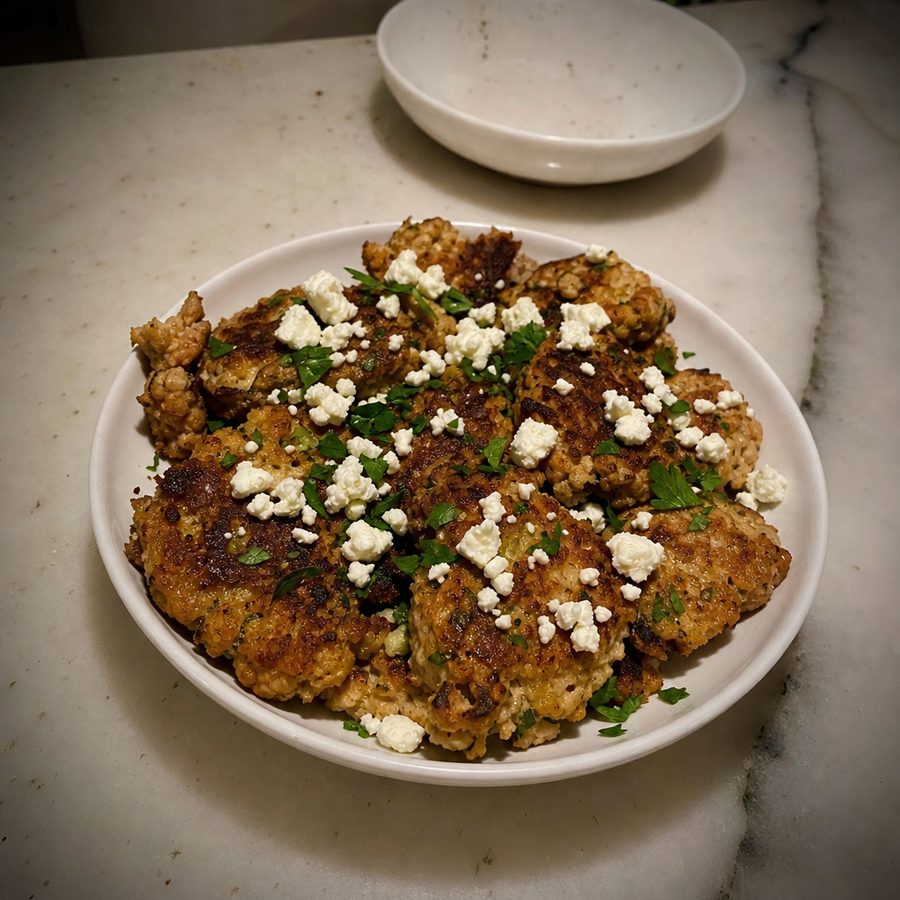
Ingredients
- 3 cans tuna, drained
- 2 eggs
- 1/3 cup almond flour
- 1/4 cup crumbled feta
- 3 tbsp chopped parsley
- 1 tbsp lemon juice
- 2 cloves garlic, minced
Instructions
- Preheat and line the pan: Preheat the oven to 400°F (200°C) and line a rimmed baking sheet with parchment paper so the cakes release cleanly and brown evenly.
- Prep the aromatics: Finely chop the parsley and mince the garlic. Set them aside together so they distribute evenly through the mixture.
- Drain the tuna: Open the cans of tuna and drain them well, pressing the fish against the lid or into a fine strainer to squeeze out as much liquid as you can. Excess moisture keeps the cakes from firming up, so take a moment to get the tuna fairly dry, then flake it into a large bowl with a fork.
- Mix the batter: Add the eggs, almond flour, crumbled feta, chopped parsley, lemon juice, and minced garlic to the bowl with the tuna. Fold everything together with a fork or spatula until the mixture holds together when you press it. Let it rest a couple of minutes so the almond flour can absorb moisture and the mixture stiffens slightly, which makes shaping easier.
- Shape the patties: With clean, lightly dampened hands, scoop up portions of the mixture and press each firmly into a compact patty about three-quarters of an inch thick. Pressing firmly is what keeps them from crumbling as they bake. Arrange the patties on the lined sheet with a little space between each one.
- Bake until golden: Bake for about 18 minutes, carefully flipping each patty once at the halfway point with a thin spatula, until both sides are golden and the cakes feel firm to the touch and are set through. Let them rest a couple of minutes on the pan before serving, as they firm up further as they cool.
Variations
- Extra lemon and herb: Add lemon zest along with the juice and stir in extra chopped parsley for a fresher, more citrus-forward cake.
- A little heat: Fold in a pinch of red pepper flakes or a bit of minced fresh chili for gentle warmth that plays well against the feta.
- Salmon swap: Use drained canned salmon in place of the tuna for a richer, slightly sweeter cake; this keeps it a seafood dish while changing the flavor.
- Dairy-free: Leave out the feta and add a little extra lemon and a pinch of salt; this removes the dairy while keeping the cakes savory.
- Mediterranean bite: Mix in finely chopped kalamata olives and a spoonful of chopped sun-dried tomatoes for a briny, deeper flavor. Both add sodium, so pull back on any added salt.
Storage & Leftovers
Store the cooled tuna cakes in an airtight container in the refrigerator, where they keep well for up to three days. Let them cool completely before sealing so trapped steam does not make them soggy.
To reheat, warm them in a 350°F (175°C) oven or toaster oven for a few minutes until heated through and the outside crisps back up. Avoid the microwave if you can, since it softens the exterior and can make the eggs rubbery; if you do use it, heat them in short bursts.
For make-ahead, you can mix and shape the patties a day in advance and keep them raw and covered in the refrigerator, then bake them fresh when you want them. They also freeze well once baked and cooled; freeze them in a single layer, then transfer to a bag and reheat straight from frozen in the oven.
Notes & Tips
- Choose your tuna: Tuna packed in olive oil gives a moister, richer cake, while water-packed tuna gives a firmer one; either works, but drain oil-packed tuna especially well or the cakes will spread.
- Dry tuna is key: The single biggest factor in cakes that hold together is well-drained tuna, so press out the liquid until the flakes look fairly dry before mixing.
- Test one first: Bake or pan-check a single small patty first; if it crumbles, work in a little more almond flour or another egg before shaping the rest.
- The feta is adjustable: Feta brings the salt to this dish, so if you like it milder use less and add a pinch of salt instead, and if you love the tang add a bit more.
- Serve it up: These are great with a squeeze of extra lemon and a dollop of plain yogurt or a simple green salad alongside for a light meal rather than just a snack.
- Double the batch: They scale and freeze well, so make a large batch and freeze the extras flat on a tray before bagging them for easy single-serving snacks later.
Nutrition & Mindful Eating
- Tuna, egg and almond flour hold each other together here. The tuna is the substance, the egg binds it, and the almond flour keeps the mixture loose enough that the cakes stay tender once the oven sets them.
- Canned tuna gives these cakes their savory backbone and their firm, flaky texture, and it brings both complete protein and the omega-3 fats that oily fish are known for into something you can eat with your fingers.
- Almond flour is finely ground whole almonds, so it carries a soft nuttiness and a little vitamin E into the mixture, and it toasts along with the outside of each cake as it bakes.
- Feta softens into salty pockets through the middle while lemon juice, garlic and a handful of chopped parsley cut across it, and that mix of briny and green is what keeps a fish cake tasting fresh.
- Protein this concentrated eats more like a small meal than a snack, and two or three of these with a squeeze of lemon will carry you comfortably through an afternoon.
- As you eat, listen for the crackle as the crust breaks and notice the lemon coming through after the salt of the feta, then slow down enough to feel when you have had enough.
Frequently Asked Questions
Why are my tuna cakes falling apart?
The most common cause is tuna that was not drained well enough, which leaves the mixture too wet to bind. Press the tuna very dry, let the shaped mixture rest so the almond flour absorbs moisture, and pack each patty firmly. If it still crumbles, work in a bit more almond flour or another egg.
Can I pan-fry these instead of baking?
Yes. Cook them in a little oil over medium heat for a few minutes per side until golden and set through. Pan-frying gives a crisper crust, but handle them gently and flip only once so they hold their shape.
What can I use instead of almond flour?
You can swap in an equal role of another binder such as breadcrumbs or crushed crackers, though that adds gluten. Ground oats or a gluten-free breadcrumb also work; the goal is simply something that absorbs moisture and helps the cakes hold together.
Can I make these ahead for the week?
Absolutely. They keep in the refrigerator for a few days and reheat crisp in the oven, and they also freeze well once baked. Making a batch at the start of the week gives you a ready protein-rich snack you can grab and reheat in minutes.