
Kale And Quinoa Egg Cups
Savory baked egg cups where whisked eggs bind fluffy quinoa, tender massaged kale, and sliced scallion, finished with the toasty, cheese-like depth of nutritional yeast.
Why You'll Love This Recipe
These little baked egg cups are for anyone who wants a real, savory bite ready to grab when the day gets busy, a portable snack that eats like a small meal. They come together in one bowl and one tin, keep beautifully in the fridge, and reheat in seconds, which makes them a quiet lifesaver for early mornings, afternoon slumps, and lunchboxes. The flavor leans nutty and toasty rather than rich, so they feel light without leaving you hungry.
One small step matters more than the rest. Massaging the kale with a little olive oil breaks down its fibrous structure so it turns tender and sweet instead of squeaky and tough, and it keeps the leaves from steaming into a soggy layer once baked. Cooking and cooling the quinoa first means the grains fold in fluffy and separate rather than mushy, giving the cups a pleasant, slightly chewy body. The nutritional yeast is the secret handshake here. It lends a savory, almost cheesy, umami roundness that stands in for the Parmesan you might expect, without any dairy at all.
Substance on one hand, lift on the other. The eggs set into a soft, custardy structure, the quinoa adds gentle chew and staying power, and the kale and scallion keep each bite fresh and green rather than heavy. They are a good source of protein and they carry real fiber from the kale and whole-grain quinoa, so they settle the kind of hunger that otherwise sends you reaching for something far less nourishing.
Ingredients
- 5 large eggs
- 1 cup cooked quinoa
- 2 cups chopped kale
- 3 scallions, sliced
- 2 tbsp nutritional yeast
- 1 tbsp olive oil
- 1/2 tsp salt
Instructions
- Rinse and cook the quinoa: Rinse the quinoa in a fine-mesh sieve under cold water to wash off its bitter coating, then simmer it covered for about 15 minutes, until the grains are tender and the little spiral germ has unfurled. Fluff it and let it cool, because warm quinoa would start setting the eggs in the bowl before the tin ever reached the oven.
- Oil the tin generously, sides and all: Heat the oven to 375°F (190°C) and brush the wells of a muffin tin generously with olive oil, reaching right up the sides. Baked egg bonds to bare metal as it sets, so a tin given a quick wipe rather than a proper coat is why egg cups come out in halves.
- Massage the kale for a minute or two: Strip the kale off its stems, chop the leaves, then put them in a bowl with a little olive oil and massage them with your hands for a minute or two, until they darken, soften, and shrink down. Massaging breaks down the tough cell walls that would otherwise stay stiff and squeaky inside a soft egg cup. Slice the scallions.
- Whisk the eggs until they are one color: Crack the eggs into a large bowl and whisk for about 30 seconds, until the yolks and whites are fully blended, then whisk in the nutritional yeast and the salt until smooth. Ropes of unmixed white set into rubbery streaks, which is more noticeable in something this small than in a full-size bake.
- Fold in the quinoa, kale, and scallions: Fold the cooled quinoa, the massaged kale, and the scallions into the eggs until everything is evenly coated and distributed. Fold rather than beat, since the goal is to spread the solids through the custard, not to work more air into it.
- Stir before each spoonful into the tin: Stir the mixture again, then spoon it into the oiled wells, filling each nearly to the top and making sure every cup gets a fair share of quinoa and kale. The solids sink within about a minute of standing, so stirring between spoonfuls is what keeps the last cups from being all egg.
- Bake 18 to 20 minutes, then rest: Bake for 18 to 20 minutes, until the cups are puffed, set in the center, and no longer wet on top; a knife in the middle should come out clean. Let them rest in the tin a few minutes before running a thin knife around the edges, because egg firms as it cools and a cup that tears when hot lifts out whole a few minutes later.
Variations
- Sun-dried tomato and basil: Fold in chopped oil-packed sun-dried tomatoes and torn fresh basil for a sweet-tart, herby lift.
- Smoky and warm: Whisk a pinch of smoked paprika and a little garlic powder into the eggs for a deeper, savory background note.
- Spinach and dill: Swap the kale for chopped spinach and add fresh dill for a softer, brighter, more delicate cup.
- Feta and olive: Crumble in feta and a few chopped olives for a briny, tangy bite; note that this adds dairy.
- Roasted red pepper: Stir in diced jarred roasted red peppers for extra sweetness, color, and moisture.
Storage & Leftovers
Store the cooled egg cups in an airtight container in the refrigerator, where they keep well for up to four days. Let them cool completely before sealing so condensation does not make them soggy.
To reheat, microwave one or two on a plate in short bursts of about 20 to 30 seconds until just warmed through. Stop as soon as they are hot, since overheating turns eggs rubbery. For a slightly firmer edge, warm them in a 325°F (163°C) oven for a few minutes instead.
These are made for getting ahead. Bake a batch at the start of the week and portion them out for grab-and-go snacks. They also freeze well: wrap individually, freeze, and thaw overnight in the fridge before reheating.
Notes & Tips
- Oil the tin well: Egg sets stubbornly to metal, so brush every well thoroughly, including the sides. A silicone muffin tin or paper liners make release even easier.
- Cool the quinoa first: Warm quinoa can begin to cook the eggs before they hit the oven. Let it cool so the mixture stays loose and pours cleanly into the cups.
- Buy nutritional yeast in flakes: Look for it in the bulk or supplement aisle; flakes dissolve into the eggs more evenly than the powder and give a rounder, savory flavor.
- Taste-check the seasoning: Nutritional yeast is savory but not salty, so whisk a tiny pinch of the egg mixture and cook it in a hot pan for a few seconds if you want to check the salt before filling the tin.
- Don't overbake: Pull them the moment the centers stop jiggling; carryover heat finishes them, and overbaked egg cups turn dry and spongy.
- Serve them well: They are good warm or at room temperature, and a dab of hot sauce, salsa, or unsweetened plant-based yogurt on top rounds them into a more filling snack or light meal.
Nutrition & Mindful Eating
- Egg, quinoa and kale are the whole structure of these cups. The egg sets and holds everything in place, the quinoa keeps the middle from going rubbery, and the kale gives each bite something green to chew on.
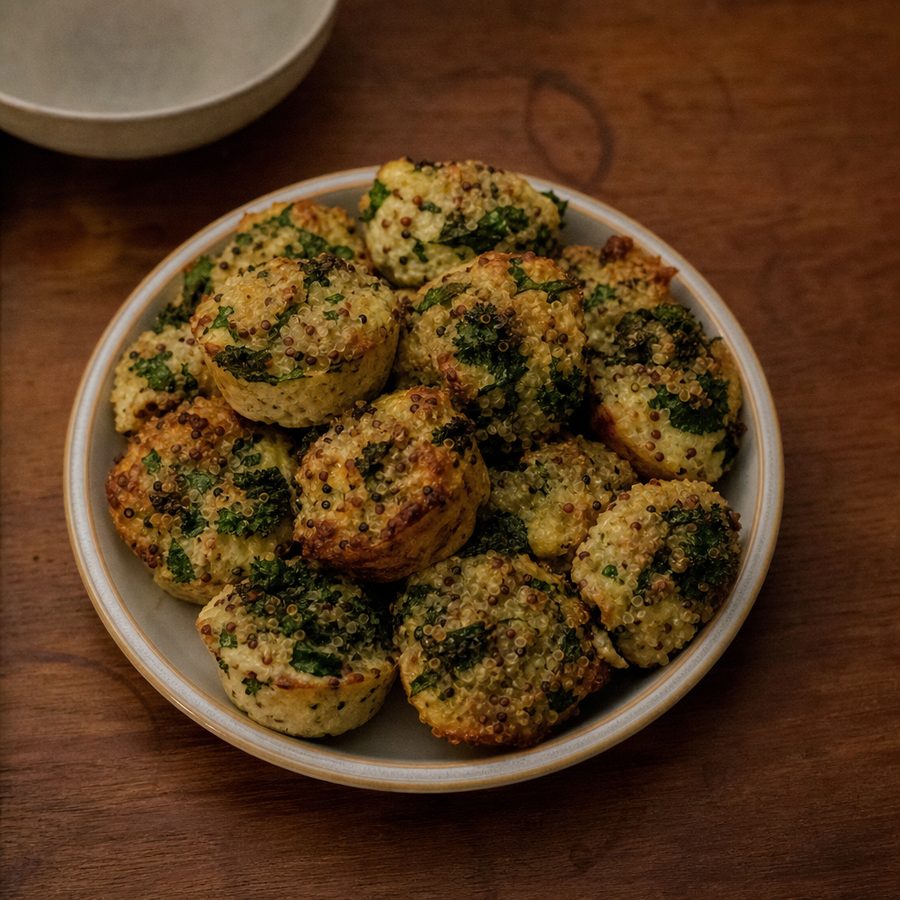
- Cooked quinoa stays in tiny distinct beads through the bake, giving the cups their soft, grainy texture, and it brings a full spread of amino acids and fiber along with it.
- Nutritional yeast is what makes these taste roasted and savory, a golden flake that smells almost like toasted cheese as the tin heats up, and it carries B vitamins into the batter with that flavor.
- Scallions stirred through raw keep a sharp, fresh note that comes through against the soft egg, and the tops of the cups dome and color in the oven before settling as they cool.
- A couple of these hold you longer than their size suggests, the egg protein doing most of that work with the quinoa underneath it, which is why they travel so well in a bag for the middle of the afternoon.
- As you eat, take the first one sitting down rather than standing at the counter, notice the tender give of the egg against the grain of the quinoa, and stop when you feel settled.
Frequently Asked Questions
Can I make these without a muffin tin?
Yes. Pour the whole mixture into an oiled baking dish and bake as a single frittata-style slab, adding a few extra minutes until the center is set, then cut it into squares.
Why did my egg cups stick to the pan?
Egg bonds tightly to metal. Oil the wells generously up the sides, let the cups rest a few minutes after baking, and run a thin knife around each edge before lifting them out. Silicone tins or liners help too.
Can I use frozen kale?
Yes. Thaw it fully and squeeze out as much water as you can, then chop it. You can skip the massaging step, since freezing already softens the leaves; just make sure it is well drained so the cups do not turn watery.
What can I use instead of nutritional yeast?
Nutritional yeast gives a dairy-free savory depth. If you leave it out, add a little extra salt and a pinch of garlic powder; if dairy is not a concern for you, a spoonful of grated Parmesan works, though it adds dairy.