
Avocado Baked Eggs with Feta
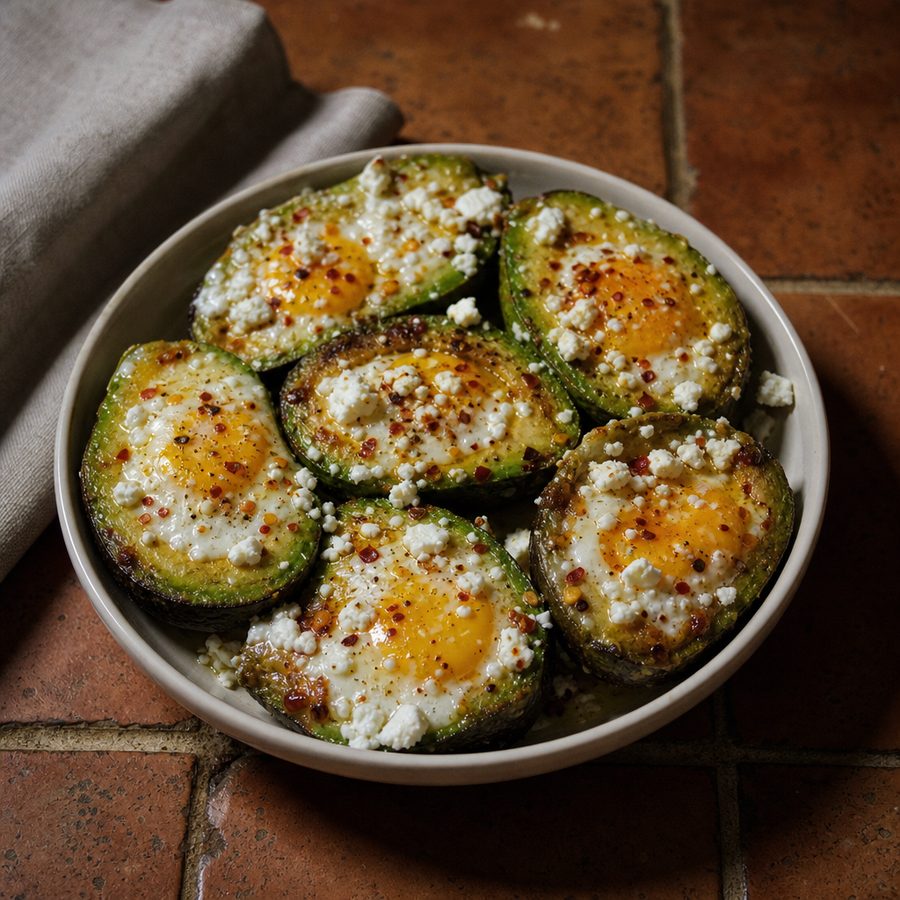
Ripe avocado halves cradling a softly baked egg, finished with briny crumbled feta, a drizzle of olive oil, and a scattering of fresh chives.
Why You'll Love This Recipe
This is a warm, hands-off breakfast for anyone who wants something rich and satisfying without a pile of dishes. It leans on whole ingredients and cooks in the oven while you do something else, which makes it a friendly choice for a slow morning. It is also one of the few hot breakfasts that needs no pan, no toast, and no flipping, so the entire technique amounts to hollowing out an avocado and not letting it tip over.
Two soft, creamy textures baked together. The gentle heat of the oven sets the egg white while keeping the yolk lush, and the surrounding avocado warms just enough to turn silky without collapsing. Hollowing out the avocado so the egg sits low and snug is what keeps everything contained, and the briny feta, grassy olive oil, and sharp chives added at the end cut through all that richness so each bite stays bright rather than heavy.
Quality fat, protein, and fiber all packed into one small serving is what makes the fullness last rather than fade. The egg brings complete protein, the avocado contributes fiber and heart-friendly fats, and the feta and olive oil add savory depth that makes a modest portion feel generous. It eats like comfort food while quietly doing the work of keeping you steady until your next meal.
Ingredients
- 2 large avocados, halved and pitted
- 4 large eggs
- 1/2 cup crumbled feta
- 2 tbsp olive oil
- 2 tbsp chopped chives
- 1/4 tsp salt
Instructions
- Heat the oven and chop the chives: Heat the oven to 400°F (200°C) and finely chop the chives, setting them aside for the finish. They go on raw at the end rather than into the oven, since chives lose their color and their onion bite within a couple of minutes of real heat.
- Hollow the avocados out wider than they look: Halve each avocado lengthwise and remove the pit, then scoop a little more flesh from around each cavity so the hollow is wide and deep enough to take a whole egg without overflowing. The pit leaves a hollow about half the size an egg needs, so this step is not optional. Keep the scooped flesh for something else.
- Wedge them so they cannot tip: Arrange the halves cut side up in a snug baking dish, tucking them against one another so they sit level, and trim a thin sliver off the rounded bottom of any that wobble. An avocado that tips in the oven empties its egg into the dish, and there is no fixing it once it has happened.
- Add the yolk first, then the white: Crack each egg into a small cup, slip the yolk into a hollow, and add just enough of the white to fill it, stopping before it spills over. Doing it in two stages is what keeps the dish clean, because a whole egg cracked straight in almost always carries more white than the hollow can hold. Season lightly, remembering the feta comes later and is salty.
- Bake 14 to 16 minutes: Bake for 14 to 16 minutes, until the whites are opaque and set and the yolks are done to your liking. For a runny yolk pull them at the shorter end and check by nudging the dish, looking for a slight jiggle in the center rather than a firm dome.
- Feta, oil, and chives at the end: Scatter the crumbled feta over the warm eggs, drizzle with olive oil, and finish with the chives. Serve right away while the yolks are warm, since a baked avocado goes bitter as it cools and this is a dish with a short and definite window.
Variations
- Herb swap: Trade the chives for chopped fresh dill, parsley, or basil, or use a mix. Each changes the character of the dish while keeping it fresh and green.
- Warm heat: Sprinkle red pepper flakes or a pinch of Aleppo pepper over the eggs before baking, or finish with a little hot sauce, for a gentle kick against the creamy avocado.
- Smoky top: Lay a few strips of cooked crumbled bacon over the finished eggs; this adds meat and brings a salty, smoky crunch to the soft interior.
- Cured fish finish: Drape a little smoked salmon over the top after baking; this adds fish and pairs its silky, briny flavor with the warm yolk.
- Different crumble: Swap the feta for crumbled goat cheese or shaved Parmesan; this keeps the dairy but shifts the flavor from briny and tangy to either soft and lactic or sharp and nutty.
Storage & Leftovers
These are best eaten the moment they come out of the oven, but leftovers keep in an airtight container in the refrigerator for up to a day. Beyond that the avocado softens and darkens and the texture suffers, so plan to enjoy them soon after baking.
To reheat, warm a stuffed half in a low oven, around 300°F (150°C), just until heated through; a hotter oven or the microwave tends to overcook the yolk to a rubbery set and can make the avocado bitter. Add the feta and chives fresh after reheating rather than before, so they stay bright.
For a faster morning, halve and hollow the avocados the night before, rub the cut flesh with a little olive oil to slow browning, and store them covered in the refrigerator. In the morning, steady them in the dish, crack in the eggs, and bake.
Notes & Tips
- Pick the right avocado: Choose avocados that yield to gentle pressure but are not mushy, and buy the largest you can find so the cavity is roomy enough to hold a whole egg. Rock-hard fruit will not turn creamy in the oven, and overripe ones collapse.
- Make the hollow big enough: The single most common problem is the egg white spilling over the sides. Scoop out enough flesh that the pit cavity becomes a real bowl; a melon baller or a sturdy spoon makes quick work of it.
- Add the white in stages: Cracking each egg into a cup first lets you slide the yolk in, then add only as much white as the hollow will hold. Any extra white can go into a separate ramekin and bake alongside.
- Go easy on the salt: Feta is quite salty on its own, so season the eggs with a light hand before baking and taste before adding more. You can always finish with a pinch at the table.
- Judge the yolk by feel: For a runny center, pull them when the whites look set but the yolk still jiggles slightly when you nudge the dish; for a firmer yolk, give it the extra couple of minutes. The residual heat keeps cooking them a little after they leave the oven.
- Round out the plate: These are rich but light on their own, so serve with a simple green salad, sliced tomatoes, or sautéed greens if you want a fuller plate. A wedge of lemon squeezed over the top brightens everything.
Nutrition & Mindful Eating
- Avocado, egg and feta arrive as one bite here. The avocado turns warm and almost custardy in the oven, the egg sets into it, and the feta gives the whole thing the salt it needs to come alive.
- Avocado behaves differently baked than it does raw, going softer and sweeter and losing its grassy edge, and it brings monounsaturated fat and a real amount of fiber to a breakfast built around eggs.
- The egg cooks slowly inside the avocado rather than against hot metal, so the white stays tender and the yolk holds at the center, and that yolk is where the choline and the fat-soluble vitamins live.
- Feta crumbled over at the end keeps its briny bite rather than melting into the egg, and the chives snipped across the top add a thin, sharp green line through all that softness.
- Fat and protein together in this proportion settle you for a long stretch, which is why one half with its egg and a small spoon eats like an actual breakfast.
- As you eat, feel how the warm avocado gives under the spoon and how the salt of the feta arrives just after it, and let a small spoon slow you down enough to notice when you are comfortably full.
Frequently Asked Questions
Why does my egg white run over the sides of the avocado?
The hollow left by the pit is usually too small for a whole large egg. Scoop out extra flesh to widen and deepen the cavity, and crack the egg into a cup first so you can add the yolk plus only as much white as fits. Tucking the halves snugly in the dish also keeps them from tilting and spilling.
Does the avocado get warm and mushy in the oven?
It warms and turns silky but holds its shape as long as you start with fruit that is ripe but still firm, not overripe. The baking time is short, so the avocado gently heats through without breaking down into mush.
How do I get a runny yolk instead of a hard one?
Pull them at the shorter end of the baking window, when the whites look opaque and set but the yolk still jiggles slightly if you nudge the dish. Remember they keep cooking from residual heat for a minute after they come out, so err on the earlier side for a soft center.
Can I make these ahead for the week?
They are really a same-morning dish, since the avocado softens and darkens within a day. What you can do ahead is halve and hollow the avocados the night before, rub the cut surfaces with a little olive oil, and refrigerate them covered so all you have to do in the morning is add the egg and bake.