
Lamb and Feta Baked Meatballs
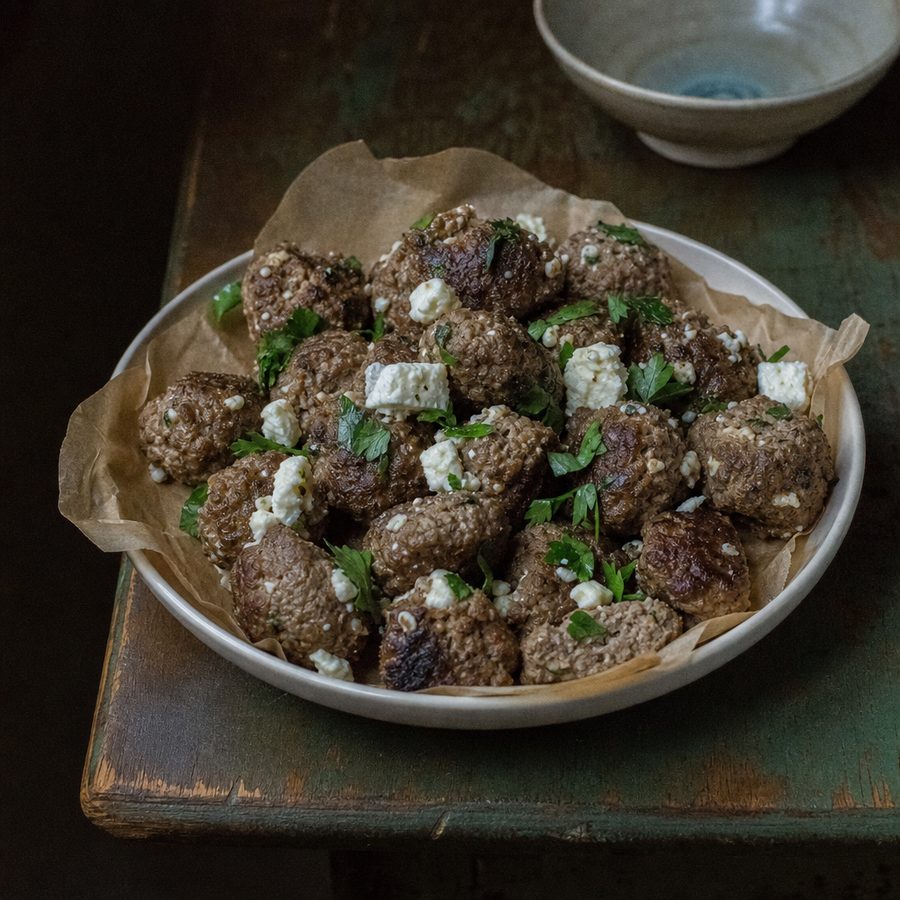
Juicy oven-baked meatballs of ground lamb shot through with pockets of crumbled feta and bound with egg, seasoned simply with salt and browned until firm.
Why You'll Love This Recipe
These are what I make when a friend is on their way over and I want something out of the oven before they arrive. Four ingredients and a hot pan is the entire job, and they are as good at room temperature as they are hot, so nothing is ruined if the timing slips. The lamb carries a rich, slightly gamey depth, the feta softens into salty pockets through the middle, and because there is no filler they cook fast and hold their shape on a platter or in a container. Anyone who wants a warm, savory, handheld bite of protein between meals can have them.
The lamb needs almost nothing added. Lamb is fatty enough on its own that it needs no oil, and the feta seasons and moistens the interior as it softens in the oven's heat, so you get flavor without any breadcrumb or dairy binder beyond the egg that holds everything together. Mixing gently and stopping the moment the ingredients are combined keeps the protein strands loose, and spacing the balls apart on the pan gives each one a browned exterior for contrast against the tender inside.
Well-browned lamb, the richness of all of its own rendered fat, and the sharp salty punch of feta, all of which register as deeply savory and keep you full. They deliver a generous amount of complete protein plus the minerals lamb is naturally rich in, with almost nothing else along for the ride, so they feel like a real, nourishing bite rather than a light nibble.
Ingredients
- 12 oz ground lamb
- 1/2 cup crumbled feta
- 1 large egg
- 1/4 tsp salt
Instructions
- Preheat and line the pan: Preheat the oven to 400°F (200°C) and line a rimmed sheet pan with parchment paper so the meatballs release cleanly and the rendered fat stays contained.
- Crumble the feta: If your feta is in a block, crumble it into small pieces roughly the size of peas so it distributes evenly through the meat and leaves soft pockets rather than one large lump.
- Mix the meatball base: In a bowl, combine the ground lamb, crumbled feta, egg, and salt. Mix gently with your hands or a fork until the egg and feta are just evenly distributed. Stop as soon as it comes together; overmixing packs the meat and makes the finished meatballs dense and tough.
- Shape the meatballs: With lightly wet hands to keep the mixture from sticking, roll the mixture into evenly sized balls, each about the size of a golf ball. Space them out on the prepared pan so they are not touching, which lets the surfaces brown instead of steam.
- Bake: Bake for 16 to 18 minutes, until the meatballs are browned on top, firm to the touch, and register 160°F (71°C) on an instant-read thermometer inserted into the center of the largest one.
- Rest and serve: Let the meatballs rest on the pan for 5 minutes before serving. Resting lets the juices settle so they stay in the meat when you bite in rather than running out immediately.
Variations
- Lamb and beef blend: Swap part of the ground lamb for ground beef for a milder, less gamey flavor and slightly firmer texture. This adds beef.
- All pork: Use ground pork in place of the lamb for a sweeter, more delicate meatball that still browns well. This adds pork.
- Sharper cheese: Replace the feta with a finely grated hard aged cheese for a nuttier, saltier bite and a firmer interior. This keeps it dairy but changes the character.
- Bacon-studded: Fold in finely chopped cooked bacon along with the feta for smoky pockets and extra richness. This adds pork.
- Richer bind: Add an extra egg yolk to the mixture for a more tender, custardy interior. This adds more egg.
Storage & Leftovers
Refrigerator: Store cooled meatballs in an airtight container in the refrigerator for up to four days. Keep them in a single layer or lightly separated so they do not compress and turn pasty.
Reheat: Warm them in a 350°F (175°C) oven or toaster oven for about 8 to 10 minutes until heated through, which keeps the exterior firm. A microwave works in a pinch but softens the browned surface, so use short bursts and stop as soon as they are hot to avoid drying out the lamb.
Make ahead: You can mix and shape the raw meatballs, arrange them on a tray, and refrigerate them covered for up to a day before baking. You can also freeze the shaped raw balls on a tray until solid, then transfer them to a bag; bake straight from frozen, adding a few extra minutes and checking that the center reaches 160°F (71°C).
Notes & Tips
- Choose your lamb by fat: Look for ground lamb with visible fat running through it; that fat is what keeps these juicy and self-basting in a dry oven. If your only option is a pale, dry-looking grind, expect a firmer, drier result.
- Taste-test the seasoning: Feta varies a lot in saltiness from brand to brand. Before shaping the whole batch, pinch off a small piece of the mix, cook it in a hot pan for a minute, and taste it so you can adjust the salt up or down before committing.
- Keep the balls uniform: Use a small scoop or eyeball equal portions so every meatball is the same size. Uniform balls finish cooking at the same time, so none are raw in the center while others overbake.
- Use a thermometer: The most reliable doneness cue is an internal temperature of 160°F (71°C), not the clock. Ovens run differently, and pulling them at temperature is how you avoid both pink centers and dried-out lamb.
- Double the batch: The mixing and shaping take the same effort whether you make one tray or two, and the extras freeze well raw, so scaling up gives you a ready protein for busy days with no extra work later.
- Serve warm for the best texture: The feta is softest and the fat is most tender right after the rest, so these eat best warm. Straight from the fridge they firm up considerably; a short reheat brings back the juicy bite.
Nutrition & Mindful Eating
- Lamb, feta and egg is the entire mixture, and each one has a job. The lamb brings the fat and the flavor, the feta seasons it from the inside as it softens, and the egg holds the rolled balls together through the bake.
- Ground lamb has real character, faintly sweet and grassy, and its own fat bastes the meatballs from within as they cook, carrying complete protein along with iron, zinc and B12.
- Feta softens rather than melting away, so it stays in salty pockets you find as you bite through, and it brings calcium and a tang that keeps rich meat tasting bright.
- Baking rather than pan-frying browns every side at once and lets the rendered fat collect underneath, and the smell that comes out of that oven is most of the reason these rarely make it to the table cold.
- Meatballs this rich hold you far longer than their size suggests, the protein and the fat doing that work together, which is why three or four off a tray count as a genuine snack.
- As you eat, notice the crust the oven built on the outside and the soft, salty give of the feta once you are through it, and eat them off a plate sitting down so you can tell when you have had enough.
Frequently Asked Questions
Why did my meatballs turn out dense and tough?
The usual cause is overmixing. Once the egg and feta are just distributed, stop; working the meat further develops the protein and packs it tight. Closely trimmed lamb and overbaking past 160°F (71°C) can also firm them up.
Do I need to add oil to the pan or the mixture?
No. Ground lamb renders plenty of its own fat as it bakes, which is why the parchment matters for cleanup. Adding oil would just make them greasy without improving texture.
Can I make these on the stovetop instead of baking?
You can pan-fry them in a skillet over medium heat, turning to brown all sides, until they reach 160°F (71°C) in the center. Baking is more hands-off and browns them evenly, but the skillet works and gives a deeper crust.
Why are my meatballs saltier than expected?
Feta and the added salt both bring sodium, and some brands of feta are very briny. Next time, cook and taste a small pinch of the mix before shaping, and cut back the added salt if your feta is on the salty side.