
Lamb Parmesan Meatballs
Rich, savory ground-lamb meatballs bound with egg and grated parmesan, seared until deeply browned and finished with an extra shower of parmesan.
Why You'll Love This Recipe
These are meatballs stripped down to what matters: ground lamb, egg, parmesan, and salt, seared in a hot skillet. There is no breadcrumb filler and no sauce to hide behind, so the flavor of the lamb and the salty depth of the cheese carry the whole dish. They suit anyone who wants a substantial, protein-dense lunch that comes together from a handful of ingredients, and anyone who is eating close to the ground and keeping to animal foods.
Hold back on the mixing, and go hard on the browning. Egg and finely grated parmesan act as the binder, so the meat holds together without any starch; mixing only until combined keeps the texture tender instead of rubbery. Searing in a hot, uncrowded pan builds a browned crust through the Maillard reaction, which is where the roasted, savory flavor comes from. That crust is about flavor and texture, not sealing anything in, so the real goal is simply to get good color on every side while cooking the center through.
Lamb's richness, and the concentrated, umami hit of aged parmesan against it. Lamb is a complete protein and carries plenty of its own fat, so the meatballs stay juicy and keep you full for hours. The parmesan adds savory intensity and a little calcium, and the eggs contribute more protein and choline. It is a filling, low-fuss plate that eats like comfort food while being built almost entirely from nutrient-dense animal foods.
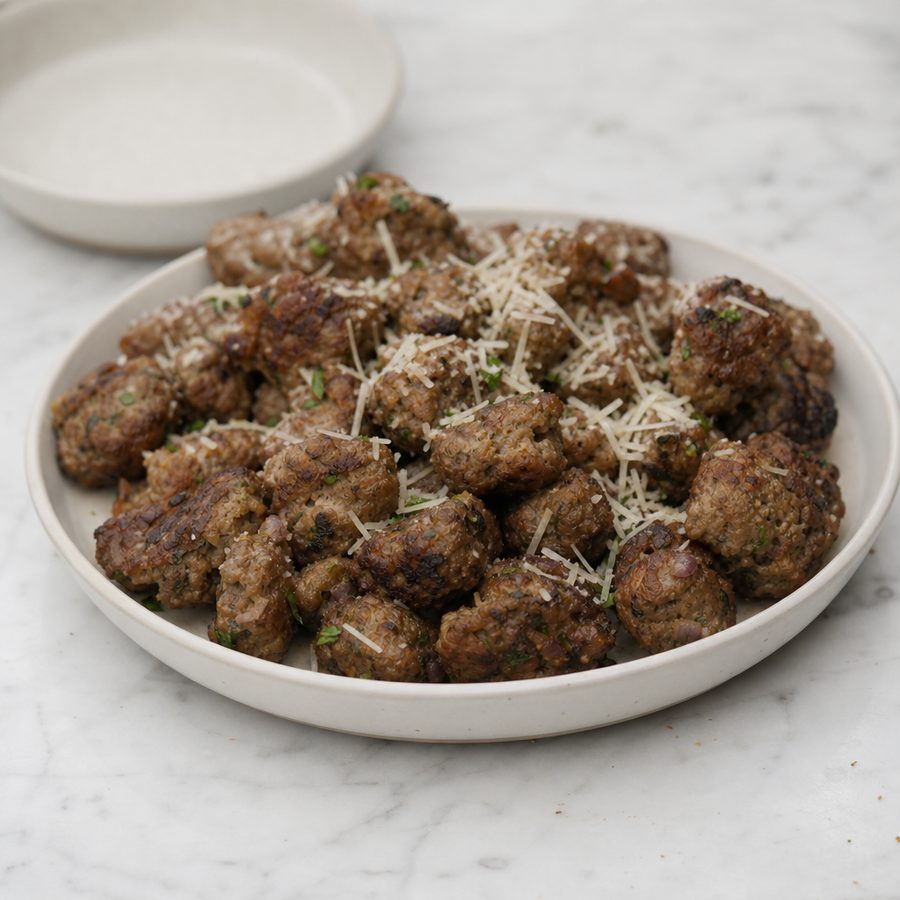
Ingredients
- 1 1/2 lb ground lamb
- 2 large eggs
- 2/3 cup grated parmesan
- 3/4 tsp salt
Instructions
- Mix the meat: Put the ground lamb in a large bowl. Crack in the eggs, add the grated parmesan and the salt. Mix gently with your hands or a fork just until everything is evenly combined; stop as soon as it comes together, since overworking the meat makes the finished meatballs dense and tough.
- Shape the meatballs: With lightly wet hands so the mixture does not stick, scoop up even portions and roll each between your palms until it is smooth and round with no cracks in the surface. Keep them uniform in size so they cook through at the same rate. Set the shaped meatballs on a plate as you go.
- Heat the skillet: Set a heavy skillet over medium-high heat and let it get hot, until a drop of water flicked onto it skitters and disappears. Lamb is fatty enough that you generally do not need to add fat, but a small amount of animal fat in the pan helps if your lamb is closely trimmed. Add the meatballs in a single layer with space between them so they brown rather than steam; work in batches if the pan is crowded.
- Brown and cook through: Sear the meatballs, turning them every couple of minutes with tongs so each side develops a deep brown crust, 12 to 16 minutes total. Lower the heat slightly if they are coloring too fast, since the crust can be as dark as you want it long before the middle has come up to temperature. They are done when firm to the touch and the center reads 160°F (71°C) on an instant-read thermometer; the juices should run clear with no pink in the middle.
- Finish and serve: Transfer the meatballs to a plate and let them rest for 2 minutes off the heat. Grate or sprinkle more parmesan over the top so it softens against the hot meatballs, and serve warm.
Variations
- Beef and lamb blend: Replace part of the lamb with ground beef for a milder, less gamey flavor and a slightly firmer bite. This adds beef.
- Sharper cheese: Swap the parmesan for finely grated pecorino, which is sharper and saltier; taste and pull back on the added salt to balance it. This keeps the dish dairy-based but changes the cheese.
- Butter-basted finish: In the last minute of searing, add a knob of butter to the pan and spoon the foaming butter over the meatballs for a richer, nuttier finish. This adds dairy in the form of butter.
- Bacon-studded: Cook bacon until crisp, chop it finely, and fold it into the meat before rolling for smoky bits throughout. This adds pork.
- Extra-tender yolks: Fold a couple of extra egg yolks into the mixture for a softer, more custardy interior. This adds egg.
Storage & Leftovers
Keep leftover meatballs in an airtight container in the refrigerator for up to three or four days. Let them cool before sealing so condensation does not build up and soften the crust.
To reheat, warm them gently in a covered skillet over medium-low heat with a splash of water to keep them from drying out, turning once or twice until heated through. A short spell in a low oven also works well and helps them stay tender; avoid a long blast in the microwave, which can make lamb tough and greasy.
To make ahead, mix and roll the meatballs, then keep them raw and covered in the refrigerator for up to a day before searing, or freeze the raw balls on a tray until solid and transfer to a bag. Cook them straight from the refrigerator, or thaw frozen ones overnight before searing.
Notes & Tips
- Choose fattier lamb: Ground lamb from the shoulder, with visible marbling, stays juicy through searing. If your only option is closely trimmed lamb, expect a drier meatball and consider searing in a little extra animal fat.
- Cook a test patty: Because you cannot taste raw meat, flatten a small pinch of the mixture into a patty and cook it first. Taste it and adjust the salt in the rest of the batch before rolling everything.
- Grate the parmesan fresh: Grate it from a block rather than using the pre-shredded kind, which is coated to prevent clumping and does not bind or melt as smoothly into the meat.
- Keep them uniform: Roll the meatballs to the same size so they finish cooking at the same moment. A cookie scoop portions them evenly if you want them identical.
- Trust the thermometer: Lamb this rich can look done on the outside while the center is still pink. An instant-read thermometer reading 160°F (71°C) in the middle is the reliable call, especially for larger meatballs.
- Save the pan drippings: The rendered lamb fat and browned bits left in the skillet are pure flavor. Spoon them back over the finished meatballs, or reserve the fat to sear the next batch.
Nutrition & Mindful Eating
- Lamb, egg and parmesan are the whole mixture, and each one is load-bearing. The lamb brings the flavor and the fat, the egg holds everything together, and the parmesan seasons the meatballs from the inside out as they cook.
- Ground lamb is what makes these taste like lamb rather than generic meatballs, faintly sweet and grassy, and it stays juicy in a hot pan. It is a complete protein carrying iron and zinc in a form your body absorbs easily.
- The egg does more than bind. Its yolk adds fat that keeps the interiors soft as they cook through, and it brings choline and the fat-soluble vitamins that ride in the yolk along with it.
- Parmesan is aged long enough to go crumbly and sharp, and it dissolves into the meat as the meatballs cook, leaving pockets of salt and savor behind. It contributes calcium and a little more protein as it goes.
- The browning is where the flavor is made. Give them room in the pan so the outsides take on a real crust, and listen for the sizzle to settle down, which is the moment that crust has set.
- As you eat, let the crust give way to the soft salty middle and notice how long the parmesan lingers after each bite, slowing down enough that a few of these feel like the meal they are.
Frequently Asked Questions
Why are my meatballs falling apart in the pan?
Usually it is too little binding or too much handling. Make sure the egg and finely grated parmesan are evenly worked through the meat, chill the rolled meatballs for a few minutes if they feel soft, and resist flipping them until a browned crust has formed, which is when they release cleanly from the pan.
Can I bake these instead of searing them?
Yes. Arrange the meatballs on a rack set over a rimmed baking sheet and roast at 400°F (200°C) until browned and cooked through to 160°F (71°C) in the center. You lose a little of the hard skillet crust, but it is a hands-off option for a larger batch.
My lamb tastes gamey. How do I tame it?
Buy the freshest ground lamb you can and keep it cold until cooking, since off flavors grow as it ages. Blending in some ground beef also mellows the taste, and the sharp parmesan already helps balance lamb's richness.
What is the best way to serve these for lunch?
They are filling on their own, spooned with their pan drippings and an extra grating of parmesan. For a heartier plate, pair them with a couple of fried or soft-boiled eggs, which keeps everything to simple animal foods.