
Lemon Garlic White Bean Dip
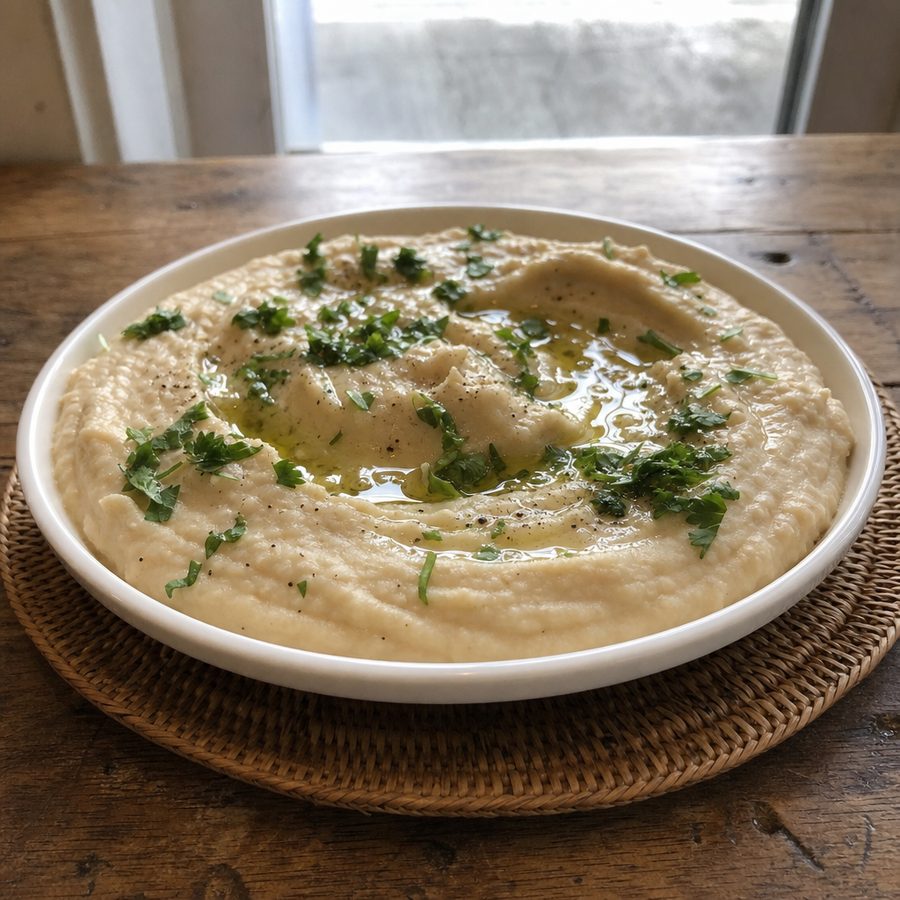
A silky, smooth-blended cannellini bean dip whipped with tahini, fresh lemon juice, and garlic, finished with a drizzle of olive oil and a scatter of chopped parsley.
Why You'll Love This Recipe
This is a creamy, spoonable dip for anyone who wants a snack that actually holds them over between meals rather than leaving them hungry an hour later. It comes together in one blender with pantry staples, so it suits busy weeknights, lunchboxes, and last-minute gatherings alike. It is naturally plant-based and free of dairy, which makes it an easy thing to set out when you are not sure what everyone at the table eats.
The texture is what sets it apart, and it comes down to two things: rinsing the canned beans to shed their gummy liquid, and blending long enough to break down every last bean skin. Tahini adds body and a gentle nutty backbone, while fresh lemon juice cuts through the richness and keeps each bite tasting bright instead of heavy. Raw garlic blended in gives a clean, sharp bite that mellows as the dip sits.
Fiber-rich beans and the fats from tahini and olive oil work together to slow digestion down, which is what keeps you feeling full rather than reaching for the bowl again ten minutes later. The beans bring plant protein, the olive oil drizzle adds a fruity finish, and the parsley lends a fresh, grassy lift. It is the kind of snack that feels indulgent and creamy while quietly doing your body good.
Ingredients
- 1 1/2 cups cannellini beans, drained
- 2 tbsp tahini
- 2 tbsp lemon juice
- 2 cloves garlic
- 1 tbsp olive oil
- 2 tbsp parsley, chopped
- 1/4 tsp salt
Instructions
- Prep the garlic, parsley, and lemon: Peel the garlic cloves, rinse the parsley and dry it until no water clings to the leaves, then roughly chop them, keeping them aside for the finish, and squeeze the lemons. The parsley stays out of the machine on purpose, since blended parsley tints the whole bowl a dull green where chopped parsley on top gives you flecks you can see and taste.
- Rinse the beans until the water runs clear: Pour the cannellini beans into a colander, drain them, and rinse under cool running water for about 30 seconds, until the foam stops and the water runs clear, then shake off the excess. That starchy canning liquid is what makes a bean dip taste faintly of the tin and go gluey rather than creamy.
- Blend it long, then loosen it with water: Put the beans, tahini, lemon juice, garlic, and salt in a food processor and blend until completely smooth, stopping to scrape down the sides, then add a splash of water at a time with the motor running until it turns pale, creamy, and spreadable. Blend it longer than looks necessary, because bean skins need real time to break down and they are the difference between smooth and slightly grainy.
- Taste it before it leaves the machine: Stop the machine when the dip looks smooth and taste it. Add more lemon for brightness or more salt for depth and pulse briefly to blend anything in, since adjustments are easy now and awkward once the dip has been spread and drizzled.
- Swirl it, then oil and parsley: Spread the dip into a shallow bowl and swirl a shallow well across the surface with the back of a spoon, then drizzle the olive oil over the top until it pools in the well, and scatter the parsley. The swirl is not decoration: it gives the oil somewhere to pool so every scoop picks up some of it rather than sliding off a flat surface.
Variations
- Roasted red pepper: Blend in a jarred roasted red pepper for a smoky-sweet flavor and a warm blush color.
- Herb-forward: Add a handful of fresh basil or dill along with the parsley for a greener, more garden-like taste.
- Spiced and warm: Blend in a pinch of ground cumin and smoked paprika for an earthy, gently smoky version.
- Extra garlicky and bright: Roast the garlic cloves first for a sweeter, mellower depth, or add extra lemon zest for a sharper citrus edge.
- Chili-lemon kick: Blend in a pinch of red pepper flakes or a spoonful of harissa for gentle heat against the cool, creamy base.
Storage & Leftovers
Store the dip in an airtight container in the refrigerator, where it keeps well for up to five days. Press a piece of plastic wrap directly onto the surface or add a thin film of olive oil on top to keep it from drying out and forming a skin.
This dip is meant to be eaten cold or at room temperature, so there is no reheating involved. If it has firmed up in the fridge, let it sit on the counter for fifteen to twenty minutes and give it a stir; a splash of water or lemon juice will loosen it back to a smooth, spreadable consistency.
It is an ideal make-ahead snack. In fact, the flavor improves after a few hours as the garlic mellows and the lemon settles in, so blend it a day before you need it. Hold off on the olive oil drizzle and parsley until just before serving so the finish looks fresh.
Notes & Tips
- For the silkiest texture: Blend longer than you think you need to, a full two to three minutes, scraping down the sides often. The dip goes from grainy to silky in the last minute.
- Warm the tahini first: If your tahini has separated and gone stiff, stir it well in the jar before measuring. Cold, clumpy tahini blends unevenly and can leave the dip pasty.
- Add lemon in stages: Blend in most of the lemon juice, taste, then add the rest to taste. Lemons vary in tartness, so building it up lets you hit the brightness you want without overshooting.
- Loosen with confidence: The dip thickens as it chills, so blend it slightly looser than you want to serve it. A little extra water now saves you from a stiff, dense dip tomorrow.
- Tame the raw garlic: If raw garlic feels too sharp for you, let the finished dip rest in the fridge for an hour before serving; the bite softens considerably as it sits.
- What to serve alongside: This is excellent with warm pita, cucumber, and carrot sticks, or spread thick on toast. It also works as a sandwich spread in place of mayonnaise.
Nutrition & Mindful Eating
- Beans, tahini and olive oil give this dip its body and its creaminess, while lemon and raw garlic give it the sharp edge that carries. The protein and fiber in the beans and the fat in the tahini are why a scoop of it settles in and holds you.
- Cannellini beans have thin skins and a soft, almost buttery interior, which is why they blend to silk rather than staying grainy, and they bring the soluble fiber and plant protein that give the dip its substance.
- Tahini is ground sesame, thick and faintly bitter, and a spoonful of it loosens the whole dip and lays a roasted depth underneath the lemon. It carries unsaturated fats and a surprising amount of calcium along with it.
- Raw garlic goes straight into the blender, so its heat stays sharp, and the lemon juice, used in a quantity that feels bold, is what makes the dip taste bright the second it hits your tongue.
- Chopped parsley stirred through at the end adds a green, peppery note and a little texture against all that smoothness, and a slick of olive oil poured over the top pools in the ridges and brings its own peppery finish.
- As you eat, feel how cool and smooth the dip is against whatever you are scooping with, and pause between scoops long enough to taste the lemon and the garlic as separate things.
Frequently Asked Questions
Can I use dried beans instead of canned?
Yes. Soak dried cannellini beans overnight, then simmer them in fresh water until they are very soft and creamy, roughly an hour. Drain and cool them before blending. Softer beans blend into a smoother dip, so cook them a little past firm.
My dip turned out bitter. What happened?
Bitterness usually comes from the tahini, especially if it is older or was made from over-toasted seeds. Add a little more lemon juice and a pinch more salt to balance it, and consider a fresher jar of tahini next time.
Can I make this without a food processor?
You can, though the texture will be more rustic. Mash the beans thoroughly with a fork or potato masher, then whisk in the tahini, lemon juice, and finely minced garlic. It will be chunkier but still delicious.
How do I keep the top from drying out in the fridge?
Smooth the surface flat and either press plastic wrap directly against it or pour a thin layer of olive oil over the top. Both create a seal that stops a dry skin from forming.