
Lemon Herb Trout With Farro
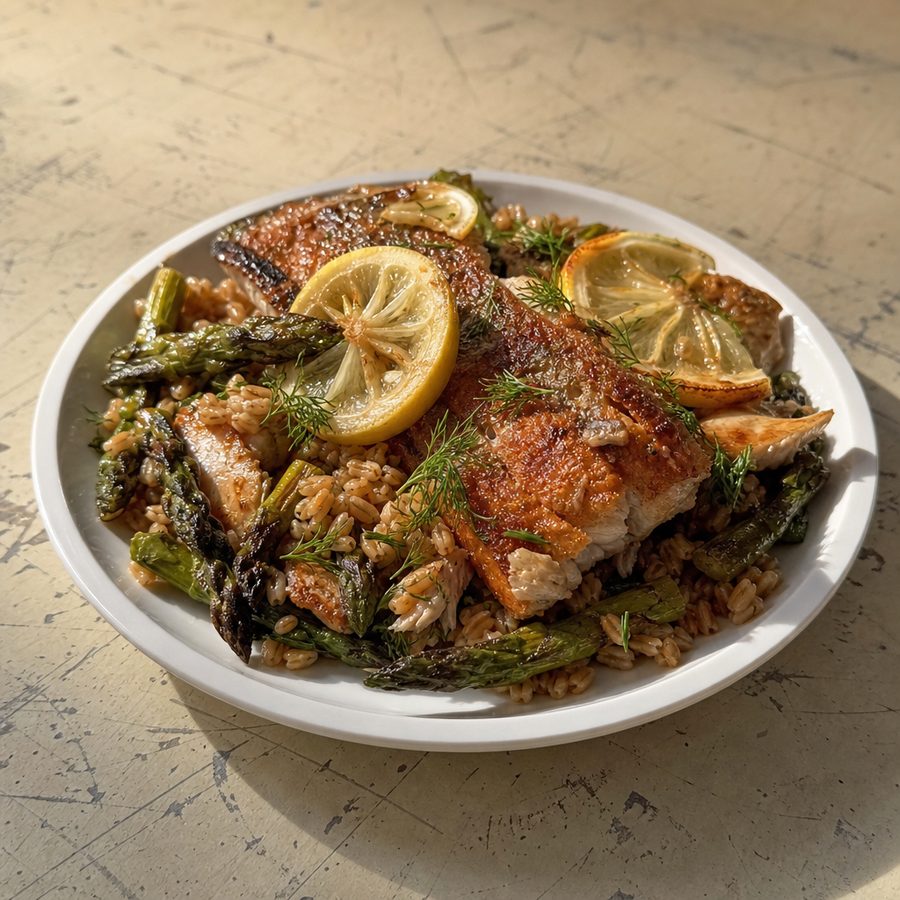
Pan-seared trout fillets finished with lemon, fresh dill, and parsley, plated over herbed farro with roasted asparagus and cherry tomatoes.
Why You'll Love This Recipe
A plate that feels restaurant-nice on a weeknight, without much fuss to get there. Trout is a mild, tender fish that even hesitant fish eaters tend to like, and here it sits on a bed of chewy whole-grain farro with roasted spring vegetables. It comes together in about half an hour and leans on fresh herbs and lemon rather than heavy sauces, so it stays bright and clean.
A hard sear on the skin side carries the dish. Getting the skillet properly hot and leaving the fillet undisturbed for a few minutes gives you crisp, golden skin and browned flavor, and the trout finishes cooking in just a couple more minutes once you flip it, so it never dries out. Adding the garlic and thyme to the pan only at the end keeps them fragrant instead of scorched, and dressing the warm farro with lemon juice and olive oil lets the grains drink in that flavor while they are still hot.
What makes this satisfying is the balance of textures and the way each part pulls its weight nutritionally. Trout brings rich omega-3 fats and plenty of protein, the farro adds fiber-rich whole grains that keep you full, and the roasted asparagus and tomatoes lend color, sweetness, and a dose of vegetables. Finished with a generous shower of dill and parsley and a squeeze of lemon, it eats fresh and complete without feeling heavy.
Ingredients
- 4 trout fillets (about 600 g)
- 3 cups cooked farro
- 1 large bunch asparagus, trimmed
- 1 cup cherry tomatoes
- 4 garlic cloves, minced
- 3 1/2 tbsp olive oil
- 3 tbsp lemon juice
- 2 tbsp chopped fresh dill
- 1/4 cup chopped parsley
- 1 tsp dried thyme
- 3/4 tsp salt
Instructions
- Cook the farro: Rinse the farro under cold water, then simmer it in a pot of salted water until the grains are tender but still chewy, about 25 to 30 minutes. Drain off any excess water and set the farro aside, but keep it warm, since warm grains take up a dressing and cold ones only wear it.
- Prep the aromatics and herbs: While the farro cooks, mince the garlic, chop the fresh dill, and chop the parsley. Trim the woody ends from the asparagus, because the bottom inch stays stringy however long it roasts. Keep everything separate for now, so that the herbs stay raw and bright until the very end.
- Roast the vegetables: Preheat the oven to 425°F (220°C). Toss the asparagus and cherry tomatoes with olive oil and spread them in a single layer on a rimmed baking sheet, since a crowded pan traps steam and the tomatoes will slump instead of blistering. Roast for about 12 minutes, until the asparagus is bright green and just tender and the tomatoes have softened and begun to blister.
- Sear the trout: Pat the trout fillets dry and season them with salt. Heat olive oil in a large skillet over medium-high heat until it shimmers. Lay the fillets in skin-side down and cook undisturbed for about 3 minutes, until the skin is crisp, because the skin releases from the pan on its own once it has browned and tears if you rush it. Flip the fillets, add the minced garlic and dried thyme to the pan, and cook 2 minutes more, until the flesh is opaque and flakes easily and the center reaches 145°F (63°C).
- Dress the farro: Toss the warm drained farro with lemon juice, the remaining olive oil, salt, and half of the chopped dill and parsley until evenly coated. Half the herbs go in here and half go on at the table, which is what keeps the plate tasting fresh rather than uniformly seasoned.
- Plate and finish: Spread the farro on plates, set a trout fillet on top of each, and arrange the roasted asparagus and tomatoes alongside. Garnish with the remaining dill and parsley and serve right away, since crisp trout skin softens within a few minutes of meeting the warm farro underneath it.
Variations
- Swap the fish: Trade the trout for salmon or arctic char fillets, which sear the same way and share a similar rich texture. Watch the timing, as thicker fillets may need an extra minute or two.
- Change the grain: Use cooked quinoa, barley, or brown rice in place of the farro. Quinoa cooks faster and makes the dish free of gluten.
- Add a creamy finish: Stir a spoonful of plain yogurt or a crumble of feta into the herbed farro for a tangy, richer base. This adds dairy.
- Different vegetables: Swap the asparagus for green beans, broccolini, or zucchini, roasting until just tender. Keep the cherry tomatoes for their sweet, jammy contrast.
- Brighter and spicier: Add lemon zest and a pinch of red pepper flakes to the farro, or scatter thin lemon slices over the vegetables before roasting for a sharper citrus edge.
Storage & Leftovers
Store leftovers in an airtight container in the refrigerator for up to 3 days. Keep the trout separate from the farro and vegetables if you can, since the fish holds its texture better when it is not pressed under the grains.
To reheat, warm the farro and vegetables gently in a skillet or the microwave with a splash of water to loosen them. Reheat the trout briefly and at low heat, just until warmed through, so it does not overcook and turn dry; a few minutes in a low oven or a quick pass in a covered skillet works well.
For make-ahead, cook the farro and roast the vegetables up to two days in advance and refrigerate them. When you are ready to eat, all that is left is to sear the trout fresh and dress the farro with lemon and herbs, and dinner is on the table in minutes.
Notes & Tips
- Buy the right trout: Look for fillets with moist, shiny flesh and no fishy smell. Skin-on fillets are ideal here, since the skin crisps up and helps hold the delicate fish together in the pan.
- Dry the fish for crisp skin: Pat the fillets thoroughly dry before they hit the oil. Surface moisture steams instead of sears, so a dry surface is the difference between crisp skin and soft, pale skin.
- Know when the trout is done: Trout cooks fast. It is ready when the flesh turns from translucent to opaque and flakes with light pressure from a fork; an instant-read thermometer should show 145°F (63°C) at the thickest point.
- Fresh herbs make it: The dill and parsley are added raw at the end for a reason, so use them fresh rather than dried for that bright, grassy lift. If you must, dried dill can stand in for cooked applications but loses punch as a garnish.
- Cook extra farro: Farro keeps well, so make a bigger batch than you need and refrigerate the rest. Cold cooked farro is a quick base for grain bowls and salads through the week.
- Adjust the acid to taste: Taste the dressed farro before serving and add more lemon juice or a pinch of salt if it tastes flat. The grains soak up seasoning, so they often want a little more than you expect.
Nutrition & Mindful Eating
- Trout, farro and asparagus each keep their own texture on the plate. The fish flakes, the farro stays chewy, the asparagus snaps, and the lemon and olive oil that go over all three are what make them read as one dinner.
- Trout has soft pink flesh and a clean, mild flavor with real richness behind it, and it flakes into big pieces the moment it is done. That richness is where the omega-3 fats sit.
- Farro is a whole grain that stays firm and chewy however long it sits in the dressing, which makes it a steady base for a warm plate, and its fiber is what turns fish and vegetables into a full meal.
- Asparagus and cherry tomatoes cook fast and go in together, the tomatoes bursting and leaving a sweet juice behind that seasons the farro, the asparagus staying green with a bit of bite.
- Dill, parsley and thyme go in raw at the end, so they stay grassy and sharp, and the lemon squeezed over the fish is what carries them. That is a lot of green flavor for something that cooks this quickly.
- As you eat, notice how easily the trout gives way under the fork and how much dill you can smell before each bite, and take the meal at the pace the fish deserves.
Frequently Asked Questions
How do I keep the trout from sticking to the pan?
Make sure the skillet and oil are properly hot before the fish goes in, and lay the fillet down skin-side first. Then leave it alone for the first few minutes. The fish releases naturally once the skin is crisp, so if it resists when you try to flip it, give it a little more time.
Can I use pre-cooked or leftover farro?
Yes. Warm it gently and toss it with the lemon juice, olive oil, salt, and herbs as written. Cooking a fresh batch and cooling the extra is a good way to keep some on hand for other meals.
My family finds trout too delicate. What else works?
Salmon or arctic char are sturdier fillets that cook with the same skin-side sear and rich flavor. They stand up a bit better to handling if you are worried about the fish falling apart.
Can I roast the vegetables and cook the fish at the same time?
Yes, and it saves time. Get the asparagus and tomatoes into the hot oven, and start searing the trout in the last few minutes of their roast so everything finishes together and goes to the table hot.