
Lemon Ricotta Yogurt Pancakes
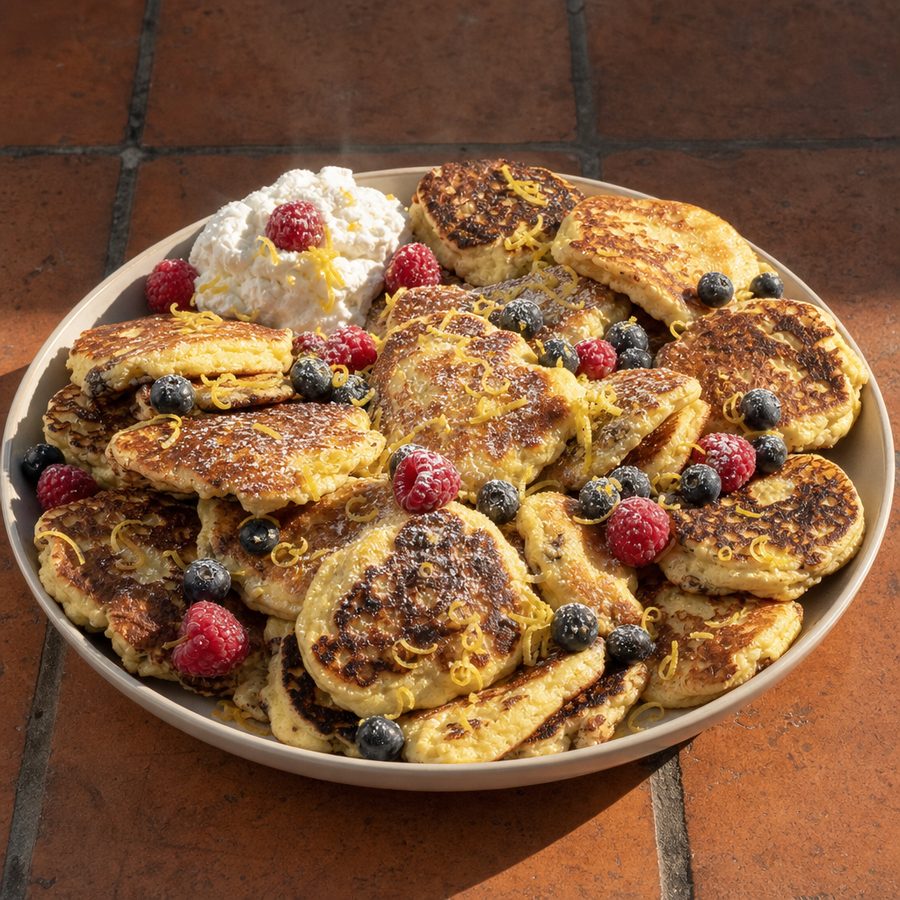
Tender, custardy pancakes built on ricotta and Greek yogurt, thickened with almond and oat flour, and brightened with fresh lemon juice and zest.
Why You'll Love This Recipe
These are soft, cafe-style pancakes for a slow weekend morning, made without any eggs at all and leaning on dairy for both their structure and their richness. They suit anyone who wants a breakfast that tastes like a treat and still eats light. They are also unusually forgiving for a pancake, since there is no gluten in the batter to toughen, which means the usual warning about overmixing carries far less risk than it does with a flour pancake.
The magic here is the reaction between baking soda and the acidic yogurt and lemon juice. As the batter rests, the acid and base meet and release carbon dioxide, aerating a batter that has no eggs to lift it. Ricotta keeps the crumb moist and custardy rather than dry, while almond flour and oat flour give body and a gentle nuttiness. Cooking over steady medium heat lets the interiors set before the outsides overbrown, giving you that even golden face.
Tender texture and tangy lift are what set these apart from a plain stack of pancakes. Ricotta, Greek yogurt, and milk stack up plenty of protein to keep you full, while oat flour brings fiber and a soft chew. The lemon cuts the richness so the plate never feels heavy, and a final dab of ricotta and a shower of zest make each bite taste fresh and finished.
Ingredients
- 1 2/3 cups ricotta
- 1 cup Greek yogurt
- 2 cups almond flour
- 1 1/4 cups oat flour (blended oats)
- 3 tbsp lemon juice
- 2/3 cup milk
- 1 1/2 tbsp butter for the pan
Instructions
- Blend the oats into a fine flour: If you are starting with whole rolled oats, blend them in a food processor until they are a fine, powdery flour with no visible flakes, about 30 seconds. Take it further than looks necessary, because any flake that survives stays chewy in the finished pancake and shows up as a damp speck. Skip this if you already have oat flour.
- Zest before you juice: Rinse the lemon and take the bright yellow zest off with a fine grater, stopping before the bitter white pith, then halve it and squeeze the juice. Zest first and juice second, since a squeezed lemon half is almost impossible to grate and the zest is what carries the perfume, where the juice only brings acid.
- Whisk the wet ingredients until smooth: Whisk the ricotta, Greek yogurt, milk, and lemon juice together in a large bowl until smooth and pourable with no large curds left. Ricotta stays lumpy unless it is properly worked, and any curd left whole here bakes into a wet pocket rather than melting into the crumb.
- Fold the dry in, and stop early: Add the almond flour, oat flour, and baking soda and stir just until the batter comes together with no dry pockets, leaving a few small lumps. Overmixing makes them dense, and this batter has no gluten in it to develop, so the only thing extra stirring does is knock out the air. It should be thick and spoonable.
- Rest the batter 5 minutes: Let the batter sit undisturbed for 5 minutes. During that rest the baking soda reacts with the acidic yogurt and lemon juice, forming the bubbles that lighten the texture, and you may see the surface puff slightly. Cook it before that reaction is spent, since a batter left half an hour goes flat.
- Cook 2 to 3 minutes a side over medium: Melt a little butter in a nonstick skillet over medium heat until it foams, spoon the batter in in quarter-cup rounds with space between them, and cook 2 to 3 minutes, until the undersides are deep golden and the edges look set, then flip once and cook 2 to 3 minutes more. Turn the heat down if they color before the centers set, because these are thick and eggless and the middle needs longer than a flour pancake would.
- Stack them and finish with zest: Stack the warm pancakes on plates, scatter the reserved lemon zest over them, and add a small spoonful of extra ricotta on top. The zest goes on at the end rather than into the batter so its oils are still volatile when the plate reaches the table, which is where the lemon smell comes from.
Variations
- Blueberry lemon: Press a few fresh or frozen blueberries into the tops of the rounds just after you spoon them into the pan. This adds fruit and a little natural sugar, and the berries burst into pockets of jam as they cook.
- Orange instead of lemon: Swap the lemon juice and zest for orange to make a softer, sweeter, more floral pancake. The batter still needs the acidity to react with the baking soda, so keep the citrus in play.
- Poppy seed: Stir a spoonful of poppy seeds into the batter with the flours for a classic lemon-poppy crunch and a speckled look.
- Warm spice: Add ground cinnamon and a splash of vanilla to the wet ingredients for a cozier, aromatic version that leans toward the cooler months.
- Honey ricotta topping: Whip the finishing ricotta with a drizzle of honey until light, then dollop it over the stack. This adds dairy and a touch of added sugar for a dessert-like brunch.
Storage & Leftovers
Keep leftover pancakes in an airtight container in the refrigerator for up to 4 days. Let them cool completely before covering so trapped steam does not turn them soggy, and layer them between sheets of parchment to stop them sticking together.
Reheat in a dry nonstick skillet over medium-low for a minute or two per side to bring back the golden surface, or warm them in a low oven wrapped loosely in foil. A microwave works in a pinch but softens the exterior, so a skillet is the better choice for texture.
To get ahead, whisk the wet ingredients the night before and refrigerate them; in the morning, stir in the flours and baking soda and rest the batter fresh so the leavening is at full strength. Cooked pancakes also freeze well in a single layer, then transfer to a bag, and reheat straight from frozen in a skillet or toaster.
Notes & Tips
- Buy or blend oat flour: Store-bought oat flour saves a step, but blending your own from rolled oats is cheaper and lets you control the grind. Blend a little longer for a finer, more tender crumb.
- Drain watery ricotta: Drain the ricotta briefly if it looks watery so the batter is not too loose.
- Test one pancake first: Cook a single small round before committing the batch. It tells you if the heat is right and lets you adjust the pan temperature so the rest come out evenly golden.
- Know when to flip: Wait until the underside is deep golden and the edges look dry and set before flipping. Because there are no eggs, a too-early flip can tear the pancake, so give it the full time.
- Rest the batter every time: Do not skip the 5-minute rest, and cook soon after. The lift comes from the fresh reaction between baking soda and the acidic dairy, and it fades if the batter sits too long.
- Serve alongside: These pair well with fresh berries, a spoonful of Greek yogurt, or a light drizzle of maple syrup. The tangy lemon base also holds up nicely next to sliced stone fruit in summer.
Nutrition & Mindful Eating
- Ricotta, yogurt and oats go into the blender together and come out as a thick, pourable batter, so these cook gently and stay soft in the middle. Between the dairy and the oats there is enough protein and fiber here to make breakfast last.
- Greek yogurt is what gives these their tang, and its lactic acid reacts in the batter to lighten it as it cooks. It brings a concentrated dose of protein and its live cultures into a stack of pancakes.
- Oats blended into flour keep a faint, homely coarseness in the crumb and a mild sweetness of their own, and their beta-glucan is a soluble fiber that helps hold the moisture in as they set.
- Ricotta keeps the centers creamy where the heat has not fully reached them, and the milk loosens the batter enough to pour. Together they carry the calcium and the mildness that the lemon plays against.
- Lemon zest runs through the batter and the butter in the pan browns slightly underneath it, which is how the edges turn lacy and gold. That smell of hot butter and citrus is the honest reason to make pancakes on a weekday.
- As you eat, let the tang of the yogurt arrive just after the sweetness and feel how soft the centers stay, and take the first one slowly enough to actually taste it.
Frequently Asked Questions
Why are there no eggs in these pancakes, and what holds them together?
The ricotta and Greek yogurt provide the moisture and protein that eggs would normally add, while the almond and oat flours give structure. The baking soda reacting with the acidic dairy and lemon is what makes them rise, so no eggs are needed.
My batter is very thick. Is that normal?
Yes. This is a thick, spoonable batter rather than a pourable one, which is why you shape it into rounds with a spoon. If it feels too stiff to spread at all, loosen it with a splash of milk, but expect it to be denser than a classic buttermilk batter.
Can I make these without oat flour to keep them gluten-free?
Oat flour is naturally gluten-free, but if you avoid oats for cross-contamination reasons, look for certified oat flour or replace it with more almond flour. Note that all-almond versions will be softer and a bit more delicate to flip.
Why do my pancakes brown outside but stay wet in the middle?
The heat is too high. Lower the pan to medium or medium-low so the interior has time to set before the surface colors, and give each side the full cooking time until the edges look dry.