
Mackerel and Eggs
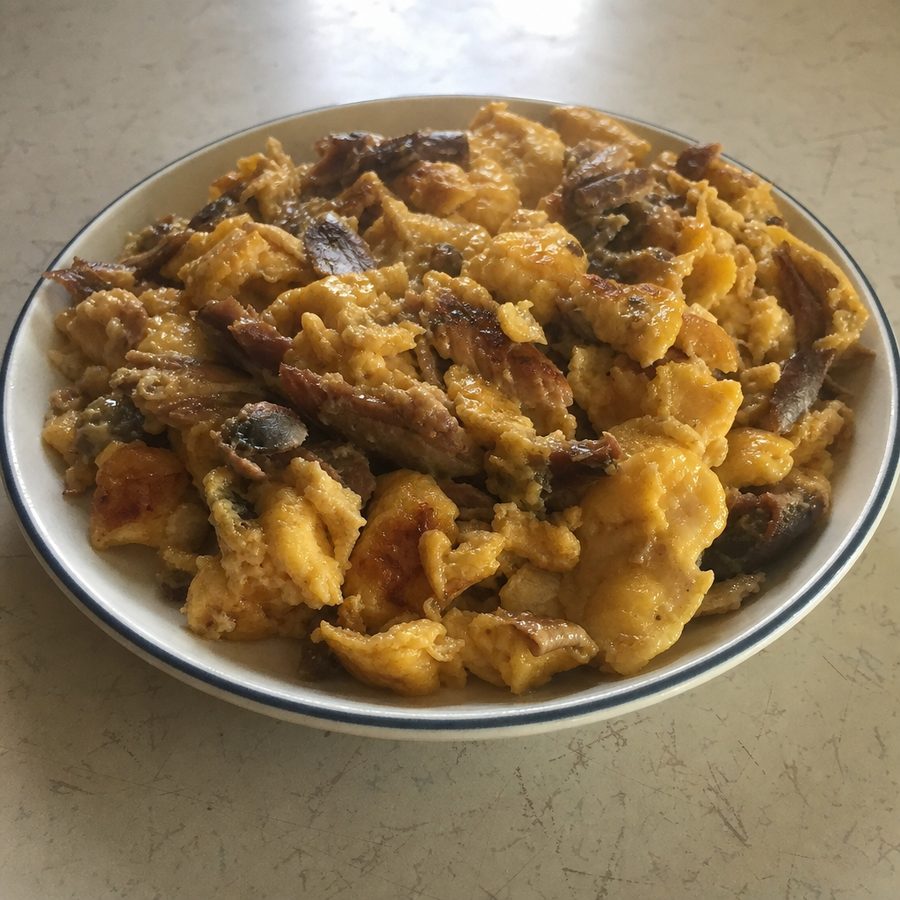
Rich, savory flakes of mackerel folded through soft, buttery scrambled eggs seasoned simply with salt.
Why You'll Love This Recipe
This is a warm, protein-dense breakfast for anyone who wants a savory start to the day instead of a sweet one, and for cooks who like a plate that comes together in a single pan in under fifteen minutes. Oily fish and eggs are humble and filling, and their natural richness does the work, with butter and salt as the only supporting players. It suits people who are cutting back on starches and sugars and want a meal that holds them through a busy morning.
The mackerel only needs warming through. Mackerel is cooked and flaked before it meets the eggs, so it only needs to be warmed through in the last minute, which keeps it moist rather than dry and rubbery. The eggs are soft-scrambled over gentle heat and pulled while still glossy, so they stay tender and custardy and carry the fish instead of fighting it. Butter rounds out the oily, mineral edge of the mackerel and gives the whole plate a smooth, cohesive texture.
It satisfies because fat and protein together are filling and slow to leave you hungry again. The mackerel brings a deep, savory character and the eggs bring a soft, creamy body, so each bite is rich without feeling heavy. It is naturally free of grains and sugar, and it delivers a real dose of long-chain omega-3 fats, quality protein, and micronutrients that are hard to get from a typical breakfast.
Ingredients
- 10 oz cooked mackerel, flaked
- 9 large eggs
- 2 tbsp butter
- 1/2 tsp salt
Instructions
- Start with cooked mackerel: This wants about ten ounces of cooked, flaked mackerel. From raw, pat the fillets dry and cook them in a skillet over medium heat, skin side down first, 4 to 5 minutes a side, until the flesh is opaque and flakes easily at 145°F (63°C). Cool them slightly, peel off the skin, feel for bones, and flake the flesh coarsely, since large flakes stay recognizable in the eggs where fine shreds disappear.
- Beat the eggs until they are frothy: Crack the eggs into a bowl with the salt and whisk until the yolks and whites are fully blended and slightly frothy, about 30 seconds. Whisking properly matters for a soft scramble, because streaks of unmixed white set faster than the yolk around them and give you tough white ribbons through something that should be uniform.
- Scramble low and slow in foaming butter: Melt the butter in a nonstick skillet over medium-low until it foams but does not brown, pour in the eggs, let them sit a few seconds, then stir and fold slowly with a spatula until they form soft curds that are just set and still glossy. Keep the heat low, since high heat squeezes water out of the curds and leaves a wet pan and dry eggs.
- Fold the fish in for about a minute: Add the flaked mackerel and fold it gently through the eggs for about a minute, just long enough to warm the fish through. The fish is already cooked, so this is about temperature rather than cooking, and every extra minute takes the eggs further past where you wanted them.
- Serve while the eggs are still creamy: Fold everything together lightly and divide among plates, serving right away while the eggs are still creamy. Scrambled eggs carry on setting on a warm plate, so a pan that looked right in the kitchen is dry by the time a slow table gets to it.
Variations
- Sharper with cheese: Grate a hard cheese into the eggs as they set for a saltier, tangier finish; this adds dairy.
- Smoked mackerel: Swap in smoked mackerel for a deeper, smokier flavor; smoked fish is noticeably higher in sodium, so use a lighter hand with the salt.
- With crisp bacon: Crumble cooked bacon over the top for a crunchy, salty contrast; this adds pork.
- Extra-rich eggs: Whisk in a couple of additional egg yolks before scrambling for a creamier, more custardy texture.
- Cooked in a different fat: Scramble the eggs in beef tallow or rendered bacon fat instead of butter for a different, more savory background note; this changes the fat and removes the dairy.
Storage & Leftovers
Store leftovers in an airtight container in the refrigerator for up to three days. Cooked eggs and oily fish are both best eaten sooner rather than later, since the fish flavor grows stronger the longer it sits.
Reheat gently to protect the soft texture. Warm the eggs and mackerel in a buttered skillet over low heat, stirring just until hot, or use short bursts in the microwave at reduced power, stopping the moment steam rises. High heat will overcook the eggs into a tough, weepy curd and dry out the fish.
To get ahead, cook and flake the mackerel up to a day in advance and keep it covered in the refrigerator, then scramble the eggs fresh in the morning and fold the fish in at the end. The eggs take only a few minutes, so making them to order gives you the best result with almost no extra effort.
Notes & Tips
- Choosing the fish: Fresh mackerel fillets give the cleanest flavor, but good tinned mackerel works well too. Just drain it thoroughly and taste it first, since some tinned fish is already salted.
- Pull the eggs early: Take the eggs off the heat while they still look slightly wet and glossy; the residual warmth of the pan finishes them, and waiting for them to look fully done means overcooked, dry curds by the time they reach the plate.
- Warm, do not cook, the mackerel: The fish is already cooked, so it only needs about a minute in the pan to heat through. Any longer and it dries out and turns stringy.
- Salt the eggs, not the fish: Mackerel carries its own briny, mineral flavor, so season the raw eggs and then taste the finished dish before adding any more salt.
- Double it for a crowd: The recipe scales easily; cook the fish ahead and keep it warm, but scramble the eggs in batches so the pan is never crowded, which keeps them soft.
- Serve it warm and fresh: This plate is best straight from the pan while the eggs are still creamy; if you like, finish each serving with a small pat of butter melting on top for extra richness.
Nutrition & Mindful Eating
- Mackerel and eggs belong together at breakfast because they are rich in the same direction. The fish is oily and assertive, the eggs are soft and mild, and the butter they share in the pan ties the two into one plate.
- Mackerel has dark, oily flesh that crisps at the edges and stays moist in the middle, and that oil is where its omega-3 fats and vitamin D live. It is a strong-flavored fish, so it wants real heat and a firm hand in the pan.
- Eggs cooked gently until the whites are just set and the yolks stay loose give you something to break over the fish. The yolk is where the choline and the color are, and a little salt over the whites is what stops them from tasting flat.
- Butter is the cooking fat and the seasoning at once. It browns slightly as the fish goes in, smells nutty by the time you turn it, and that browned fat spooned over the eggs is what pulls the plate together.
- A plate of oily fish and eggs holds you through a long stretch of the morning. Protein and fat this dense move slowly, and it is why a breakfast this quick still eats like a real meal.
- As you eat, notice how the crisped skin of the mackerel gives way to soft egg and browned butter, and take the few extra minutes to sit with it rather than eating at the stove.
Frequently Asked Questions
Can I use tinned mackerel instead of cooking fresh fish?
Yes. Drain it well, flake it with a fork, and skip the step of cooking the fish from raw. Just fold it into the eggs at the end to warm it through.
Why cook the eggs over medium-low heat?
Gentle heat gives you soft, creamy curds instead of tough, dry ones. Eggs firm up quickly, and low, slow cooking with steady stirring keeps them tender enough to carry the mackerel.
The fish flavor is too strong for me. What can I do?
Use fresh mackerel rather than smoked, drain tinned fish thoroughly, and warm it for only the final minute. The butter and soft eggs also mellow the fish considerably.
How do I make this without butter?
Scramble the eggs in beef tallow or rendered bacon fat instead. It changes the background flavor and removes the dairy while keeping the eggs rich and glossy.