
Mackerel and Wilted Greens Breakfast Plate
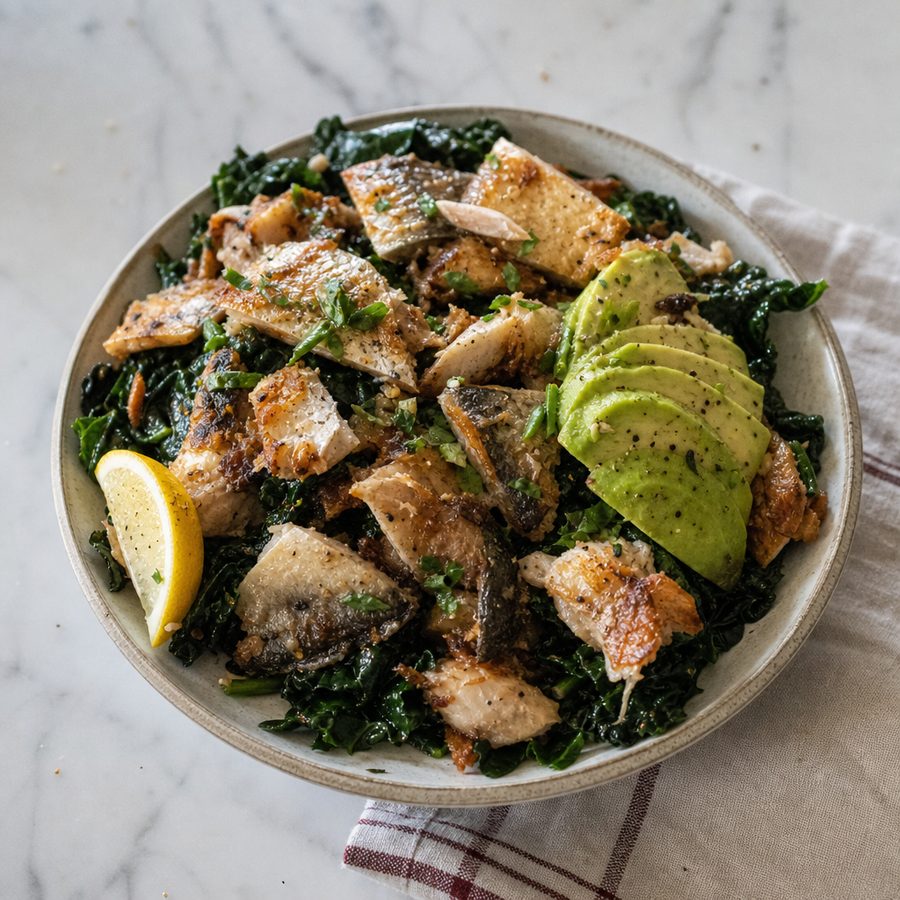
Rich, flaky mackerel warmed over garlicky wilted kale, finished with cool slices of avocado, a slick of olive oil, and a bright squeeze of lemon.
Why You'll Love This Recipe
This is a savory, protein-forward breakfast for anyone who would rather start the day with something green and substantial than with something sweet. Oily fish, dark leafy greens, and buttery avocado already belong together, and they come together in a single skillet. If the mackerel is already cooked, and it often is around here, the whole plate is about eight minutes from a cold pan.
Three things on the plate, cooked three different ways. The mackerel is seared until it flakes and keeps a little richness, the kale is cooked just to the point of wilting so it stays glossy and holds some body rather than going to mush, and the garlic is softened in the oil only until fragrant so it stays sweet instead of turning bitter. Cool, raw avocado and a hit of lemon at the very end lift all of that richness and keep the plate from feeling heavy.
It is filling because the fish brings a real dose of protein and long-chain omega-3 fats while the avocado and olive oil add more fat, so the plate carries you without a mid-morning crash. The kale adds fiber and a mineral, slightly bitter backbone, and the lemon ties it together with brightness. Mackerel is also one of the cheapest ways to put oily fish on a plate, which is worth knowing if salmon has priced itself out of your week. It eats like a complete meal, not a snack.
Ingredients
- 400 g cooked mackerel fillets, flaked
- 6 cups kale, stemmed and torn
- 1 large avocado, sliced
- 1 1/2 tbsp extra-virgin olive oil
- 3 garlic cloves, sliced
- 1 1/2 tbsp lemon juice
- 1/4 tsp salt
Instructions
- Start with cooked mackerel, flaked large: This wants about 400 g of cooked mackerel. From raw, pat the fillets dry, season lightly, and sear them skin side down in a hot skillet 3 to 4 minutes a side, until opaque and flaking at 145°F (63°C). Let them cool a minute, peel off the skin, pull out any pin bones, and flake the flesh into large pieces, because mackerel is soft and breaks down further every time it is moved.
- Strip the kale and slice the garlic: Strip the kale leaves from their tough center stems and tear the leaves into bite-size pieces, since the stems never soften in the few minutes the leaves need. Slice the garlic rather than mincing it, so it can be cooked briefly without burning, and slice the avocado in its skin, scooping the slices out with a spoon.
- Garlic 30 seconds, then the kale: Warm the olive oil in a large skillet over medium heat, add the sliced garlic, and cook about 30 seconds, until fragrant and just turning pale gold, taking care that it does not brown. Add the kale with the remaining salt and toss with tongs for 4 to 5 minutes, until the leaves collapse and turn deep glossy green.
- Settle the fish in and warm it through: Settle the flaked mackerel into the wilted kale and cook gently for about 2 minutes, just long enough to heat it. Move it as little as possible, because the whole point of flaking it large was to have pieces of fish on the plate rather than a hash of it.
- Avocado and lemon at the plate: Divide the kale and mackerel among plates, fan the avocado slices alongside, and finish with a squeeze of lemon over the top. The lemon goes on raw and last, since acid in a hot pan loses its edge within a minute, and it is what cuts through an oily fish and a plate of dark greens.
Variations
- Change the greens: Swap the kale for Swiss chard, spinach, or collards. Tender leaves like spinach wilt in a minute or two, while sturdier collards want a few extra minutes in the pan.
- Switch the citrus: Finish with lime or orange in place of lemon for a slightly rounder, sweeter brightness against the rich fish.
- Add fresh herbs: Shower the finished plate with chopped dill, parsley, or chives for a fresh, grassy lift that plays well with oily fish.
- Warm it with ginger: Add a little grated fresh ginger to the pan with the garlic for a gentle warmth and a fragrant edge.
- Add a roasted side: Serve it with roasted sweet potato wedges for a heartier, more filling plate; this adds a starchy vegetable.
Storage & Leftovers
Store leftover mackerel and kale together in an airtight container in the refrigerator for up to three days. Keep the avocado separate and slice it fresh when you serve, since cut avocado browns and softens quickly and does not hold up in the fridge.
Reheat the fish and greens gently in a skillet over low to medium heat with a few drops of olive oil, just until warmed through; a minute or two is enough. Avoid a high heat or a long spin in the microwave, which will dry out the mackerel and dull the greens. This dish is also good served at room temperature or cold, so reheating is optional.
To get ahead, sear and flake the mackerel and wilt the kale a day in advance and keep them chilled. In the morning, warm them together in the skillet, then slice a ripe avocado and squeeze the lemon fresh so the finishing touches taste bright.
Notes & Tips
- Buying the mackerel: Fresh mackerel fillets should smell clean and briny, not fishy, with firm, shiny flesh. If you can only find good canned or jarred mackerel packed in oil or water, it works well here. Just drain it and skip straight to flaking, since it is already cooked.
- Pick the right kale: Lacinato (dinosaur) kale is more tender and less bitter than curly kale and wilts a little faster; either works, but taste as you cook and give curly kale an extra minute if it still feels chewy.
- Judge avocado ripeness: A ripe avocado yields to gentle pressure in your palm and the little stem nub pops off to show green underneath. If yours is firm, buy it a couple of days ahead and let it ripen on the counter.
- Keep the lemon for the end: Add the lemon juice only after plating. Squeezing it over the hot pan dulls its brightness, whereas a fresh squeeze at the table keeps the finish lively.
- Season in layers: The fish, the greens, and the finished plate each take a little salt. Taste the kale before serving and adjust, since mackerel and lemon both shift how salty the plate reads.
- Double the base: The seared fish and wilted greens scale and keep well, so cook extra and portion it out; slice fresh avocado and squeeze fresh lemon each morning to keep leftovers tasting new.
Nutrition & Mindful Eating
- The fish, the greens and the avocado balance one another on the plate. Mackerel is oily and assertive, the kale turns dark and slightly bitter once it hits the garlic and oil, and the avocado is the cool, soft thing that settles between them.
- Kale cooked hard and fast in hot oil goes from stiff to glossy in a couple of minutes, which keeps its color deep and its bite intact, and it carries vitamin K and fiber into a plate that is otherwise mostly protein and fat.
- Mackerel skin crisps in a hot pan while the flesh underneath stays soft enough to flake apart. Cook it skin side down and leave it alone until it releases, and let the richness that comes with its omega-3 fats do the seasoning.
- Sliced avocado goes on at the end with no heat at all, cool against the warm greens, and its fat along with the olive oil helps your body take up the vitamins that came out of the kale.
- Sliced garlic sizzling in the oil before the kale goes in is what perfumes the whole plate, and a hard squeeze of lemon over everything cuts through the fish so the last bite tastes as bright as the first.
- As you eat, let the flake of the warm fish and the cool avocado land separately before they meet, and give the plate the few unhurried minutes it takes to notice you are comfortably full.
Frequently Asked Questions
Mackerel has a strong flavor. How do I keep it from being too fishy?
Start with the freshest fillets you can find, since freshness matters more than the fish itself. Searing rather than boiling mellows the flavor, and the garlic, olive oil, and generous squeeze of lemon all balance the richness. If you want it milder still, use a bit more lemon at the end.
Can I use canned mackerel instead of fresh?
Yes. Canned mackerel is already cooked, so just drain it well and flake it, then skip the searing step and add it straight to the wilted kale to warm through.
My kale turns out chewy and bitter. What am I doing wrong?
Chewiness usually means it needs another minute or two in the pan; cook until the leaves are fully collapsed and glossy. Removing the tough stems helps a lot with both texture and bitterness, and lacinato kale runs milder than curly.
Can I make this ahead for weekday breakfasts?
Yes. Cook the fish and greens ahead and refrigerate them together for up to three days, then warm gently in a skillet. Slice the avocado and squeeze the lemon fresh each morning, since both are best just before eating.