
Mackerel, Arugula and Lemon Olive Salad
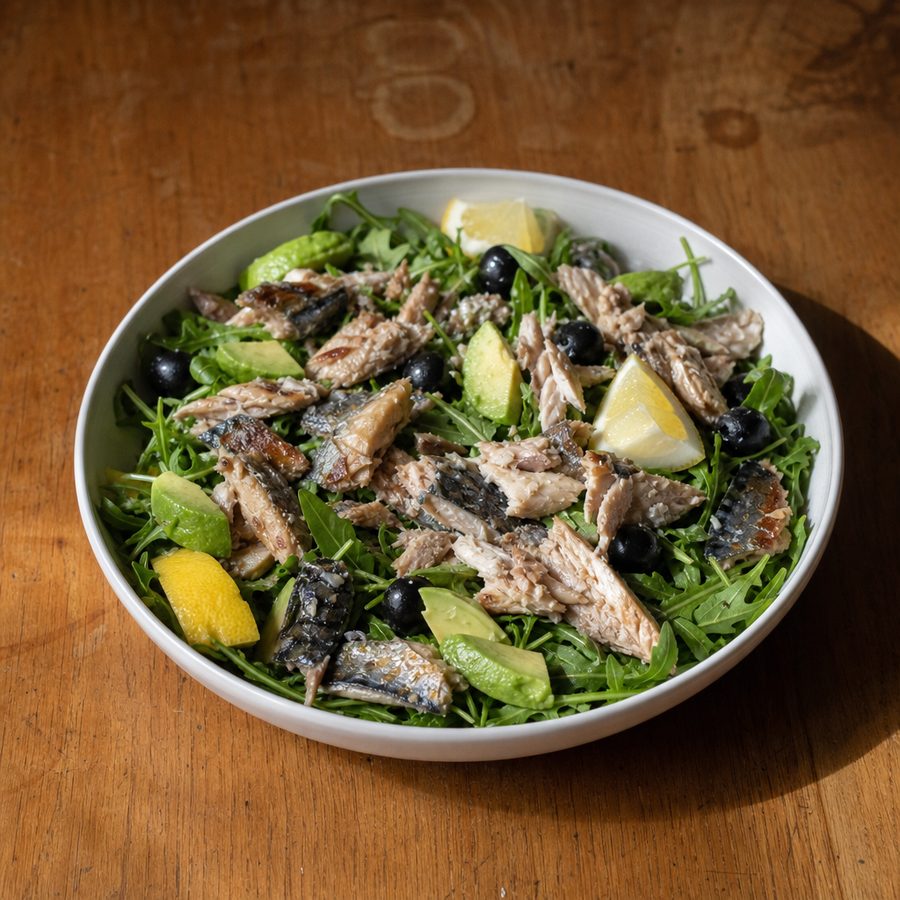
Rich, flaky mackerel piled over peppery arugula with sliced avocado, briny kalamata olives, crisp cucumber, and fresh dill, all brightened by a lemon and dijon dressing.
Why You'll Love This Recipe
This is lunch, and it eats like lunch. Everything on the plate is cold and raw except the mackerel, so the fish sets the pace: cook one skillet of it, let it cool enough to flake into big pieces, and the rest is slicing and tearing. If there is already cooked mackerel in the refrigerator from the night before, there is nothing to cook at all. It suits anyone who wants a filling plate of bold, savory flavors in the middle of the day without turning on the oven.
Richness on one side, acidity on the other. Mackerel is one of the fattiest fish, and on its own that richness can feel heavy, so the lemon and dijon dressing cuts straight through it while the peppery arugula and cool cucumber keep each bite from feeling one-note. The olives and salt add a briny backbone, and folding the fish in as large flakes rather than shredding it keeps the texture meaty and satisfying.
It satisfies because fat and protein together are slow to leave the stomach, so the meal holds you between one meal and the next. The mackerel brings long-chain omega-3 fats, the avocado and olive oil add creamy monounsaturated fat, and the arugula, cucumber, and herbs contribute fiber, water, and a fresh green flavor that makes the whole plate feel light even though it is nourishing.
Ingredients
- 1 lb cooked mackerel, flaked
- 5 cups baby arugula
- 1 large avocado, sliced
- 3 tbsp olive oil
- 1/3 cup kalamata olives
- 1 cup sliced cucumber
- 1 1/2 tbsp lemon juice
- 2 tsp dijon mustard
- 2 tbsp fresh dill
- 1/2 tsp salt
Instructions
- Cook the mackerel, then flake it: Pat the mackerel fillets dry and season them lightly with salt. Warm a little of the olive oil in a skillet over medium-high heat and lay the fillets in skin side down. Cook without moving them for 3 to 4 minutes, until the skin crisps and releases on its own, then turn them and cook 2 to 3 minutes more, until the flesh is opaque and flakes easily or the thickest part reaches 145°F (63°C). Let them cool a few minutes, peel off the skin, run your fingers along the flesh for pin bones, and flake it into large chunks.
- Whisk the dressing until it thickens: Whisk the remaining olive oil, the lemon juice, the dijon, and the salt together for about 30 seconds, until the dressing looks smooth and slightly thickened rather than separated. The dijon is not only there for flavor: mustard is an emulsifier, so it holds the oil and lemon together and stops the dressing splitting into an oily layer and a sour one in the bottom of the bowl.
- Slice the vegetables while the fish cools: Slice the cucumber into thin rounds, halve and pit the avocado and cut it into slices, and tear or roughly chop the dill. Do the avocado last, right before it goes on the plate, because cut avocado starts browning within about 10 minutes and there is nothing in this salad to hide it under.
- Dress the greens lightly, not heavily: Put the arugula and the cucumber in a large bowl, drizzle over enough dressing to lightly coat, and toss gently until the leaves are glossy but not sitting in liquid. Arugula is a thin, delicate leaf and it collapses under too much dressing within a couple of minutes, so hold back some of it and drizzle the rest over the finished plates instead.
- Plate it so nothing gets crushed: Mound the dressed greens and cucumber on plates, top with the flaked mackerel, and arrange the avocado slices and olives around and over the fish before scattering the dill. Building it in this order rather than tossing everything together is what keeps the big flakes of mackerel and the avocado slices intact instead of breaking them into a mash at the bottom of a bowl.
Variations
- Swap the fish: Trade the mackerel for another rich, oily fish such as salmon or drained canned sardines, cooked and flaked the same way. Each brings its own level of richness while keeping the plate built around fish.
- Add a salty crumble: Scatter crumbled feta or goat cheese over the top for a tangy, creamy contrast to the fish. Note that this adds dairy.
- Build in some crunch: Sprinkle toasted sliced almonds or pumpkin seeds over the finished salad for a toasty, crisp bite against the soft avocado. Note that this adds nuts or seeds.
- Change the greens: Use baby spinach or a spring mix in place of the arugula for a milder, less peppery base. The dressing and toppings work just as well over gentler leaves.
- Brighten with tomato: Toss in halved cherry tomatoes for a sweet, juicy pop alongside the olives and cucumber. Note that tomatoes add a small amount of natural sugar and carbohydrate.
Storage & Leftovers
The plate is best eaten fresh, but leftovers keep in the refrigerator for up to two days in a covered container. The dressed greens will soften over time, so if you know you will save some, store the undressed components separately and combine them when you are ready to eat.
This salad is meant to be served cold or at room temperature, so there is no reheating involved. If the mackerel was chilled, let it sit out for ten to fifteen minutes to take the edge off the cold, which brings back more of its flavor and softens the fat.
To get ahead, cook and flake the mackerel and whisk the dressing up to two days in advance, and keep both in the refrigerator. Slice the cucumber and dill ahead as well, but hold off on cutting the avocado and tossing the greens until just before serving so nothing browns or wilts.
Notes & Tips
- Choosing your mackerel: Look for firm, glossy fillets with a clean sea smell rather than a strong fishy one, which signals age. Atlantic and Spanish mackerel are milder and lower in mercury than king mackerel, which is worth keeping in mind if you eat this often.
- Pick a ready avocado: Choose one that yields to gentle pressure but is not mushy. Slice it last and give the slices a squeeze of the lemon juice if the salad will sit even a few minutes, since the acid slows browning.
- Taste the dressing first: Mackerel and olives are both salty, so dip a leaf into the dressing before you toss everything. Adjust with more lemon juice for brightness or a little more dijon for body before it hits the greens.
- Manage the olives' salt: Kalamata olives vary a lot in saltiness. If yours are very briny, give them a quick rinse and hold back a pinch of the salt in the dressing so the finished plate is not over-seasoned.
- Serve it slightly warm or cold: The mackerel is good either freshly cooked and still warm or fully chilled. Cold fat mutes flavor, so if you plate it straight from the fridge, let it come up a little before eating for the fullest taste.
- Round out the plate: For a bigger meal, serve it with a few slices of cucumber-heavy pickles or a wedge of soft cheese on the side, which complement the fish without weighing the salad down.
Nutrition & Mindful Eating
- Rich fish and peppery greens are the whole idea here. The mackerel is oily and full-flavored, the arugula pushes back with its mustardy bite, and the lemon dressing keeps moving between them so neither one takes over the plate.
- Mackerel breaks into big soft flakes while it is warm and firms up as it cools, so this salad works either way. Its oiliness is the point, and it is the same oil that carries the long-chain omega-3 fats the fish is known for.
- Arugula has real character, sharp and slightly bitter, and it stands up to a dressing rather than wilting under it. Those same peppery compounds come with folate and vitamin K attached.
- The dressing is lemon juice, olive oil and dijon whisked until it thickens, and the mustard is what keeps it from separating on the greens. Dill stirred in at the end gives it the clean, grassy smell you notice before you taste anything.
- Avocado, olives and cucumber round the plate out in three directions, creamy, salty, and cold, and the fat from the avocado and the olives helps your body take up what the greens are carrying.
- As you eat, notice the dill and lemon first and how the peppery arugula resets your mouth between forkfuls of fish, and let lunch be a genuine break rather than something you get through at a desk.
Frequently Asked Questions
Can I use canned or smoked mackerel instead of cooking it fresh?
Yes. Drained canned mackerel or flaked smoked mackerel both work and skip the cooking step entirely. They tend to be saltier than fresh, so taste before you add the full amount of salt to the dressing and adjust down as needed.
Mackerel is high in fat, is that a problem?
The fat in mackerel is largely the omega-3 kind that supports heart and brain health, so it is a benefit rather than something to avoid. Choosing Atlantic or Spanish mackerel over king mackerel also keeps mercury lower if you eat oily fish regularly.
Can I make this ahead for a packed lunch?
It travels well if you pack the parts separately. Keep the flaked fish, dressing, cucumber, and greens apart, and add the avocado and dressing only when you are ready to eat so the leaves stay crisp and the avocado stays green.
My mackerel tastes very strong, how can I mellow it?
A strong flavor usually comes down to freshness, so start with the freshest fillets you can find. Beyond that, the lemon and dijon dressing is your best tool: a little extra lemon juice cuts the richness and tames the fishy edge.