
Mackerel Nicoise Salad (No Potato)
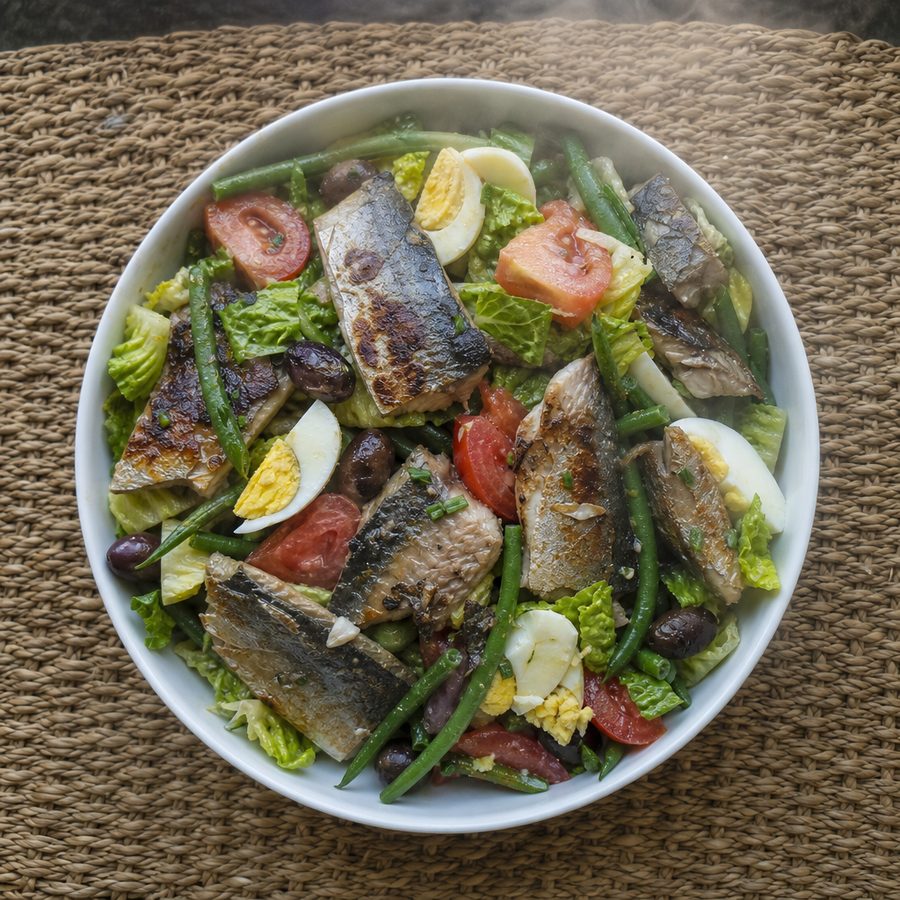
A no-potato Niçoise salad with seared mackerel, blanched green beans, hard-boiled eggs, cherry tomatoes, and olives over romaine, dressed in lemon-Dijon olive oil for a low-carb Mediterranean dinner.
Why You'll Love This Recipe
A real dinner salad keeps you full, rather than being a sad bowl of leaves you finish and forget an hour later. If you follow a low-carb or Mediterranean way of eating, or you just want more fish on your plate, the classic Niçoise gets a low-carb rework here. Dropping the potato is what keeps it light, while the mackerel, eggs, and olive oil carry the meal.
It works because every part pulls its weight. Mackerel brings the omega-3 fats and a good hit of protein, the eggs add choline and staying power, and the olive oil and olives layer in monounsaturated fat that makes the vegetables taste like more than a side. Blanching the green beans keeps them crisp and green instead of limp, and the lemon-Dijon dressing ties the plate together with a clean, bright edge that cuts the richness of the fish.
You finish this plate satisfied because it hits every texture at once: warm flaky fish, snappy beans, creamy egg yolk, juicy tomatoes, and the salty pop of olives against cool romaine. There is enough fat and protein to carry you through the evening without the crash that comes from a carb-heavy meal. It feels like a proper dinner, the kind you would order out, made in about half an hour at home.
Ingredients
- 14 oz mackerel fillets
- 3/4 lb green beans
- 4 eggs
- 1 1/2 cups cherry tomatoes
- 1/3 cup olives
- 1 head romaine
- 3 tbsp olive oil
- 2 tsp dijon
- 2 tbsp lemon juice
- 1/3 tsp salt
Instructions
- Hard-boil the eggs: Set 4 eggs in a saucepan, cover with cold water by an inch, and bring to a boil. Once it boils, cover, take the pan off the heat, and let the eggs sit for 11 minutes. Move them to a bowl of cold water, since the shell pulls away from the white as it cools and they peel cleanly instead of in flakes, then peel and quarter them.
- Blanch the green beans: Trim the 3/4 lb green beans and drop them into a pot of boiling water. Cook for 3 to 4 minutes, until bright green and just tender with a little bite. Drain and rinse under cold water, because beans left hot keep cooking in their own heat and lose the snap that holds them up against the dressing, then pat dry.
- Sear the mackerel: Pat the 14 oz mackerel fillets dry and season with a pinch of the 1/3 tsp salt. Heat a splash of the olive oil in a skillet over medium-high, then lay the fillets skin-side down, since the skin shields the flesh from the direct heat and crisps while it does it. Cook 3 to 4 minutes per side until the flesh reaches about 145°F (63°C) and flakes easily with a fork.
- Make the dressing: Whisk the remaining olive oil (from 3 tbsp total), 2 tsp Dijon, 2 tbsp lemon juice, and the rest of the 1/3 tsp salt in a small bowl until it comes together and looks glossy, because the Dijon is what holds the oil and the lemon together and a split dressing runs straight to the bottom of the plate.
- Halve the tomatoes and greens: Halve the 1.5 cups cherry tomatoes and chop the head of romaine into bite-size pieces. Rinse and spin the romaine dry so the dressing clings.
- Compose the salad: Spread the romaine across four plates or a large platter. Arrange the green beans, quartered eggs, tomatoes, and 1/3 cup olives in groups on top, then flake the mackerel over everything. Drizzle the dressing just before serving, since romaine goes limp within a few minutes of being dressed.
Variations
- Canned mackerel shortcut: Skip the searing and use two drained cans of mackerel, flaking it over the salad straight from the tin.
- Salmon swap: Trade the mackerel for salmon fillets and cook to 125 to 130°F (52 to 54°C) for a slightly milder, buttery version.
- Herb lift: Fold chopped fresh parsley or dill into the dressing for a greener, garden flavor.
- Caper punch: Scatter a spoonful of rinsed capers over the top for extra brine alongside the olives.
- Trout version: Use trout fillets in place of mackerel and cook to about 145°F (63°C) for a milder, gentler fish.
Storage & Leftovers
Store the components separately for the best results. Keep the flaked mackerel in its own covered container, the blanched green beans in another, and the peeled eggs whole in a third. Everything holds in the fridge for up to three days, and keeping them apart means nothing goes soggy or slippery before you eat.
Hold the dressing in a small sealed jar in the fridge, where it keeps for up to five days. Give it a good shake before using, since the olive oil and lemon separate as they sit. Dressing the whole salad ahead of time wilts the romaine fast, so keep it off until the last minute.
When you want to eat, build the plate fresh from the cold parts and dress it at the table. The mackerel is good cold or gently warmed, and the eggs and beans need no reheating at all. Add the tomatoes and romaine last so they stay crisp and the salad tastes freshly made.
Notes & Tips
- Dry the fish well: I pat the mackerel completely dry before it hits the pan so the skin crisps instead of steams.
- Watch the beans: I pull the green beans at 3 to 4 minutes and shock them in cold water so they stay bright and snappy.
- Older eggs peel easier: I reach for eggs that have been in the fridge a week or so, since they shed their shells far more cleanly.
- Salt the dressing, not the salad: I keep all the salt in the dressing so the seasoning spreads evenly and I do not overdo it.
- Room-temp fish sears better: I let the fillets sit out for ten minutes before cooking so they cook through without drying at the edges.
- Dress at the table: I bring the dressing separately and toss right before eating so the romaine never goes limp.
Nutrition & Mindful Eating
- The pleasure of a plate like this is that nothing is stirred together. You build each bite yourself from whatever the fork picks up, so one is fish and olive, the next is egg and tomato, and the dressing is what makes them part of the same meal.
- Mackerel is the anchor, oily and strong enough to hold its own against olives and mustard, and that oil carries the long-chain omega-3 fats it is prized for. Flake it into large pieces so it stays recognizable on the plate.
- Eggs boiled until the yolks are barely set at the center are worth the timer. They stay creamy and deep yellow, and they bring complete protein and choline to a plate built around the fish.
- Green beans blanched briefly and cooled fast keep their squeak and their bright color, and that snap against the soft egg and the flaked fish is most of what makes the plate interesting to eat.
- Olives and tomatoes season the plate from the inside, one salty and one sweet and acidic, and the olive oil, dijon and lemon go over at the very end so the romaine underneath stays cold and crisp.
- As you eat, build each forkful deliberately and notice how differently the plate tastes depending on what you pick up together, and let that choosing slow you down enough to feel when you have had enough.
Frequently Asked Questions
Can I use canned mackerel or salmon instead?
Yes. Two drained cans of mackerel or salmon work in place of the fresh fillets, and you can skip the searing step entirely. Just flake the fish over the salad and dress as usual. It is a fast, no-cook way to keep the omega-3s and protein.
My mackerel fell apart in the pan. What went wrong?
Mackerel is delicate, so it needs a dry surface and a hot pan to hold together. Pat the fillets dry, start them skin-side down, and resist flipping until the first side is set. Cook to about 145°F (63°C), where it flakes cleanly but has not overcooked into mush.
Can I make this ahead for lunch the next day?
Yes. Cook the fish, eggs, and beans in advance and store them separately, then keep the dressing in its own jar. Build the plate the morning you want it and dress right before eating. Everything holds for up to three days in the fridge.
What is different about this nicoise?
There is no potato in it. Leaving it out keeps the plate light, and the omega-3 fish, olive oil, olives, and vegetables that remain are staples of the Mediterranean table. The swap is what trims the starch while leaving the flavor intact.