
Mackerel and Roasted Beet Salad
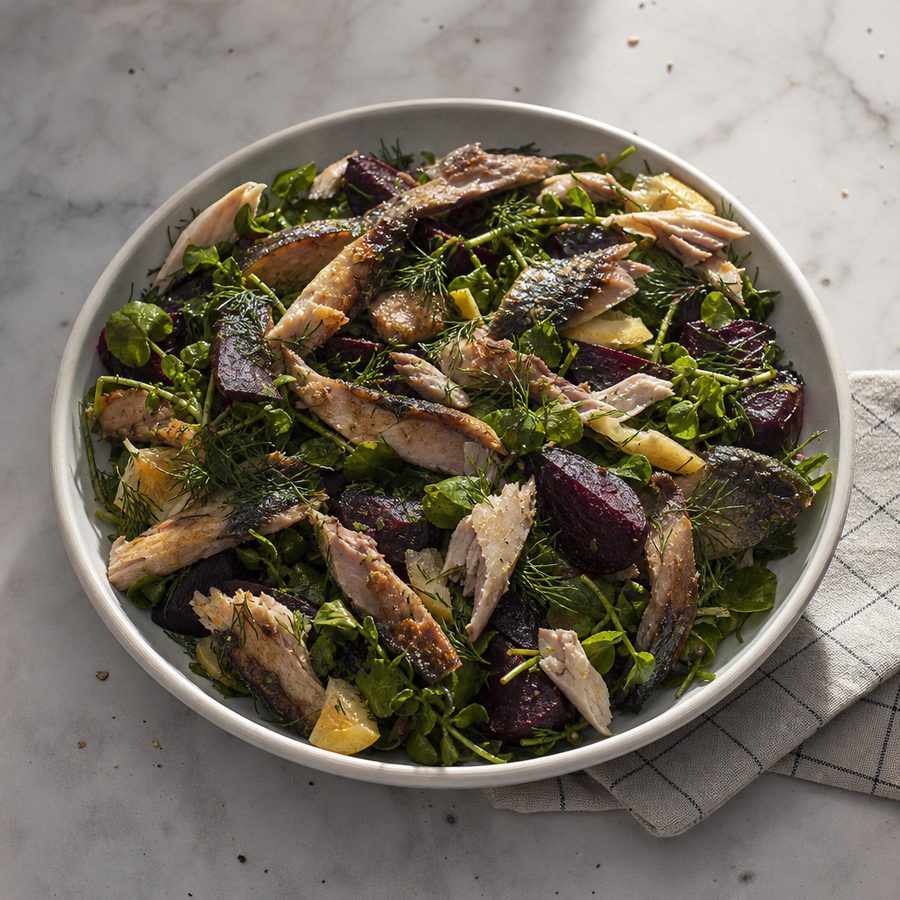
Rich flakes of pan-seared mackerel rest over sweet roasted beets, peppery watercress, and crisp shaved fennel, all brightened by a lemon-dill dressing and thin slices of raw shallot.
Why You'll Love This Recipe
This is a cold-weather-hearty yet fresh plate built for anyone who wants a substantial lunch that still feels light on the stomach. It pairs an oily, deeply flavored fish with earthy roasted beets and sharp, green leaves, so it satisfies without leaving you sluggish. It suits cooks who want real food fast: the beets do their work in the oven while you handle everything else, and the fish takes only minutes in the pan.
Richness meets acid and bite, and loses ground to both. Mackerel is one of the most full-flavored fish there is, and left on its own it can feel heavy; here the lemon juice and raw shallot cut straight through that richness, while peppery watercress and anise-scented fennel keep every bite lively. Searing the fillets skin-side down first gives you a crisp, savory skin and a browned surface that adds flavor and texture the fish would not get from poaching. The sweet, tender beets are the counterweight that ties the sharp and the rich together.
The plate is nourishing as well as filling. The mackerel brings a real dose of protein and the kind of fats that make a meal stay with you, so you are not hungry an hour later. The beets, fennel, and watercress add fiber, color, and a range of vitamins and minerals, and the olive oil helps your body absorb the fat-soluble nutrients in the vegetables. It reads as a light salad but eats like a full meal.
Ingredients
- 4 mackerel fillets (about 480g)
- 4 medium beets, roasted and sliced
- 4 cups watercress
- 1 bulb fennel, shaved
- 3 tbsp olive oil
- 2 tbsp lemon juice
- 2 tbsp chopped dill
- 1 small shallot, thinly sliced
- 1/2 tsp salt
Instructions
- Roast the beets: Preheat the oven to 400°F (200°C). Scrub the whole beets, trim the tops and roots, wrap them loosely in foil, since the trapped steam is what cooks them through without drying the outside into leather, and set them on a baking sheet. Roast until a knife slides into the center with no resistance, about 40 minutes. Let them cool until you can handle them, then rub off the skins with a paper towel and slice into thin rounds or wedges. Set aside.
- Prep the vegetables: While the beets roast, cut the fennel bulb in half through the core, cut away the tough core, because it stays woody raw, and shave the halves into thin slices with a sharp knife or mandoline. Peel and thinly slice the shallot into rings. Roughly chop the dill. Wash and dry the watercress, trimming away any thick lower stems.
- Cook the mackerel: Pat the mackerel fillets dry with a paper towel, which helps the skin crisp. Warm a little of the olive oil in a skillet over medium-high heat. Lay the fillets in skin-side down and press gently with a spatula for the first few seconds so the skin stays flat. Sear undisturbed until the skin is crisp and the flesh has turned opaque most of the way up, about 3 to 4 minutes, then flip and cook until just cooked through, about 1 minute more. Transfer to a plate and, once cool enough to handle, flake into large pieces, discarding any pin bones you feel.
- Make the dressing: In a small bowl, whisk together the remaining olive oil, the lemon juice, the chopped dill, and the salt until it comes together into a loose dressing, so that the lemon is carried by the oil rather than hitting the leaves on its own.
- Assemble: In a large bowl, toss the watercress and shaved fennel with about half of the dressing until lightly coated, since dressing everything on the platter would leave the leaves at the bottom soaked and the ones on top dry. Spread the greens over a platter or plates, arrange the beet slices on top, then add the flaked mackerel. Garnish with the sliced shallot and finish with the remaining dressing spooned over the top.
Variations
- Golden beets: Swap the red beets for golden ones for a milder, less earthy sweetness that will not bleed pink into the greens and fish.
- Arugula instead of watercress: If watercress is hard to find, use arugula for the same peppery bite; it holds up just as well under the dressing.
- Smoked mackerel: Use ready-to-eat smoked mackerel fillets in place of pan-seared for a deeper, smoky flavor and no stovetop cooking; flake it straight over the salad.
- Orange-dill dressing: Replace the lemon juice with fresh orange juice and a little of its zest for a sweeter, rounder dressing that plays up the beets.
- Add avocado: Fold in slices of ripe avocado for extra creaminess and richness that softens the sharp watercress; this adds avocado.
Storage & Leftovers
Store leftovers in an airtight container in the refrigerator for up to two days. Keep the flaked mackerel and beets separate from the dressed greens if you can, since the watercress wilts quickly once it meets the dressing and acid.
This dish is meant to be eaten cold or at room temperature, so there is no real reheating needed. If the fish came straight from the fridge and you prefer it warmer, let it sit out for ten to fifteen minutes, or warm the flaked pieces gently in a dry skillet over low heat just until the chill is off; avoid high heat, which dries mackerel out fast.
To get ahead, roast and slice the beets and whisk the dressing up to three days in advance and keep both refrigerated. Shave the fennel and slice the shallot the morning of and hold them in cold water so they stay crisp. Sear the mackerel and assemble just before serving for the best texture.
Notes & Tips
- Buy the freshest mackerel you can: Mackerel is oily and turns quickly, so buy it the day you cook it and look for firm, shiny flesh and a clean sea smell. If it smells strongly fishy, it is past its best.
- Wear gloves for the beets: Red beets stain hands and cutting boards. Peel and slice them on a plate or board you do not mind staining, or wear disposable gloves, and rub any pink off your skin with a little lemon juice.
- Keep the fennel and shallot crisp: Once shaved, drop the fennel and sliced shallot into a bowl of ice water for ten minutes, then drain and dry well. This firms them up and mellows the shallot's raw bite.
- Judge the fish by its color: The mackerel is done when the flesh turns from translucent to opaque and flakes easily with a fork; because the fillets are thin, this happens fast, so watch the sides rather than the clock.
- Dress the greens last: Watercress collapses within minutes of meeting acid, so toss the leaves and fennel with dressing only right before serving and save the rest to spoon over at the table.
- Balance the acid to taste: Taste the dressing before it goes on. If it is too sharp against the rich fish, add a little more olive oil; if the plate tastes flat, a squeeze more lemon juice wakes it back up.
Nutrition & Mindful Eating
- Sweet, peppery and rich all land in the same forkful here. The beets are earthy and candied from the oven, the watercress is sharp, the fennel is cold and crunchy, and the mackerel is the rich thing holding all three together.
- Beets roasted whole in their skins concentrate rather than leach, so they come out dense and almost jammy at the edges, and they carry the natural nitrates beets have been studied for along with all that color.
- Fennel sliced as thin as you can manage stays crisp and tastes faintly of anise, which is a cooling note against the fish, and it brings its own fiber and potassium to the plate.
- Mackerel has enough oil in it to hold its own beside the beets, and its flakes soak up the dressing. That richness is where its omega-3 fats live, and it is why a salad like this eats as a full lunch.
- Dill, shallot and lemon make the dressing, and the raw shallot mellows as it sits in the acid so its bite turns sweet. The watercress goes on last and stays peppery, and the whole plate stains pink wherever the beets touch it.
- As you eat, watch the beet color bleed into the dressing and notice how the cold fennel resets your mouth after each bite of fish, and slow down enough to let the meal register.
Frequently Asked Questions
My mackerel skin sticks to the pan. How do I stop that?
Two things cause sticking: wet skin and moving the fish too soon. Pat the fillets thoroughly dry, get the oil shimmering before the fish goes in, and then leave the fillets alone. The skin releases on its own once it is crisp; if it resists the spatula, it needs another thirty seconds.
Can I use canned or pre-smoked mackerel instead of cooking it fresh?
Yes. Ready-to-eat smoked mackerel or good tinned mackerel both work well here; just drain it, flake it, and lay it over the salad. It changes the flavor toward smoky and saves you the pan step, so it is a fine shortcut on a busy day.
The beets turned everything pink. Did I do something wrong?
No, red beets simply bleed. To keep the plate looking clean, slice the beets last, arrange them on top rather than tossing them through the greens, and add them just before serving. Golden beets are a good alternative if you want to avoid the color entirely.
Is this filling enough to be a full meal?
It is. Between the rich, protein-heavy mackerel and the fiber from the beets, fennel, and watercress, this plate eats like a complete lunch rather than a side salad. If you want it even heartier, the avocado variation adds staying power.