
Maple Tempeh Farro Harvest Bowl
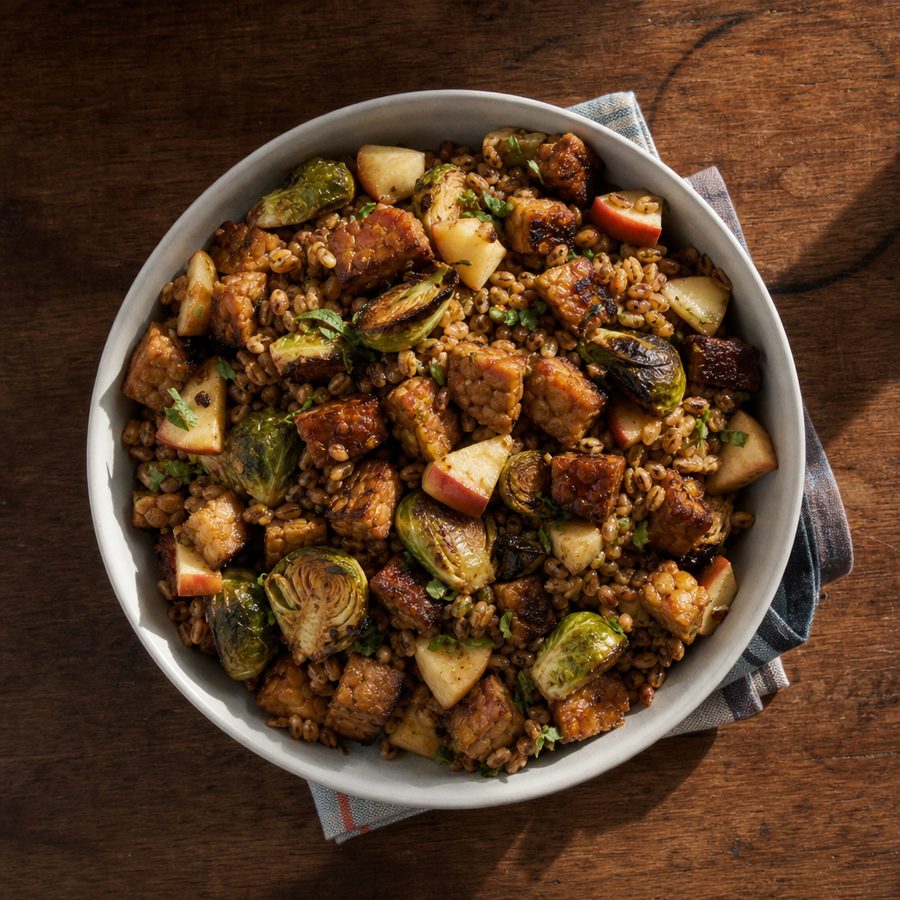
Glazed maple-mustard tempeh over nutty farro with roasted brussels sprouts and diced apple, tossed with walnuts in a warm balsamic dressing.
Why You'll Love This Recipe
This is a hearty, hold-you-over lunch bowl built around plants, made for anyone who wants a midday meal that eats like real food rather than a side salad. It layers savory glazed tempeh, caramelized brussels sprouts, chewy farro, and sweet apple into one bowl, so it works whether you are packing lunch for the office, feeding a house that eats on different schedules, or just want something warm and substantial that reheats well.
Roast the tempeh and brussels sprouts together on one hot pan. High heat drives off moisture and browns the sprouts until their edges turn crisp and nutty, while the tempeh firms up and takes on color. The maple-dijon-balsamic glaze is added after roasting, not before, so the sugars glaze the food rather than scorching in the oven, and the warm dressing folded into the farro carries that same sweet-tart-savory note all the way through the bowl.
The texture varies from forkful to forkful, and the bowl holds you well past the meal. Tempeh and farro together bring plenty of protein and fiber, so the bowl holds you between meals instead of leaving you hungry an hour later. Walnuts add richness and crunch, apple keeps it bright, and the brussels sprouts give it that roasted, savory backbone. It is filling in a steady, comfortable way rather than a heavy one.
Ingredients
- 2 blocks tempeh, cubed
- 3 cups cooked farro
- 4 cups brussels sprouts, halved
- 1 apple, diced
- 2 tbsp maple syrup
- 1 tbsp dijon mustard
- 2 tbsp balsamic vinegar
- 3 tbsp olive oil
- 1/2 cup walnuts, chopped
- 1/2 tsp salt
Instructions
- Start with cooked farro: This wants three cups of cooked farro. From dry, rinse it and simmer it in plenty of salted water for 25 to 30 minutes, until the grains are tender but still chewy, then drain. Cook it with room to move rather than in a measured amount of water, since farro sheds a great deal of starch and a tight pot turns it sticky.
- Cut the sprouts and tempeh to a common size: Heat the oven to 425°F (220°C). Trim and halve the Brussels sprouts through the stem so the layers stay attached, cube the tempeh, dice the apple, and chop the walnuts. Keep the tempeh cubes and the sprout halves about the same size, because they share a pan for twenty-five minutes and anything smaller than the rest will be dry by the end.
- Roast 25 minutes, sprouts cut side down: Toss the tempeh and sprouts with olive oil and salt on a sheet pan and spread them in a single layer with every sprout cut side down against the metal. That flat face is where the browning happens, and a sprout sitting rounded side down steams inside its own leaves. Roast about 25 minutes, until the sprouts are deeply browned at the edges and the tempeh is golden.
- Whisk the glaze while the pan roasts: Whisk the maple syrup, dijon, balsamic, and the remaining olive oil until smooth and slightly thickened. The dijon is doing more than adding flavor here, since mustard holds oil and vinegar together and without it the glaze would separate the moment it hit the pan.
- Glaze on the hot pan, not in the bowl: Drizzle about half the dressing over the tempeh and sprouts while they are still on the hot sheet pan and toss so everything takes a shiny coat. Doing it on the hot pan lets the maple tighten and cling instead of pooling, which is what makes the glaze stick rather than run to the bottom of the bowl.
- Dress the farro separately, then build: Fold the farro, apple, and walnuts together with the remaining dressing in a large bowl, then divide among bowls and top with the glazed tempeh and sprouts. Dressing the grain separately means the base is seasoned too, so the bowl does not turn into flavored things sitting on plain farro. Serve warm.
Variations
- Swap the grain: Use cooked wheat berries, barley, or brown rice in place of the farro for a different chew. Barley makes it a little softer and brown rice keeps it free of gluten.
- Change the sweet fruit: Trade the diced apple for a firm pear or a handful of dried cranberries. Dried fruit adds concentrated sweetness, so use a lighter hand.
- Different nut or seed: Swap the walnuts for chopped pecans, toasted almonds, or pumpkin seeds. Pumpkin seeds keep it free of tree nuts while still adding crunch.
- Add a hardy green: Fold in shredded kale or baby spinach with the warm farro so it wilts gently, adding color and extra vegetables to the bowl.
- Warm the spice: Whisk a pinch of smoked paprika or cayenne into the glaze for a savory, smoky edge that plays against the maple.
Storage & Leftovers
Keep leftovers in an airtight container in the refrigerator for up to four days. The farro and tempeh hold up especially well, and the flavors deepen as the glaze settles in overnight.
To reheat, warm a portion in the microwave in short bursts, stirring once, until heated through, or spread it on a pan in a 350°F (175°C) oven if you want the sprouts and tempeh to crisp back up. A quick splash of balsamic vinegar after reheating brightens everything back up.
To get ahead, cook the farro and roast the tempeh and brussels sprouts up to three days in advance and store them separately. Whisk the glaze fresh, then assemble the bowls when you are ready to eat so the apple and walnuts stay crisp.
Notes & Tips
- Steam the tempeh first if you like: If your tempeh tastes bitter to you, steam the cubes for about ten minutes before roasting. This mellows it and helps it soak up the glaze.
- Cut sprouts evenly: Halve the brussels sprouts to a uniform size so they roast at the same rate. Quarter any large ones so they finish alongside the smaller halves.
- Toast the walnuts: For deeper flavor, toast the chopped walnuts in a dry skillet over medium heat until fragrant, a couple of minutes, before folding them in.
- Taste the glaze: Adjust the glaze to your palate before tossing. Add a little more maple if you want it rounder, or more balsamic and dijon for a sharper, tangier bite.
- Pick a firm, tart apple: A crisp, tart apple like Honeycrisp or Granny Smith holds its shape and cuts the richness better than a soft, sweet variety.
- Double the batch: This bowl keeps well, so roast a second pan of tempeh and sprouts while the oven is hot and stash it for quick lunches through the week.
Nutrition & Mindful Eating
- Warm, chewy and crisp all turn up in the same bowl. The farro is soft with a bite at the center, the sprouts come out of the oven browned and slightly bitter, and the raw apple cuts across both with something cold and sweet.
- Farro is a whole grain that stays pleasantly chewy however long you cook it, which is what makes it a good base for a bowl like this, and it carries fiber and slow carbohydrate that keep the meal grounded.
- Brussels sprouts roasted cut side down, rather than boiled, until the flat face goes properly dark turn sweet and nutty at the edges, and they bring vitamin C and vitamin K along with that browning.
- Tempeh cubed and roasted alongside picks up a nutty, browned edge, and the walnuts scattered over the top add their own richness and a plant form of omega-3 fat. Between them the bowl has enough substance to eat as a full lunch.
- The dressing is dijon, balsamic and olive oil with a little maple stirred in, and that acidity is what keeps the sprouts and the farro from sitting heavy. The apple goes in last so it stays crisp against everything warm.
- As you eat, look for the darkest sprout leaves first and notice how the cold apple lands after the warm grain, and give yourself long enough with the bowl to feel it settle.
Frequently Asked Questions
My tempeh sometimes tastes bitter. How do I fix that?
That slight bitterness is natural to tempeh. Steaming the cubes for about ten minutes before roasting mellows it, and the maple-dijon glaze also balances it with sweetness and tang.
Can I eat this cold as a packed lunch?
Yes. It holds together well and tastes good at room temperature or straight from the fridge, which makes it a strong choice for a packed lunch. A splash of balsamic before eating brightens it back up.
Why do you add the glaze after roasting instead of before?
The maple syrup and balsamic contain sugars that would scorch at the high roasting temperature. Tossing them on after the pan comes out gives you a glossy glaze and browned, not burnt, edges.
Can I make this without the walnuts?
Yes. The walnuts add crunch and richness but are not essential. Leave them out, or swap in pumpkin seeds if you want the texture without tree nuts.