
Marinated Feta and Olive Bites
Cubes of feta and kalamata olives soaked in lemony oregano oil with sweet red pepper, a briny make-ahead snack you can pull straight from the fridge.
Why You'll Love This Recipe
This is the snack you make on Sunday so that Wednesday afternoon has something to look forward to. If you keep a low-carb Mediterranean kitchen and you are tired of reaching for crackers, a jar of feta and olives sitting in lemony oil answers the question of what to eat between meals. It is for anyone who wants a savory, briny bite that feels like a small treat but asks almost nothing of you once the marinade is made.
The method is mostly patience. Patting the feta dry first means the cubes stay firm and take on the oil instead of weeping into it, and folding rather than stirring keeps them from crumbling. The oregano, garlic, and lemon need time in the oil to loosen up and spread, which is why the rest in the fridge matters more than any technique. Kalamata olives and sweet red pepper round out the salt with a little fruitiness and crunch, so no single note takes over.
As a snack it holds you because it is built on salt, fat, and protein rather than starch. The feta brings staying power, the olive oil coats everything so each bite feels rich, and the brine keeps you interested cube after cube without needing a large portion. A third of a cup is enough to settle a mid-afternoon craving, and because there is real food in it, you are not hungry again twenty minutes later looking for more.
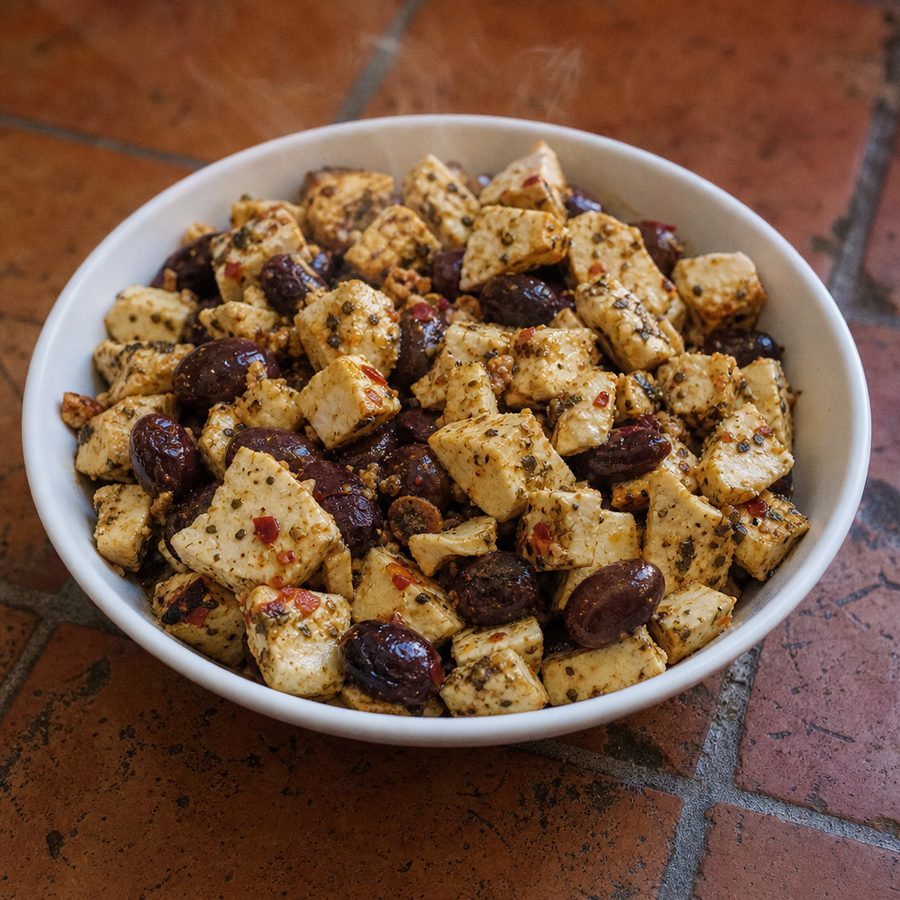
Ingredients
- 10 oz feta, cubed
- 1 cup kalamata olives
- 1 red bell pepper, diced
- 3 tbsp olive oil
- 1 tbsp lemon juice
- 1 tbsp dried oregano
- 2 cloves garlic, thin
Instructions
- Cube the feta: Pat the block of feta dry and cut it into roughly half-inch cubes, since anything smaller crumbles the moment you fold it through the oil and anything larger takes the marinade only on the outside. Buy the block rather than the tub of crumbles, because crumbles have already lost the edges that hold up here.
- Mix the marinade: In a bowl, stir together the olive oil, lemon juice, dried oregano, and thinly sliced garlic until the oregano is evenly suspended in the oil. Slice the garlic thin rather than mincing it, because minced garlic sitting raw in oil for two days turns harsh, and thin slices stay sweet and can be eaten alongside the cheese.
- Combine: Add the feta cubes, kalamata olives, and diced red bell pepper, then fold gently with a spatula rather than stirring, so that everything gets coated without breaking up the cheese. The pepper goes in raw and stays crisp, which is what keeps the jar from being only salt and fat.
- Give it thirty minutes, and eat it inside two days: Half an hour is enough for the garlic and oregano to reach the cheese, and overnight is better. Past about two days, though, the lemon starts working on the feta itself: acid and salt together break the curd down, and firm cubes turn soft and crumble when you lift them. If you want this for later in the week, mix the feta with the oil, garlic, and oregano only, keep it covered in the refrigerator, and add the lemon juice on the day.
- Rest it, then let it warm up: Cover and chill for at least 30 minutes, or up to overnight, so that the garlic and the oregano have time to reach the middle of each cube rather than sitting on the outside. Take the bowl out about twenty minutes before you eat, since cold olive oil sets cloudy and thick and everything in it tastes muted until it loosens again.
Variations
- Herb swap: Trade the oregano for fresh thyme or a mix of thyme and marjoram for a softer, greener aroma in the oil.
- Add heat: Fold in a pinch of red pepper flakes or a few thin slices of chili to give the marinade a gentle warmth.
- Citrus zest: Grate a little lemon or orange zest into the oil for a brighter, more perfumed finish alongside the juice.
- Sun-dried tomato: Add a few chopped oil-packed sun-dried tomatoes for a sweet-tart chew that plays off the salty feta.
- Mixed olives: Use a blend of kalamata and green olives so you get a range of brine and firmness in every scoop.
Storage & Leftovers
Keep the bites in an airtight jar or container in the fridge, fully submerged in their oil, for up to five days. The oil protects the feta and lets the flavors keep developing, so day two and day three often taste even better than the first hour after mixing.
The olive oil will firm up and turn cloudy when cold, which is normal. Pull the jar out about twenty minutes before you want to snack and let it come to room temperature so the oil loosens and the flavor opens back up. Give it a gentle turn to recoat everything before serving.
This one is built for making ahead, and the overnight rest is the best version. Mix it a day early and it needs nothing from you later. If you want to stretch it, add fresh feta cubes to the leftover marinade once the first batch is gone rather than starting over.
Notes & Tips
- Buy block feta: Feta sold in a block, packed in brine, holds its cube shape and flavor far better than the pre-crumbled kind.
- Dry the cubes: Pat the feta dry before you cut it so the marinade clings instead of sliding off into a watery layer.
- Slice garlic thin: Very thin garlic mellows in the oil overnight, while thick pieces stay sharp and can overpower the feta.
- Fold, do not stir: Use a folding motion so the cubes stay whole; aggressive stirring turns them into a crumbled spread.
- Let it rest: Give it the full thirty minutes at minimum, since that rest is where the garlic and lemon actually settle in.
- Save the oil: Once the bites are gone, use the leftover herby oil on a salad or to dress roasted vegetables.
Nutrition & Mindful Eating
- Marinating is the whole recipe here. The feta softens and takes on the garlic and oregano, the olives give the oil their brine, and the lemon works into both, so by the next day the oil at the bottom of the jar is as good as what is sitting in it.
- Feta is salty, crumbly and tangy in a way that seasons everything it touches, and cut into cubes rather than crumbled it holds its shape in the oil. It brings protein and calcium to a snack built mostly on flavor.
- Olives bring the deep, briny, slightly bitter note that makes this taste grown up, and their monounsaturated fat and vitamin E come along with it. Press them lightly with the flat of a knife so the marinade gets inside.
- Diced raw bell pepper is the crunch and the color in the jar, staying sweet and firm against the soft cheese, and cutting it fresh keeps its vitamin C right where it is.
- Dried oregano rubbed between your fingers before it goes in wakes up its oils, the garlic is sliced thin so it perfumes rather than dominates, and the lemon is what keeps a jar of cheese and oil tasting bright.
- As you eat, spear one bite at a time and notice the oil that comes with it, the oregano first and then the brine, and let a small plate be reason enough to sit down.
Frequently Asked Questions
Can I use a different cheese instead of feta?
Yes, halloumi or a firm goat cheese both hold up well in the marinade and take on the garlic and lemon nicely. Keep the cubes on the larger side so they do not fall apart. The salt level will shift a little, so taste before adding anything extra.
How far ahead can I make these?
Up to a day ahead is ideal, and honestly the overnight rest gives the best flavor. Keep them submerged in the oil in the fridge and they hold for about five days total. Just let the jar warm to room temperature before you serve it.
What counts as a serving?
One serving is about a third of a cup, which the recipe stretches to six times. That is a satisfying afternoon snack on its own, or a smaller amount alongside cucumber slices if you want to make it last longer.
What makes these Mediterranean, and how much starch do they carry?
Feta, olives, and olive oil are the base of a Mediterranean plate, and none of the three brings any starch at all. What you get is fat, salt, and flavor in a small, satisfying bite.