
Maryland-Style Baked Crab Cakes
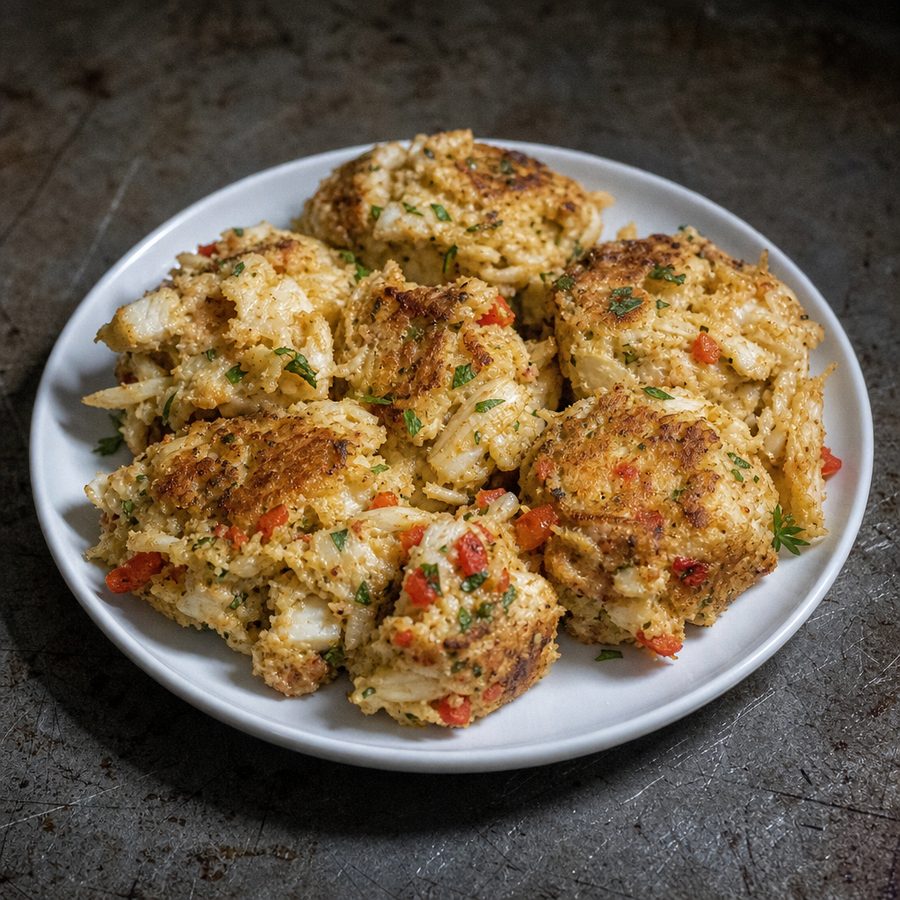
Sweet lump crab folded with egg, minced red bell pepper, dijon, parsley and a squeeze of lemon, then baked into tender golden cakes with almond flour holding them together.
Why You'll Love This Recipe
These baked crab cakes are for anyone who wants the taste of a crab house without the heavy batter and hot oil. They lean on the natural sweetness of lump crab, and because they go into the oven rather than a skillet of fat, they stay light enough to eat as a protein-rich snack or a small plate before dinner. They come together quickly and suit a cook who wants something that feels special but is simple to pull off.
The crab is the star, so almost nothing else is. The crab is the star, so the binder is deliberately spare: egg and almond flour hold the cakes together, dijon and lemon sharpen the flavor, and minced red bell pepper adds a little sweetness and color without turning them into a vegetable fritter. Folding the crab in with just a few strokes is the key move, because overmixing shreds the meat and you lose the tender lumps that make crab worth buying. Baking at a steady, hot temperature sets the egg and browns the edges while keeping the centers moist.
They satisfy because crab is rich in protein that keeps you full, and the cakes deliver that with very little that weighs you down. The almond flour binder keeps them light and tender rather than dense, the bell pepper gives a fresh crunch, and the lemon and dijon keep every bite bright instead of rich. They feel like a treat while still being clean, honest food you can eat and feel good about.
Ingredients
- 12 oz cooked crab meat
- 2 eggs
- 1/3 cup almond flour
- 1/2 red bell pepper, minced
- 2 tsp dijon mustard
- 2 tbsp chopped parsley
- 1 tbsp lemon juice
Instructions
- Preheat and prepare the pan: Preheat the oven to 400°F (200°C) and line a baking sheet with parchment paper so the cakes lift off cleanly once baked.
- Drain and check the crab: Turn the cooked crab meat out onto a plate and run your fingers through it gently, pressing out any excess liquid and picking away any bits of shell or cartilage. Keep the lumps as whole as you can rather than shredding them.
- Prep the aromatics: Mince the red bell pepper into small, even pieces so it folds through without making the cakes bulky. Chop the parsley finely and squeeze the lemon, catching any seeds.
- Make the base: In a bowl, whisk the eggs, dijon mustard, lemon juice and parsley until smooth. Add the almond flour and minced bell pepper and stir into a loose, cohesive mixture.
- Fold in the crab: Add the crab and fold it in with a spatula using a few slow strokes, just until the meat is coated. Stop as soon as it holds together so the lumps stay intact rather than breaking down into paste.
- Shape the cakes: Scoop portions of the mixture and pat each into a round cake about three-quarters of an inch thick, pressing gently so it holds without compacting. Set them on the lined sheet, spaced apart so the edges can brown.
- Bake: Bake for about 16 minutes, until the tops are set to the touch and the edges are golden. Let them rest on the sheet for a few minutes to firm up before lifting with a thin spatula.
Variations
- Old Bay style: Add a spoonful of Old Bay or a similar seafood seasoning to the egg mixture for the classic bay-house warmth and a little more color.
- Herb and scallion: Fold in thinly sliced scallions and a little fresh dill or chives along with the parsley for a greener, brighter cake.
- Spicy kick: Stir a pinch of cayenne or a few dashes of hot sauce into the egg to give the cakes gentle heat that plays off the sweet crab.
- Coconut crumb top: Press a light coating of unsweetened shredded coconut onto the tops before baking for a toasty, faintly sweet crust; this adds coconut.
- Smoked paprika and garlic: Whisk smoked paprika and a little grated fresh garlic into the base for a deeper, savory backbone under the crab.
Storage & Leftovers
Store cooled crab cakes in an airtight container in the refrigerator for up to three days. Because they hold moisture, lay them in a single layer or separate stacked cakes with parchment so they do not stick together.
To reheat, warm them in a 350°F (175°C) oven or toaster oven for about eight to ten minutes until heated through and the edges crisp up again. The microwave works in a pinch but softens the crust and can make them rubbery, so the oven is worth the few extra minutes.
To get ahead, mix and shape the cakes, then arrange them on the lined sheet and refrigerate uncovered for up to a day before baking. A rest in the fridge actually helps them hold their shape, so you can go straight from cold pan to hot oven when you are ready.
Notes & Tips
- Buy the right crab: Refrigerated pasteurized lump or jumbo lump crab in the tub gives the sweetest flavor and biggest pieces. Canned shelf-stable crab works but is more shredded, so handle it even more gently.
- Dry the crab first: Wet crab makes cakes that will not hold. Press the meat between paper towels before mixing so the binder can do its job and the cakes set cleanly.
- Chill if the mix feels loose: If the shaped cakes feel soft, rest them in the fridge for fifteen to twenty minutes before baking. Cold mixture firms up and browns without spreading.
- Know when they are done: They are ready when the tops spring back to a light touch and the edges have turned golden. If the center still jiggles, give them a couple more minutes.
- Adjust the tang to taste: Dijon and lemon carry the seasoning here, so taste a tiny bit of the raw base before folding in the crab and add a touch more mustard or lemon if it needs lift.
- What to serve alongside: A crisp green salad, lemon wedges, or a dollop of plain yogurt whisked with dijon and herbs rounds them into a light meal without adding anything heavy.
Nutrition & Mindful Eating
- The binder is doing a supporting job here and nothing more. Egg and almond flour hold the cakes together while they bake, the mustard and lemon season them from the inside, and the crab stays in pieces big enough to see.
- Crab meat is sweet, delicate and close-grained, and folding it gently is the difference between a crab cake and a paste. It is dense complete protein and carries zinc and selenium along with it.
- Almond flour is soft and faintly sweet, and it takes up just enough moisture to keep the cakes from spreading on the pan while they bake, adding its own gentle richness and a little vitamin E to the mix.
- Finely diced red bell pepper gives you small sweet crunches through the soft crab, and parsley keeps the whole thing tasting green. Both go in raw so they hold their texture through the oven.
- Dijon and lemon are what stop a rich cake from sitting heavy. The mustard sharpens the crab from within, and a squeeze of lemon over the hot tops as they come out of the oven is what makes people reach for a second.
- As you eat, break one open with a fork and let the steam and the sweetness of the crab reach you before the lemon does, and take them slowly enough to enjoy them as a course of their own.
Frequently Asked Questions
Why did my crab cakes fall apart?
Almost always excess moisture. Press the crab dry before mixing, fold gently so the egg and almond flour can coat everything, and chill the shaped cakes if they feel soft before they go in the oven.
Can I use canned crab instead of fresh lump?
Yes. Drain it well and pat it dry, and expect a more shredded texture with smaller pieces. Handle it especially gently and the cakes will still hold and taste good.
How do I keep the lumps intact?
Mix the binder fully first, then add the crab last and fold with only a few slow strokes. The less you stir once the crab is in, the more whole pieces survive into the finished cake.
Can I pan-sear these instead of baking?
You can, but this recipe is built for the oven, which browns the edges while keeping the centers moist with no added fat. If you do pan-cook, use a nonstick surface and turn them once, carefully, since baked-style cakes are delicate.